
278 lines
13 KiB
Markdown
278 lines
13 KiB
Markdown
|
|
> Name
|
|
|
|
开敞包围式开高价交叉交易策略Open-High-Cross-Over-Trading-Strategy
|
|
|
|
> Author
|
|
|
|
ChaoZhang
|
|
|
|
> Strategy Description
|
|
|
|
|
|
|
|
[trans]
|
|
|
|
|
|
## 概述
|
|
|
|
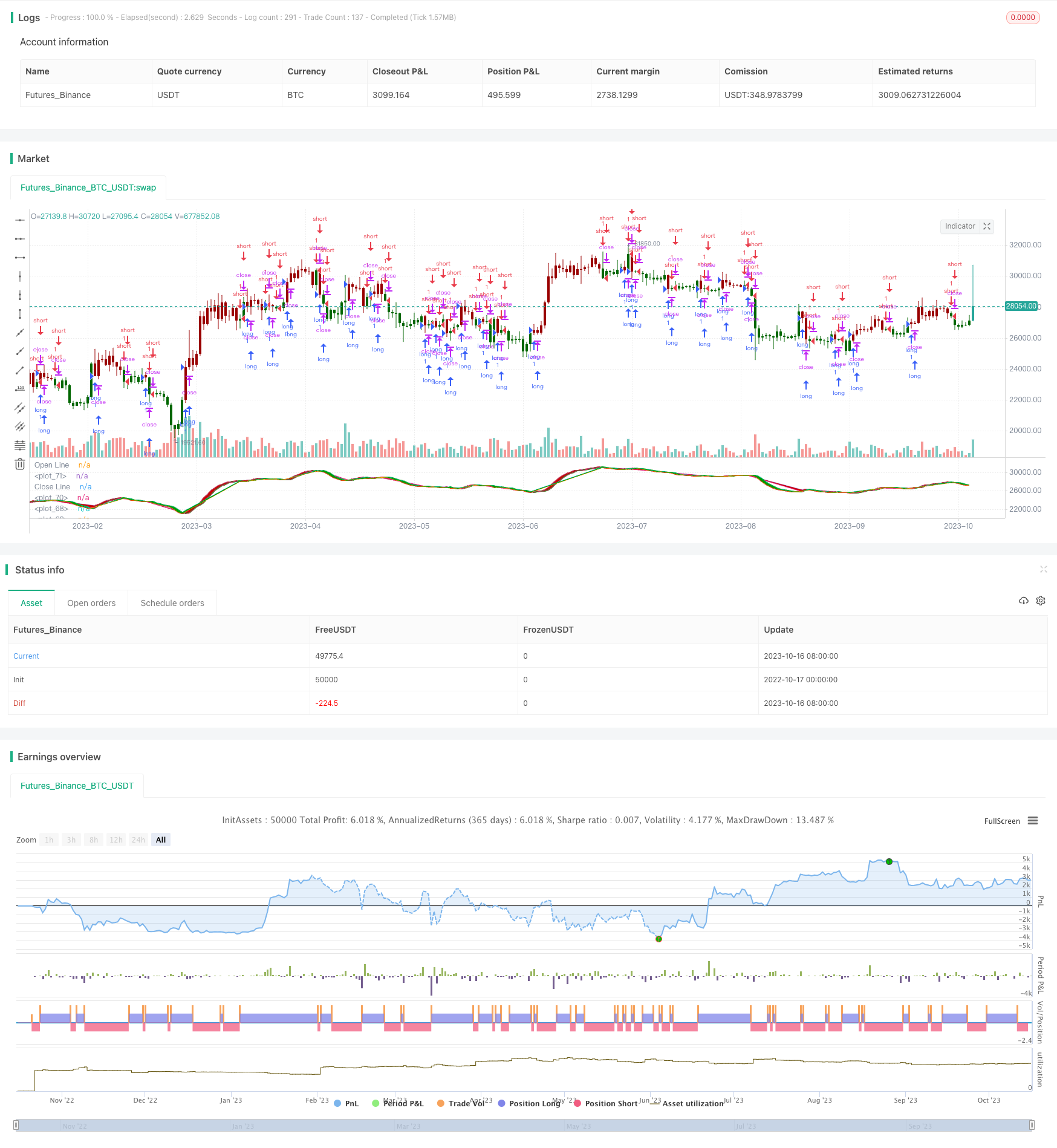
该策略基于开价和高价的交叉进行交易信号判断。当开价上穿高价时做多,当开价下穿高价时做空。使用移动平均线可平滑价格数据,降低噪音交易。可配置移动平均线类型和参数。还可配置是否启用追踪止损来锁定利润。
|
|
|
|
## 策略原理
|
|
|
|
1. 根据输入参数决定是否使用替代周期解析度(useRes)。如果使用,则根据stratRes设定周期。
|
|
|
|
2. 根据输入参数决定是否使用移动平均线(useMA)。如果使用,则根据basisType选择移动平均线类型,basisLen设定周期长度。
|
|
|
|
3. 获取开价(open)和收盘价(close)的系列数据。如果使用移动平均线,则应用选择的移动平均线类型和参数平滑处理。
|
|
|
|
4. 比较当前开价x与开价系列openSeries。如果x大于openSeries则趋势状态trendState为多头,否则为空头。
|
|
|
|
5. 当开价上穿开价移动平均线时产生做多信号longCond,当开价下穿开价移动平均线时产生做空信号shortCond。
|
|
|
|
6. 根据做多做空信号进入多头或空头仓位。如果启用追踪止损,设置止损点位和偏移距离。
|
|
|
|
## 策略优势
|
|
|
|
1. 使用开价和高价两个不同系列进行交易信号判断,避免单一数据系列的局限性。
|
|
|
|
2. 应用移动平均线技术可过滤掉短期市场噪音,锁定主要趋势。
|
|
|
|
3. 可灵活配置移动平均线类型,调整参数达到最佳效果。
|
|
|
|
4. 可选择是否使用追踪止损来控制风险,锁定利润。
|
|
|
|
5. 策略优化空间大,可针对不同品种和市场环境进行参数调整。
|
|
|
|
## 策略风险
|
|
|
|
1. 单一交易信号来源,信号稀少,容易漏单。
|
|
|
|
2. 移动平均线存在滞后问题,可能错过短期机会。
|
|
|
|
3. 追踪止损设置不当可能过早止损或止损幅度太大。
|
|
|
|
4. 参数设置不当可能导致虚拟交易过于频繁而影响实盘效果。
|
|
|
|
5. 不同品种和市场环境需要调整参数,优化难度较大。
|
|
|
|
6. 可通过增加其他指标判断或引入机器学习模型来丰富信号来源。调整移动平均线类型和参数达到最佳平滑效果。谨慎设置止损点位,适当放宽以获取更多利润。进行充分回测优化确保参数可靠。
|
|
|
|
## 策略优化方向
|
|
|
|
1. 增加其它技术指标判断,如布林带、KD等,丰富交易信号。
|
|
|
|
2. 应用机器学习模型处理信号判断。
|
|
|
|
3. 优化移动平均线参数,找到最佳参数组合。
|
|
|
|
4. 优化追踪止损参数,平衡止损幅度和利润获取。
|
|
|
|
5. 添加参数优化功能,自动寻找最优参数。
|
|
|
|
6. 为不同品种开发专属参数模板。
|
|
|
|
7. 开发量化回测框架,快速迭代策略。
|
|
|
|
## 总结
|
|
|
|
该策略基于开价和高价的交叉进行交易信号判断,运用移动平均线技术过滤噪音。可灵活配置参数,实现多种效果。具有一定的优势,但也存在一些问题,如少量信号、滞后等。通过引入更多指标组合判断、机器学习等方式进行优化,可形成较强大的交易策略。需要针对不同品种和市场环境进行参数调整优化,来达到最佳效果。
|
|
|
|
||
|
|
|
|
|
|
## Overview
|
|
|
|
This strategy generates trading signals based on the crossover between open and high prices. It goes long when open price crosses above high price and goes short when open price crosses below high price. Moving averages can be used to smooth the price data and reduce noisy trades. Various types and parameters of moving averages are configurable. Trailing stop loss can also be enabled to lock in profits.
|
|
|
|
## Strategy Logic
|
|
|
|
1. Determine whether to use an alternate resolution based on the input parameter useRes. If enabled, set the resolution with stratRes.
|
|
|
|
2. Decide whether to use moving average (useMA) based on input parameter. If enabled, select MA type with basisType and set period length with basisLen.
|
|
|
|
3. Get open price (open) and close price (close) series data. Apply selected MA with configured parameters if useMA enabled.
|
|
|
|
4. Compare current open price x with open series openSeries. If x is greater than openSeries, set trendState to long, otherwise to short.
|
|
|
|
5. Generate long signal longCond when open price crosses above open MA series. Generate short signal shortCond when open price crosses below open MA series.
|
|
|
|
6. Enter long or short positions based on long and short signals. Set stop loss points and offset if trailing stop loss is enabled.
|
|
|
|
## Advantages
|
|
|
|
1. Uses two different price series, open and high, avoiding limitations of single series.
|
|
|
|
2. MA techniques filter out short-term noise and focus on major trend.
|
|
|
|
3. Flexible configuration of MA types and parameters for optimal effect.
|
|
|
|
4. Optional trailing stop loss to control risk and lock in profits.
|
|
|
|
5. High optimization space to adjust parameters for different products and market environments.
|
|
|
|
## Risks
|
|
|
|
1. Single signal source leads to scarce signals and potentially missed trades.
|
|
|
|
2. MA lag may result in missing short-term opportunities.
|
|
|
|
3. Improper stop loss configuration could lead to premature exit or excess loss.
|
|
|
|
4. Poor parameter tuning could cause excessive fictional trades affecting live performance.
|
|
|
|
5. Parameter optimization is challenging for different products and environments.
|
|
|
|
6. Add more indicators or ML models to enrich signal sources. Fine tune MA types and parameters. Set stop loss carefully with some buffer to capture more profit. Thoroughly backtest and optimize parameters.
|
|
|
|
## Optimization Directions
|
|
|
|
1. Incorporate additional indicators like Bollinger Bands, KD etc. to expand signal sources.
|
|
|
|
2. Apply machine learning models for signal generation.
|
|
|
|
3. Optimize MA parameters to find best configurations.
|
|
|
|
4. Balance stop loss levels between risk and profit capture.
|
|
|
|
5. Add parameter optimization methods to auto find optimal settings.
|
|
|
|
6. Develop specialized parameter templates for different products.
|
|
|
|
7. Build quantitative backtesting frameworks for quick strategy iterations.
|
|
|
|
## Summary
|
|
|
|
This strategy generates signals based on open-high crossovers and uses MAs to filter noise. It offers flexibility through configurable parameters. The strategy has advantages but also some problems like sparse signals and lag. Further improvements can be made through more indicators, machine learning models etc. Extensive parameter tuning and optimization is needed for the best performance across different products and market environments.
|
|
|
|
[/trans]
|
|
|
|
> Strategy Arguments
|
|
|
|
|
|
|
|
|Argument|Default|Description|
|
|
|----|----|----|
|
|
|v_input_1|true|Use Alternate Resolution? ( recommended )|
|
|
|v_input_2|120|Set Resolution ( should not be lower than chart )|
|
|
|v_input_3|true|Use MA? ( otherwise use simple Open/Close data )|
|
|
|v_input_4|DEMA|MA Type: SMA, EMA, DEMA, TEMA, WMA, VWMA, SMMA, HullMA, LSMA, ALMA ( case sensitive )|
|
|
|v_input_5|14|MA Period|
|
|
|v_input_6|6|Offset for LSMA / Sigma for ALMA|
|
|
|v_input_7|0.85|Offset for ALMA|
|
|
|v_input_8|true|Use Trailing Stop?|
|
|
|v_input_9|200|Stop Loss Trail Points|
|
|
|v_input_10|400|Stop Loss Trail Offset|
|
|
|
|
|
|
> Source (PineScript)
|
|
|
|
``` pinescript
|
|
/*backtest
|
|
start: 2022-10-17 00:00:00
|
|
end: 2023-10-17 00:00:00
|
|
period: 1d
|
|
basePeriod: 1h
|
|
exchanges: [{"eid":"Futures_Binance","currency":"BTC_USDT"}]
|
|
*/
|
|
|
|
//@version=2
|
|
|
|
//strategy(title = "Open Close Cross Strategy", shorttitle = "OCC Strategy", overlay = true, pyramiding = 0, default_qty_type = strategy.percent_of_equity, default_qty_value = 10)
|
|
|
|
// Revision: 1
|
|
// Author: @JayRogers
|
|
//
|
|
// Description:
|
|
// - Strategy based around Open-Close Crossovers.
|
|
// Setup:
|
|
// - I have generally found that setting the strategy resolution to 3-4x that of the chart you are viewing
|
|
// tends to yield the best results, regardless of which MA option you may choose (if any)
|
|
// - Don't aim for perfection. Just aim to get a reasonably snug fit with the O-C band, with good runs of
|
|
// green and red.
|
|
// - Option to either use basic open and close series data, or pick your poison with a wide array of MA types.
|
|
// - Optional trailing stop for damage mitigation if desired (can be toggled on/off)
|
|
// - Positions get taken automagically following a crossover - which is why it's better to set the resolution
|
|
// of the script greater than that of your chart, so that the trades get taken sooner rather than later.
|
|
// - If you make use of the trailing stops, be sure to take your time tweaking the values. Cutting it too fine
|
|
// will cost you profits but keep you safer, while letting them loose could lead to more drawdown than you
|
|
// can handle.
|
|
|
|
// === INPUTS ===
|
|
useRes = input(defval = true, title = "Use Alternate Resolution? ( recommended )")
|
|
stratRes = input(defval = "120", title = "Set Resolution ( should not be lower than chart )")
|
|
useMA = input(defval = true, title = "Use MA? ( otherwise use simple Open/Close data )")
|
|
basisType = input(defval = "DEMA", title = "MA Type: SMA, EMA, DEMA, TEMA, WMA, VWMA, SMMA, HullMA, LSMA, ALMA ( case sensitive )")
|
|
basisLen = input(defval = 14, title = "MA Period", minval = 1)
|
|
offsetSigma = input(defval = 6, title = "Offset for LSMA / Sigma for ALMA", minval = 0)
|
|
offsetALMA = input(defval = 0.85, title = "Offset for ALMA", minval = 0, step = 0.01)
|
|
useStop = input(defval = true, title = "Use Trailing Stop?")
|
|
slPoints = input(defval = 200, title = "Stop Loss Trail Points", minval = 1)
|
|
slOffset = input(defval = 400, title = "Stop Loss Trail Offset", minval = 1)
|
|
// === /INPUTS ===
|
|
|
|
// === BASE FUNCTIONS ===
|
|
// Returns MA input selection variant, default to SMA if blank or typo.
|
|
variant(type, src, len, offSig, offALMA) =>
|
|
v1 = sma(src, len) // Simple
|
|
v2 = ema(src, len) // Exponential
|
|
v3 = 2 * v2 - ema(v2, len) // Double Exponential
|
|
v4 = 3 * (v2 - ema(v2, len)) + ema(ema(v2, len), len) // Triple Exponential
|
|
v5 = wma(src, len) // Weighted
|
|
v6 = vwma(src, len) // Volume Weighted
|
|
v7 = na(v5[1]) ? sma(src, len) : (v5[1] * (len - 1) + src) / len // Smoothed
|
|
v8 = wma(2 * wma(src, len / 2) - wma(src, len), round(sqrt(len))) // Hull
|
|
v9 = linreg(src, len, offSig) // Least Squares
|
|
v10 = alma(src, len, offALMA, offSig) // Arnaud Legoux
|
|
type=="EMA"?v2 : type=="DEMA"?v3 : type=="TEMA"?v4 : type=="WMA"?v5 : type=="VWMA"?v6 : type=="SMMA"?v7 : type=="HullMA"?v8 : type=="LSMA"?v9 : type=="ALMA"?v10 : v1
|
|
// security wrapper for repeat calls
|
|
reso(exp, use, res) => use ? request.security(syminfo.tickerid, res, exp) : exp
|
|
// === /BASE FUNCTIONS ===
|
|
|
|
// === SERIES SETUP ===
|
|
// open/close
|
|
//closeSeries = useMA ? reso(variant(basisType, close, basisLen, offsetSigma, offsetALMA), useRes, stratRes) : reso(close, useRes, stratRes)
|
|
openSeries = useMA ? reso(variant(basisType, open, basisLen, offsetSigma, offsetALMA), useRes, stratRes) : reso(open, useRes, stratRes)
|
|
x = openSeries[1]
|
|
trendState = x > openSeries ? true : x < openSeries ? false : trendState[1]
|
|
// === /SERIES ===
|
|
|
|
// === PLOTTING ===
|
|
barcolor(color = x > openSeries ? #006600 : #990000, title = "Bar Colours")
|
|
// channel outline
|
|
closePlot = plot(x, title = "Close Line", color = #009900, linewidth = 2, style = line, transp = 90)
|
|
openPlot = plot(openSeries, title = "Open Line", color = #CC0000, linewidth = 2, style = line, transp = 90)
|
|
// channel fill
|
|
closePlotU = plot(trendState ? x : na, transp = 100, editable = false)
|
|
openPlotU = plot(trendState ? openSeries : na, transp = 100, editable = false)
|
|
closePlotD = plot(trendState ? na : x, transp = 100, editable = false)
|
|
openPlotD = plot(trendState ? na : openSeries, transp = 100, editable = false)
|
|
fill(openPlotU, closePlotU, title = "Up Trend Fill", color = #009900, transp = 40)
|
|
fill(openPlotD, closePlotD, title = "Down Trend Fill", color = #CC0000, transp = 40)
|
|
// === /PLOTTING ===
|
|
|
|
// === STRATEGY ===
|
|
// conditions
|
|
longCond = crossover(openSeries, x)
|
|
shortCond = crossunder(openSeries, x)
|
|
// entries and base exit
|
|
strategy.entry("long", true, when = longCond)
|
|
strategy.entry("short", false, when = shortCond)
|
|
// if we're using the trailing stop
|
|
//if (useStop)
|
|
// strategy.exit("XL", from_entry = "long", trail_points = slPoints, trail_offset = slOffset)
|
|
// strategy.exit("XS", from_entry = "short", trail_points = slPoints, trail_offset = slOffset)
|
|
// not sure needed, but just incase..
|
|
//strategy.exit("XL", from_entry = "long", when = shortCond)
|
|
//strategy.exit("XS", from_entry = "short", when = longCond)
|
|
// === /STRATEGY ===
|
|
```
|
|
|
|
> Detail
|
|
|
|
https://www.fmz.com/strategy/429566
|
|
|
|
> Last Modified
|
|
|
|
2023-10-18 11:22:57
|