
298 lines
19 KiB
Markdown
298 lines
19 KiB
Markdown
|
|
> Name
|
|
|
|
多周期开盘区间突破策略限价入场与自动止盈止损管理系统-Multi-Timeframe-Opening-Range-Breakout-Strategy-with-Limit-Entry-and-Automated-Risk-Management
|
|
|
|
> Author
|
|
|
|
ianzeng123
|
|
|
|
> Strategy Description
|
|
|
|
|
|
|
|
|
|
|
|
|
|
|
|
|
|
[trans]
|
|
|
|
#### 策略概述
|
|
|
|
多周期开盘区间突破策略(限价入场)是一种专为捕捉市场早盘动量的日内交易系统。该策略基于美国东部时间9:30-9:35(开盘后前5分钟)形成的价格区间,通过监测该区间的突破方向来确定市场趋势。与传统突破策略不同,本策略采用限价订单在区间边缘入场,既提高了成交概率,又获得了更优的入场价格。策略配备自动止损、动态止盈倍数设置以及交易日结束前强制平仓机制,形成了一套完整的风险管理体系。
|
|
|
|
#### 策略原理
|
|
|
|
策略核心逻辑基于以下几个关键步骤:
|
|
|
|
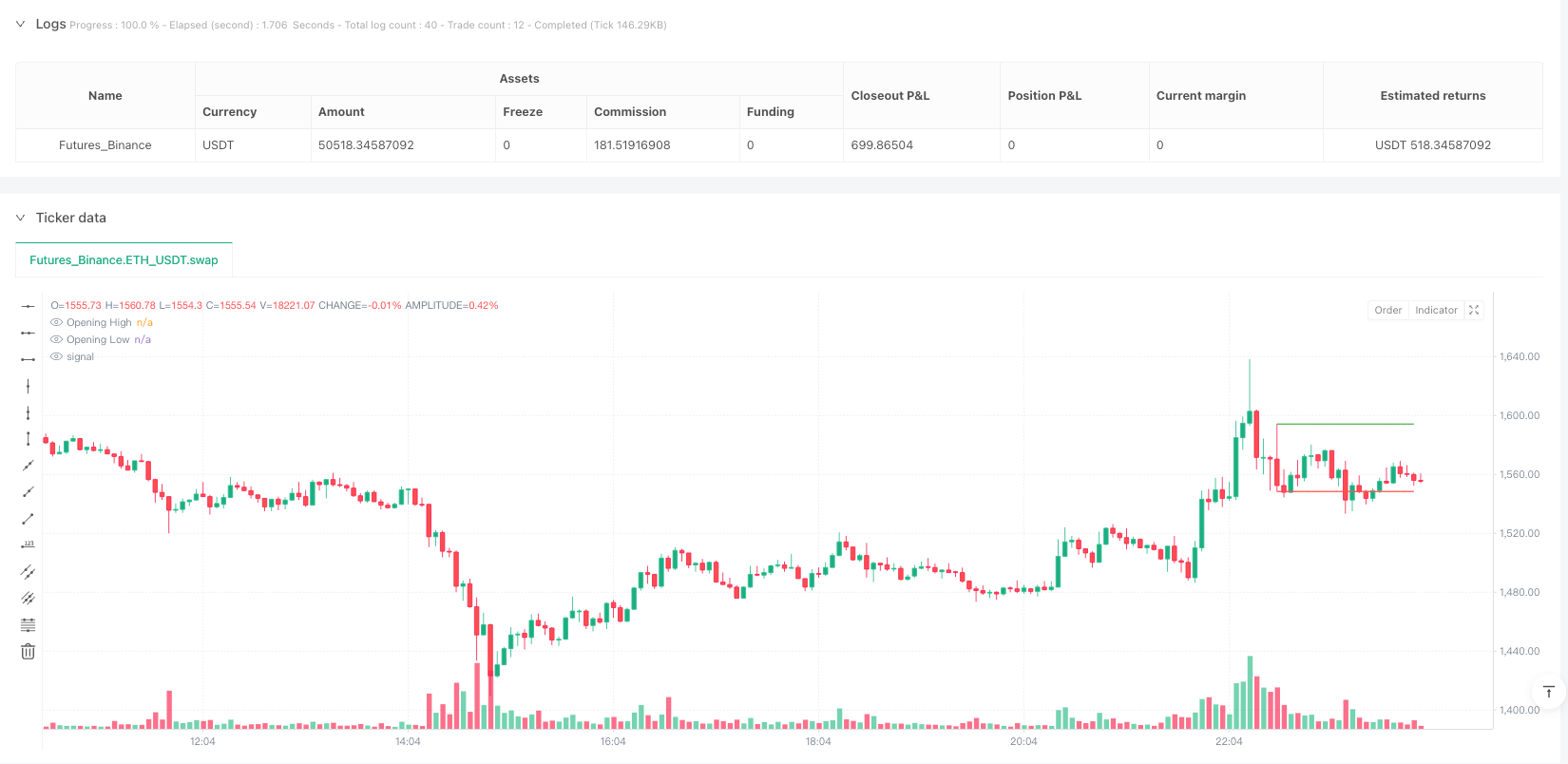
1. **开盘区间确立**: 捕捉美国东部时间9:30-9:35(开盘后首个5分钟)的高点和低点,形成"开盘区间"。
|
|
2. **方向识别**: 等待价格完全突破开盘区间(即蜡烛完全位于区间之上或之下),确认趋势方向。
|
|
3. **限价入场**: 一旦方向确认,不立即市价追入,而是在区间边缘(阻力变支撑或支撑变阻力位)放置限价订单,等待价格回调至区间边缘时入场。
|
|
4. **风险控制**: 止损设置在开盘区间的对面边缘,形成清晰的风险界限。
|
|
5. **止盈策略**: 基于止损距离乘以可配置的倍数(默认为2.0),建立动态止盈目标。如果价格在下单前已经超过计算的止盈目标,则采用价格极值作为止盈位。
|
|
6. **时间退出**: 如果交易未触发止盈或止损,在美国东部时间15:55自动平仓,避免隔夜风险。
|
|
|
|
策略实现中使用了Pine Script的状态管理机制,每个交易日开始时重置所有变量,确保不同交易日之间相互独立。通过限价订单机制,策略能够在趋势确认后,以更为优惠的价格入场,降低滑点影响并提高风险回报比。
|
|
|
|
#### 策略优势
|
|
|
|
经过代码深入分析,该策略具有以下显著优势:
|
|
|
|
1. **精准捕捉开盘动量**: 市场开盘后的前5分钟通常反映了大量订单积累和主要参与者的初始立场,该策略有效利用了这一高信息含量的时间窗口。
|
|
2. **限价入场降低成本**: 相比传统的市价突破入场,限价入场机制能够获得更优的入场价格,这对于缩小点差成本和提高整体策略表现至关重要。
|
|
3. **可视化交易区域**: 策略提供了清晰的视觉辅助,显示开盘区间和潜在的交易区域,帮助交易者直观理解市场结构。
|
|
4. **动态风险管理**: 止盈倍数可根据市场波动性进行调整,更好地适应不同市场环境。
|
|
5. **自动化操作流程**: 从入场识别到出场管理,整个交易过程实现全自动化,减少人为干预和情绪影响。
|
|
6. **日内交易避免隔夜风险**: 强制在收盘前平仓的机制有效规避了隔夜持仓可能带来的缺口风险。
|
|
7. **逻辑清晰可扩展**: 策略结构模块化,各个功能独立性强,便于未来进行策略优化和扩展。
|
|
|
|
#### 策略风险
|
|
|
|
尽管该策略设计合理,但仍存在以下潜在风险:
|
|
|
|
1. **区间过窄导致频繁误触发**: 如果开盘前5分钟波动极小,形成的区间过窄,可能导致止损位过近,增加被轻易触发的风险。解决方法:可增加最小区间宽度限制,或根据历史波动率动态调整区间。
|
|
|
|
2. **高波动市场下的滑点风险**: 虽然采用限价订单,但在极端波动市场中,价格可能快速穿越入场价位,导致订单未能成交。解决方法:可考虑增加备用的追踪入场机制。
|
|
|
|
3. **假突破陷阱**: 价格可能在突破开盘区间后快速回落,形成假突破。解决方法:可增加确认过滤器,如要求突破后的持续时间或突破力度达到某个阈值。
|
|
|
|
4. **固定时间窗口的局限性**: 不同交易日的市场活跃度可能存在差异,固定的5分钟开盘区间可能不总是最优。解决方法:可考虑根据波动率动态调整时间窗口长度。
|
|
|
|
5. **未考虑基本面冲击**: 策略纯技术导向,未考虑重大新闻或经济数据发布对市场的影响。解决方法:整合经济日历过滤功能,在重要数据公布日调整策略参数或暂停交易。
|
|
|
|
#### 策略优化方向
|
|
|
|
基于代码分析,该策略可在以下几个方向进行优化:
|
|
|
|
1. **自适应开盘区间**: 当前策略使用固定的5分钟时间窗口,可以改进为基于市场波动率动态调整开盘区间的时长。这样能更好地适应不同市场条件,在低波动日增加区间时长以捕捉更有意义的区间。
|
|
|
|
2. **多重确认机制**: 可以引入额外的技术指标(如成交量、RSI或移动平均线)作为突破确认条件,降低假突破风险。通过要求多重条件同时满足,能提高入场信号的可靠性。
|
|
|
|
3. **动态止盈优化**: 目前止盈设置为固定倍数,可以改进为基于ATR(平均真实波幅)的动态止盈,或实现追踪止盈功能,在趋势延续时锁定更多利润。
|
|
|
|
4. **市场状态过滤**: 增加对整体市场状态的评估,如区分盘整市场和趋势市场,在不同市场状态下采用不同的策略参数或暂停交易。
|
|
|
|
5. **多时间框架分析**: 整合更高时间框架的趋势方向判断,仅在日内趋势与更高时间框架趋势一致时入场,提高胜率。
|
|
|
|
6. **季节性优化**: 分析不同月份、星期几或特定市场事件前后的策略表现,针对不同时期定制参数设置。
|
|
|
|
7. **资金管理优化**: 当前策略使用固定的资金比例(默认100%),可以改进为基于历史表现和当前回撤状态动态调整仓位大小,实现更精细的风险控制。
|
|
|
|
#### 总结
|
|
|
|
多周期开盘区间突破策略(限价入场)是一套结合了技术分析、风险管理和执行优化的完整交易系统。通过捕捉开盘初期的市场动能并利用限价订单优化入场,在保持策略简洁性的同时实现了较高的执行效率。该策略特别适合日内交易者,尤其是那些寻求明确规则和自动化执行的交易者。
|
|
|
|
策略的主要优势在于其清晰的逻辑框架和全面的风险管理措施,包括预设止损、动态止盈和时间退出机制。同时,通过视觉化展示交易区域,提高了策略的可解释性和用户体验。
|
|
|
|
虽然该策略基本框架已经相当完善,但仍有进一步优化空间,特别是在区间定义的自适应性、入场确认的可靠性以及止盈机制的灵活性方面。通过持续的参数优化和功能扩展,该策略有潜力适应不同市场环境,提供更为稳定的长期表现。
|
|
|
|
最后,需要强调的是,尽管该策略具有自动化特性,但仍需结合市场经验和风险管理原则使用,尤其是在高波动或重大市场事件期间。完善的回测和前向验证是成功实施该策略的关键步骤。 ||
|
|
|
|
|
|
#### Strategy Overview
|
|
|
|
The Multi-Timeframe Opening Range Breakout Strategy with Limit Entry is a specialized intraday trading system designed to capture early market momentum. This strategy is based on the price range formed during the first 5 minutes of market open (9:30-9:35 EST) and identifies trend direction through breakouts from this range. Unlike traditional breakout strategies, this system employs limit orders at the range boundaries for entry, improving fill probability while securing more favorable entry prices. The strategy features automatic stop-loss placement, configurable take-profit multipliers, and forced position closure before market end, creating a comprehensive risk management framework.
|
|
|
|
#### Strategy Principles
|
|
|
|
The core logic of the strategy follows these key steps:
|
|
|
|
1. **Opening Range Establishment**: Capturing the high and low during the first 5 minutes after market open (9:30-9:35 EST) to form the "opening range."
|
|
2. **Direction Identification**: Waiting for price to completely break out of the opening range (with candles fully positioned above or below the range) to confirm the trend direction.
|
|
3. **Limit Entry**: Once direction is confirmed, rather than chasing price with market orders, limit orders are placed at the range boundary (resistance becoming support or support becoming resistance), awaiting price retracement to the range edge for entry.
|
|
4. **Risk Control**: Stop-loss is set at the opposite boundary of the opening range, creating a clear risk boundary.
|
|
5. **Take-Profit Strategy**: Based on the stop-loss distance multiplied by a configurable factor (default 2.0), establishing a dynamic profit target. If price has already exceeded the calculated target before order placement, the price extreme is used as the take-profit level.
|
|
6. **Time-Based Exit**: If a trade has not triggered either take-profit or stop-loss, positions are automatically closed at 15:55 EST to avoid overnight risk.
|
|
|
|
The strategy implementation uses Pine Script's state management mechanism, resetting all variables at the beginning of each trading day to ensure independence between different trading sessions. Through the limit order mechanism, the strategy can enter at more favorable prices after trend confirmation, reducing the impact of slippage and improving the risk-reward ratio.
|
|
|
|
#### Strategy Advantages
|
|
|
|
Through detailed code analysis, this strategy demonstrates the following significant advantages:
|
|
|
|
1. **Precise Capture of Opening Momentum**: The first 5 minutes after market open typically reflect the accumulation of orders and the initial positions of major participants, and this strategy effectively utilizes this time window rich in information content.
|
|
2. **Cost Reduction Through Limit Entries**: Compared to traditional market order breakout entries, the limit entry mechanism obtains more favorable entry prices, which is crucial for reducing spread costs and improving overall strategy performance.
|
|
3. **Visualization of Trading Zones**: The strategy provides clear visual aids displaying the opening range and potential trading areas, helping traders intuitively understand market structure.
|
|
4. **Dynamic Risk Management**: The take-profit multiplier can be adjusted according to market volatility, better adapting to different market environments.
|
|
5. **Automated Operation Process**: From entry identification to exit management, the entire trading process is fully automated, reducing human intervention and emotional influence.
|
|
6. **Intraday Trading Avoids Overnight Risk**: The forced position closure mechanism before market close effectively avoids potential gap risks associated with overnight positions.
|
|
7. **Clear and Extensible Logic**: The strategy structure is modular with strong independence between functions, facilitating future strategy optimization and extension.
|
|
|
|
#### Strategy Risks
|
|
|
|
Despite the strategy's logical design, the following potential risks exist:
|
|
|
|
1. **Narrow Range Triggering False Signals**: If the first 5 minutes show minimal volatility, resulting in a narrow range, it may lead to close stop-loss placement, increasing the risk of premature triggering. Solution: Add minimum range width restrictions or dynamically adjust the range based on historical volatility.
|
|
|
|
2. **Slippage Risk in Highly Volatile Markets**: Although limit orders are used, in extremely volatile markets, prices may rapidly cross entry levels, causing orders to remain unfilled. Solution: Consider adding backup tracking entry mechanisms.
|
|
|
|
3. **False Breakout Traps**: Prices may quickly retreat after breaking the opening range, creating false breakouts. Solution: Add confirmation filters, such as requiring sustained breakout duration or breakout strength to reach a certain threshold.
|
|
|
|
4. **Limitations of Fixed Time Windows**: Market activity may vary across different trading days, and the fixed 5-minute opening range may not always be optimal. Solution: Consider dynamically adjusting the time window length based on volatility.
|
|
|
|
5. **Lack of Fundamental Impact Consideration**: The strategy is purely technical and does not account for the impact of major news or economic data releases. Solution: Integrate economic calendar filtering functionality to adjust strategy parameters or pause trading on important data release days.
|
|
|
|
#### Strategy Optimization Directions
|
|
|
|
Based on code analysis, the strategy can be optimized in the following directions:
|
|
|
|
1. **Adaptive Opening Range**: The current strategy uses a fixed 5-minute time window, which could be improved to dynamically adjust the opening range duration based on market volatility. This would better adapt to different market conditions, increasing range duration on low volatility days to capture more meaningful ranges.
|
|
|
|
2. **Multiple Confirmation Mechanisms**: Additional technical indicators (such as volume, RSI, or moving averages) could be introduced as breakout confirmation conditions to reduce false breakout risk. By requiring multiple conditions to be simultaneously satisfied, entry signal reliability could be improved.
|
|
|
|
3. **Dynamic Take-Profit Optimization**: Currently, take-profit is set as a fixed multiplier, which could be improved to ATR-based (Average True Range) dynamic take-profit, or implementing trailing stop functions to lock in more profit during trend continuation.
|
|
|
|
4. **Market State Filtering**: Add assessment of overall market state, such as distinguishing between ranging and trending markets, adopting different strategy parameters or pausing trading under different market conditions.
|
|
|
|
5. **Multi-Timeframe Analysis**: Integrate higher timeframe trend direction judgment, only entering when the intraday trend aligns with higher timeframe trends, improving win rates.
|
|
|
|
6. **Seasonality Optimization**: Analyze strategy performance across different months, days of the week, or before/after specific market events, customizing parameter settings for different periods.
|
|
|
|
7. **Capital Management Optimization**: The current strategy uses a fixed capital percentage (default 100%), which could be improved to dynamically adjust position size based on historical performance and current drawdown status, implementing more refined risk control.
|
|
|
|
#### Conclusion
|
|
|
|
The Multi-Timeframe Opening Range Breakout Strategy with Limit Entry is a complete trading system combining technical analysis, risk management, and execution optimization. By capturing early market momentum and utilizing limit orders to optimize entry, it achieves high execution efficiency while maintaining strategic simplicity. This strategy is particularly suitable for intraday traders, especially those seeking clear rules and automated execution.
|
|
|
|
The main advantages of the strategy lie in its clear logical framework and comprehensive risk management measures, including preset stop-losses, dynamic take-profits, and time-based exit mechanisms. At the same time, by visually displaying trading zones, it improves strategy explainability and user experience.
|
|
|
|
Although the basic framework of this strategy is quite comprehensive, there remains room for further optimization, especially in terms of adaptability of range definition, reliability of entry confirmation, and flexibility of take-profit mechanisms. Through continuous parameter optimization and functional extension, this strategy has the potential to adapt to different market environments, providing more stable long-term performance.
|
|
|
|
Finally, it should be emphasized that despite the strategy's automated features, it still needs to be used in conjunction with market experience and risk management principles, especially during high volatility periods or major market events. Thorough backtesting and forward validation are key steps to successfully implementing this strategy.[/trans]
|
|
|
|
|
|
|
|
> Source (PineScript)
|
|
|
|
``` pinescript
|
|
/*backtest
|
|
start: 2025-04-01 00:00:00
|
|
end: 2025-04-08 00:00:00
|
|
period: 4m
|
|
basePeriod: 4m
|
|
exchanges: [{"eid":"Futures_Binance","currency":"ETH_USDT"}]
|
|
*/
|
|
|
|
//@version=5
|
|
strategy("Opening Range Breakout (Limit Entry)", overlay=true, default_qty_type=strategy.percent_of_equity, default_qty_value=100)
|
|
|
|
// === Parameters ===
|
|
startHour = 9
|
|
startMinute = 30
|
|
endHour = 9
|
|
endMinute = 35
|
|
closeHour = 15
|
|
closeMinute = 55
|
|
|
|
// Take Profit Multiplier
|
|
tpMultiplier = input.float(2.0, title="Take Profit Multiplier", step=0.1)
|
|
|
|
// === Time Filters ===
|
|
sessionStart = timestamp("America/New_York", year, month, dayofmonth, startHour, startMinute)
|
|
sessionEnd = timestamp("America/New_York", year, month, dayofmonth, endHour, endMinute)
|
|
closeTime = timestamp("America/New_York", year, month, dayofmonth, closeHour, closeMinute)
|
|
barTime = time
|
|
|
|
inOpeningRange = barTime >= sessionStart and barTime <= sessionEnd
|
|
rangeLockedTime = barTime > sessionEnd
|
|
exitTime = (time_close == timestamp("America/New_York", year, month, dayofmonth, closeHour, closeMinute))
|
|
|
|
// === Session Day Tracking ===
|
|
var int sessionKey = na
|
|
currentKey = year * 10000 + month * 100 + dayofmonth
|
|
newDay = na(sessionKey) or sessionKey != currentKey
|
|
if newDay
|
|
sessionKey := currentKey
|
|
|
|
// === Opening Range and State Variables ===
|
|
var float openingHigh = na
|
|
var float openingLow = na
|
|
var bool directionSet = false
|
|
var bool directionUp = false
|
|
var float entryPrice = na
|
|
var float stop = na
|
|
var float target = na
|
|
var float interimMax = na
|
|
var float interimMin = na
|
|
var bool orderPlaced = false
|
|
var bool rangeLocked = false
|
|
var int rangeStartIndex = na
|
|
|
|
// === Daily Reset & Opening Range Update ===
|
|
if newDay
|
|
openingHigh := na
|
|
openingLow := na
|
|
directionSet := false
|
|
directionUp := false
|
|
entryPrice := na
|
|
stop := na
|
|
target := na
|
|
interimMax := na
|
|
interimMin := na
|
|
orderPlaced := false
|
|
rangeLocked := false
|
|
rangeStartIndex := na
|
|
|
|
if inOpeningRange and not rangeLocked
|
|
openingHigh := na(openingHigh) ? high : openingHigh
|
|
openingLow := na(openingLow) ? low : openingLow
|
|
rangeStartIndex := na(rangeStartIndex) ? bar_index : rangeStartIndex
|
|
|
|
// === Lock the range after the window ===
|
|
if rangeLockedTime and not rangeLocked and not na(openingHigh) and not na(openingLow)
|
|
rangeLocked := true
|
|
|
|
// === Detect first candle fully outside the opening range ===
|
|
outOfRange = rangeLocked and not directionSet and ((low > openingHigh and high > openingHigh) or (high < openingLow and low < openingLow))
|
|
|
|
if outOfRange
|
|
directionUp := low > openingHigh
|
|
directionSet := true
|
|
|
|
// === Entry Setup ===
|
|
var box tradeBox = na
|
|
|
|
if directionSet and not orderPlaced
|
|
interimMax := high
|
|
interimMin := low
|
|
if directionUp
|
|
entryPrice := openingHigh
|
|
stop := openingLow
|
|
target := entryPrice + tpMultiplier * (entryPrice - stop)
|
|
if interimMax > target
|
|
target := interimMax
|
|
strategy.entry("Long", strategy.long, limit=entryPrice)
|
|
strategy.exit("TP/SL", from_entry="Long", limit=target, stop=stop)
|
|
orderPlaced := true
|
|
else
|
|
entryPrice := openingLow
|
|
stop := openingHigh
|
|
target := entryPrice - tpMultiplier * (stop - entryPrice)
|
|
if interimMin < target
|
|
target := interimMin
|
|
strategy.entry("Short", strategy.short, limit=entryPrice)
|
|
strategy.exit("TP/SL", from_entry="Short", limit=target, stop=stop)
|
|
orderPlaced := true
|
|
|
|
// === Exit near end of day ===
|
|
if exitTime and orderPlaced
|
|
strategy.close_all(comment="EOD Close")
|
|
|
|
// === Plotting ===
|
|
plot(openingHigh, color=color.green, title="Opening High")
|
|
plot(openingLow, color=color.red, title="Opening Low")
|
|
|
|
|
|
|
|
|
|
```
|
|
|
|
> Detail
|
|
|
|
https://www.fmz.com/strategy/489895
|
|
|
|
> Last Modified
|
|
|
|
2025-04-09 17:18:24
|