
14 KiB
Name
多周期市场疲劳度分析策略与风险管理系统-Multi-Timeframe-Market-Exhaustion-Analysis-Strategy-with-Risk-Management-System
Author
ChaoZhang
Strategy Description
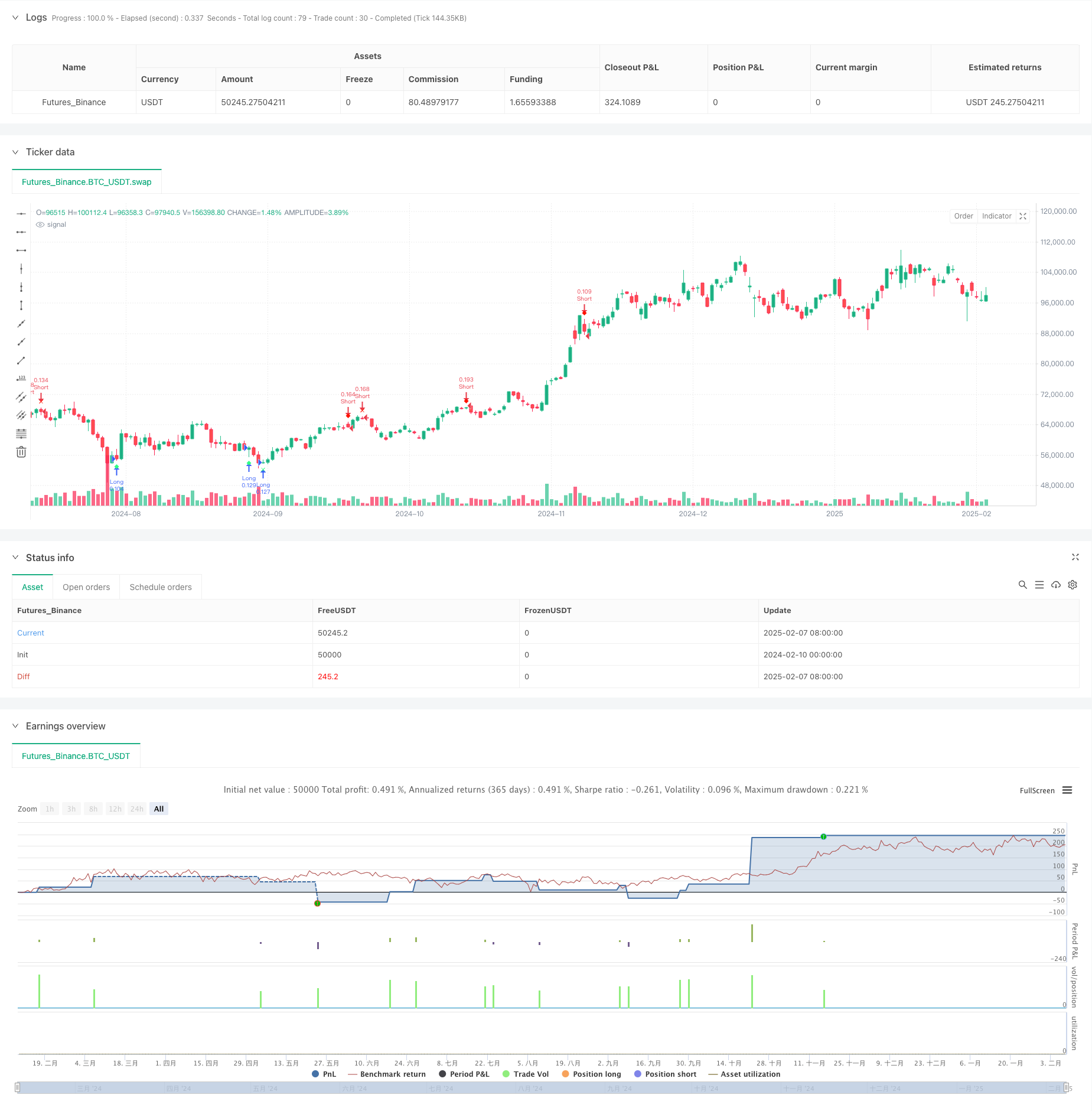
[trans]
概述
本策略是一个基于市场疲劳度分析的多层级交易系统,通过对价格动态的深入分析来识别市场可能出现转折的关键时刻。该策略结合了动态的风险管理机制,包括资金管理、止损优化以及回撤控制等多个维度,形成了一个完整的交易决策框架。
策略原理
策略核心是通过监测价格连续运动来判断市场疲劳程度。具体来说:
- 通过比较当前收盘价与之前第4根K线的收盘价来确定趋势方向
- 设置了三个不同强度级别(9/12/14)的信号触发点
- 当价格持续朝一个方向运动时,系统会累积信号计数
- 一旦达到预设的信号强度阈值,系统会给出相应级别的交易信号
- 整合了基于ATR的动态止损机制和风险回报比的仓位管理系统
策略优势
- 多层级信号系统提供了不同程度的交易机会识别
- 通过资金管理和风险控制机制来保护资金安全
- 采用ATR动态止损,能更好地适应市场波动
- 引入了追踪止损机制,可以更好地锁定利润
- 设置了最大回撤保护,避免过度损失
- 系统具有良好的可扩展性和参数优化空间
策略风险
- 在震荡市场中可能产生错误信号
- 固定的信号阈值可能不适合所有市场环境
- 快速反转行情下止损可能较大
- 需要较多的参数优化工作
- 资金管理系统可能在某些情况下限制获利空间
策略优化方向
- 引入市场波动率过滤机制,在不同波动环境下调整信号阈值
- 增加成交量分析维度,提高信号可靠性
- 开发自适应的参数优化系统
- 加入更多的市场环境分析指标
- 优化资金管理系统,使其更具灵活性
总结
该策略通过多层级的疲劳度分析和完善的风险管理系统,为交易者提供了一个系统化的交易框架。虽然存在一些需要优化的地方,但整体设计理念完整,具有实际应用价值。建议在实盘中采用保守的资金管理策略,并持续进行参数优化和系统改进。
||
Overview
This strategy is a multi-level trading system based on market exhaustion analysis, designed to identify potential market turning points through in-depth price dynamics analysis. It incorporates dynamic risk management mechanisms, including money management, stop-loss optimization, and drawdown control, forming a comprehensive trading decision framework.
Strategy Principles
The core mechanism analyzes market exhaustion through continuous price movement monitoring. Specifically:
- Determines trend direction by comparing current closing price with the 4th previous candle
- Implements three different signal strength levels (9/12/14)
- Accumulates signal counts when price moves consistently in one direction
- Triggers corresponding level signals when preset thresholds are reached
- Integrates ATR-based dynamic stop-loss and position sizing based on risk-reward ratio
Strategy Advantages
- Multi-level signal system provides varied trading opportunity identification
- Protects capital through money management and risk control mechanisms
- Uses ATR-based dynamic stop-loss for better market adaptation
- Incorporates trailing stop mechanism for better profit protection
- Implements maximum drawdown protection to prevent excessive losses
- System offers good extensibility and parameter optimization potential
Strategy Risks
- May generate false signals in ranging markets
- Fixed signal thresholds might not suit all market conditions
- Potential larger stops in quick reversal scenarios
- Requires significant parameter optimization work
- Money management system may limit profit potential in certain situations
Optimization Directions
- Introduce volatility filtering to adjust signal thresholds in different market conditions
- Add volume analysis dimension to improve signal reliability
- Develop adaptive parameter optimization system
- Incorporate additional market environment indicators
- Optimize money management system for greater flexibility
Summary
The strategy provides a systematic trading framework through multi-level exhaustion analysis and comprehensive risk management. While there are areas for optimization, the overall design is complete and practically applicable. It is recommended to use conservative money management in live trading while continuously optimizing parameters and improving the system.[/trans]
Source (PineScript)
/*backtest
start: 2024-02-10 00:00:00
end: 2025-02-08 08:00:00
period: 1d
basePeriod: 1d
exchanges: [{"eid":"Futures_Binance","currency":"BTC_USDT"}]
*/

//@version=6
strategy(title="Improved Exhaustion Signal with Risk Management and Drawdown Control", shorttitle="Exhaustion Signal", overlay=true)

// ———————————————— INPUT SETTINGS ————————————————
showLevel1 = input.bool(true, 'Show Level 1 Signals')
showLevel2 = input.bool(true, 'Show Level 2 Signals')
showLevel3 = input.bool(true, 'Show Level 3 Signals')

// Thresholds for signal strength levels
level1 = 9
level2 = 12
level3 = 14

// Risk management inputs
riskPercentage = input.float(1.0, title="Risk Percentage per Trade", minval=0.1, maxval=5.0)  // Risk per trade in percentage
riskRewardRatio = input.float(2.0, title="Risk-to-Reward Ratio", minval=1.0, maxval=5.0)  // Reward-to-risk ratio
trailingStop = input.bool(true, title="Enable Trailing Stop")  // Enable/Disable trailing stop
trailingStopDistance = input.int(50, title="Trailing Stop Distance (in points)", minval=1)  // Distance for trailing stop

// Drawdown protection settings
maxDrawdown = input.float(10.0, title="Max Drawdown Percentage", minval=0.1, maxval=50.0)  // Max allowable drawdown before stopping trading

// ———————————————— GLOBAL VARIABLES ————————————————
var int cycle = 0
var int bullishSignals = 0
var int bearishSignals = 0
var float equityHigh = na  // Initialize as undefined

// Track equity drawdown
if (na(equityHigh) or strategy.equity > equityHigh)
    equityHigh := strategy.equity

drawdownPercent = 100 * (equityHigh - strategy.equity) / equityHigh

// Stop trading if drawdown exceeds the limit
if drawdownPercent >= maxDrawdown
    strategy.close_all()

// ———————————————— FUNCTION: RESET & IMMEDIATE RECHECK USING AN ARRAY RETURN ————————————————
f_resetAndRecheck(_bullish, _bearish, _cycle, _close, _close4) =>
    newBullish = _bullish
    newBearish = _bearish
    newCycle = _cycle

    // Reset cycle if necessary based on price action
    newBullish := 0
    newBearish := 0
    newCycle := 0

    if _close < _close4
        newBullish := 1
        newCycle := newBullish
    else if _close > _close4
        newBearish := 1
        newCycle := newBearish

    resultArray = array.new_int(3, 0)
    array.set(resultArray, 0, newBullish)
    array.set(resultArray, 1, newBearish)
    array.set(resultArray, 2, newCycle)

    resultArray

// ———————————————— EXHAUSTION LOGIC ————————————————
if cycle < 9
    // Bullish cycle: close < close[4]
    if close < close[4]
        bullishSignals += 1
        bearishSignals := 0
        cycle := bullishSignals
    // Bearish cycle: close > close[4]
    else if close > close[4]
        bearishSignals += 1
        bullishSignals := 0
        cycle := bearishSignals
    else
        newVals = f_resetAndRecheck(bullishSignals, bearishSignals, cycle, close, close[4])
        bullishSignals := array.get(newVals, 0)
        bearishSignals := array.get(newVals, 1)
        cycle := array.get(newVals, 2)
else
    // ——— BULLISH checks ———
    if bullishSignals > 0
        if bullishSignals < (level3 - 1)
            if close < close[3]
                bullishSignals += 1
                bearishSignals := 0
                cycle := bullishSignals
            else
                newVals = f_resetAndRecheck(bullishSignals, bearishSignals, cycle, close, close[4])
                bullishSignals := array.get(newVals, 0)
                bearishSignals := array.get(newVals, 1)
                cycle := array.get(newVals, 2)
        else if bullishSignals == (level3 - 1)
            if close < close[2]
                bullishSignals := level3
                cycle := bullishSignals
            else
                newVals = f_resetAndRecheck(bullishSignals, bearishSignals, cycle, close, close[4])
                bullishSignals := array.get(newVals, 0)
                bearishSignals := array.get(newVals, 1)
                cycle := array.get(newVals, 2)
        else
            newVals = f_resetAndRecheck(bullishSignals, bearishSignals, cycle, close, close[4])
            bullishSignals := array.get(newVals, 0)
            bearishSignals := array.get(newVals, 1)
            cycle := array.get(newVals, 2)
    // ——— BEARISH checks ———
    else if bearishSignals > 0
        if bearishSignals < (level3 - 1)
            if close > close[3]
                bearishSignals += 1
                bullishSignals := 0
                cycle := bearishSignals
            else
                newVals = f_resetAndRecheck(bullishSignals, bearishSignals, cycle, close, close[4])
                bullishSignals := array.get(newVals, 0)
                bearishSignals := array.get(newVals, 1)
                cycle := array.get(newVals, 2)
        else if bearishSignals == (level3 - 1)
            if close > close[2]
                bearishSignals := level3
                cycle := bearishSignals
            else
                newVals = f_resetAndRecheck(bullishSignals, bearishSignals, cycle, close, close[4])
                bullishSignals := array.get(newVals, 0)
                bearishSignals := array.get(newVals, 1)
                cycle := array.get(newVals, 2)
        else
            newVals = f_resetAndRecheck(bullishSignals, bearishSignals, cycle, close, close[4])
            bullishSignals := array.get(newVals, 0)
            bearishSignals := array.get(newVals, 1)
            cycle := array.get(newVals, 2)
    else
        newVals = f_resetAndRecheck(bullishSignals, bearishSignals, cycle, close, close[4])
        bullishSignals := array.get(newVals, 0)
        bearishSignals := array.get(newVals, 1)
        cycle := array.get(newVals, 2)

// ———————————————— SIGNAL FLAGS ————————————————
bullishLevel1 = showLevel1 and (bullishSignals == level1)
bearishLevel1 = showLevel1 and (bearishSignals == level1)

bullishLevel2 = showLevel2 and (bullishSignals == level2)
bearishLevel2 = showLevel2 and (bearishSignals == level2)

bullishLevel3 = showLevel3 and (bullishSignals == level3)
bearishLevel3 = showLevel3 and (bearishSignals == level3)

// ———————————————— PLOT SIGNALS ————————————————
plotshape(bullishLevel1, style=shape.diamond, color=color.new(#30ff85, 0), textcolor=color.white, size=size.tiny, location=location.belowbar, title="Level 1 Bullish Signal")
plotshape(bearishLevel1, style=shape.diamond, color=color.new(#ff1200, 0), textcolor=color.white, size=size.tiny, location=location.abovebar, title="Level 1 Bearish Signal")

plotshape(bullishLevel2, style=shape.xcross, color=color.new(#30ff85, 0), textcolor=color.white, size=size.tiny, location=location.belowbar, title="Level 2 Bullish Signal")
plotshape(bearishLevel2, style=shape.xcross, color=color.new(#ff1200, 0), textcolor=color.white, size=size.tiny, location=location.abovebar, title="Level 2 Bearish Signal")

plotshape(bullishLevel3, style=shape.flag, color=color.new(#30ff85, 0), textcolor=color.white, size=size.tiny, location=location.belowbar, title="Level 3 Bullish Signal")
plotshape(bearishLevel3, style=shape.flag, color=color.new(#ff1200, 0), textcolor=color.white, size=size.tiny, location=location.abovebar, title="Level 3 Bearish Signal")

// ———————————————— RESET AFTER LEVEL 3 ————————————————
if bullishSignals == level3 or bearishSignals == level3
    bullishSignals := 0
    bearishSignals := 0
    cycle := 0

// ———————————————— BACKTEST LOGIC ————————————————
// Set up basic long and short entry conditions based on signal levels
longCondition = bullishLevel1 or bullishLevel2 or bullishLevel3
shortCondition = bearishLevel1 or bearishLevel2 or bearishLevel3

// Calculate position size based on risk percentage
equity = strategy.equity
riskAmount = equity * riskPercentage / 100
atr = ta.atr(14)
stopLossLevel = atr * 1.5  // Using ATR for dynamic stop-loss
positionSize = riskAmount / stopLossLevel

// Initialize strategy logic
if longCondition
    strategy.entry("Long", strategy.long, qty=positionSize)

if shortCondition
    strategy.entry("Short", strategy.short, qty=positionSize)

// ———————————————— CONCRETE STOP LOSS AND TAKE PROFIT ————————————————
stopLoss = stopLossLevel
takeProfit = stopLoss * riskRewardRatio

// Apply stop loss and take profit to the strategy based on concrete price levels
strategy.exit("Exit Long", from_entry="Long", stop=close - stopLoss, limit=close + takeProfit)
strategy.exit("Exit Short", from_entry="Short", stop=close + stopLoss, limit=close - takeProfit)

// ———————————————— TRAILING STOP ————————————————
if trailingStop
    strategy.exit("Exit Long Trailing", from_entry="Long", trail_price=close - trailingStopDistance, trail_offset=trailingStopDistance)
    strategy.exit("Exit Short Trailing", from_entry="Short", trail_price=close + trailingStopDistance, trail_offset=trailingStopDistance)
Detail
https://www.fmz.com/strategy/481346
Last Modified
2025-02-10 14:27:15