
202 lines
8.3 KiB
Markdown
202 lines
8.3 KiB
Markdown
|
|
> Name
|
|
|
|
多周期均线趋势跟踪与成交量加权定价交叉策略-Multi-Period-Moving-Average-Trend-Following-with-VWAP-Cross-Strategy
|
|
|
|
> Author
|
|
|
|
ChaoZhang
|
|
|
|
> Strategy Description
|
|
|
|
|
|
|
|
[trans]
|
|
#### 概述
|
|
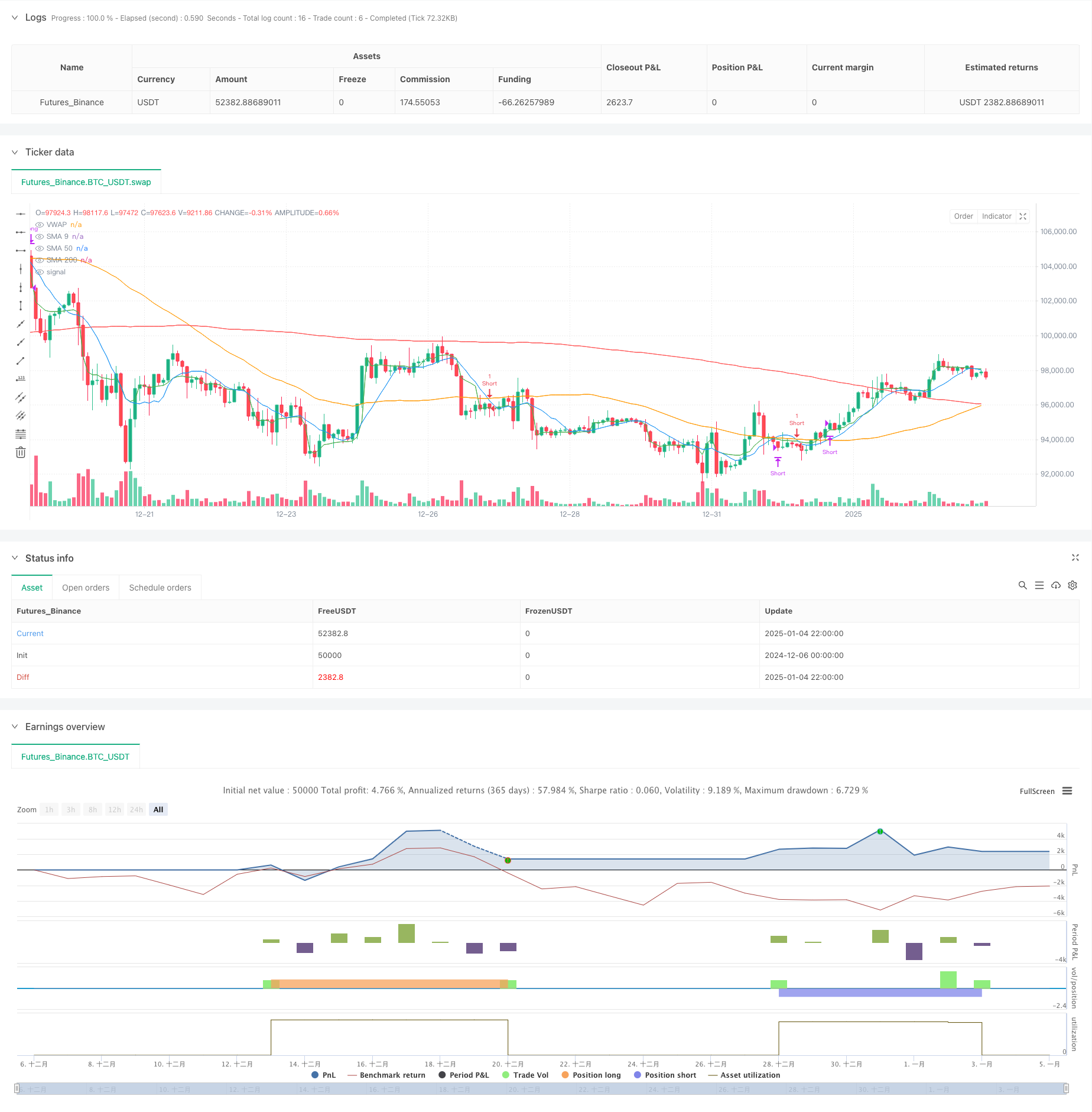
该策略是一个结合了多周期均线和成交量加权平均价格(VWAP)的趋势跟踪系统。策略通过9周期、50周期和200周期三条简单移动平均线(SMA)的交叉来识别趋势方向,并结合VWAP作为价格强度确认指标,实现多维度的交易信号确认机制。该策略既适用于日内交易(1分钟图表),也适用于短线交易(1小时图表)。
|
|
|
|
#### 策略原理
|
|
策略的核心逻辑建立在以下几个关键要素上:
|
|
1. 利用SMA9与SMA50的交叉来触发交易信号
|
|
2. 使用SMA200作为长期趋势过滤器
|
|
3. 结合VWAP进行价格强度确认
|
|
|
|
多头入场条件需同时满足:
|
|
- SMA9向上穿越SMA50
|
|
- SMA200低于SMA50(确认上升趋势)
|
|
- 收盘价高于VWAP(确认价格强度)
|
|
|
|
空头入场条件需同时满足:
|
|
- SMA9向下穿越SMA50
|
|
- SMA200高于SMA50(确认下降趋势)
|
|
- 收盘价低于VWAP(确认价格弱势)
|
|
|
|
#### 策略优势
|
|
1. 多重确认机制:通过三重均线系统和VWAP的配合,大大降低了假突破的风险
|
|
2. 适应性强:策略可以在不同的时间周期中使用,适合不同的交易风格
|
|
3. 趋势过滤:通过SMA200作为趋势过滤器,避免了在横盘市场中频繁交易
|
|
4. 量价结合:引入VWAP指标,实现了价格和成交量的有机结合
|
|
5. 执行简单:策略逻辑清晰,易于理解和执行
|
|
6. 风险可控:有明确的止损条件,能够及时止损出场
|
|
|
|
#### 策略风险
|
|
1. 滞后性风险:移动平均线本身具有滞后性,可能导致入场和出场时机延迟
|
|
2. 震荡市风险:在横盘震荡市场中可能产生频繁的假信号
|
|
3. 趋势反转风险:在趋势快速反转时,可能会产生较大回撤
|
|
4. 参数敏感性:不同市场环境下最优参数可能存在差异
|
|
|
|
风险控制建议:
|
|
- 建议结合其他技术指标进行交易确认
|
|
- 设置适当的止损位置
|
|
- 根据不同市场周期调整参数
|
|
- 控制每次交易的资金比例
|
|
|
|
#### 策略优化方向
|
|
1. 动态参数优化:
|
|
- 可以根据市场波动率动态调整均线周期
|
|
- 引入自适应参数机制
|
|
|
|
2. 信号过滤增强:
|
|
- 增加成交量确认机制
|
|
- 添加波动率过滤器
|
|
- 结合价格形态分析
|
|
|
|
3. 风险管理优化:
|
|
- 实现动态仓位管理
|
|
- 优化止损止盈机制
|
|
- 加入回撤控制
|
|
|
|
4. 市场适应性增强:
|
|
- 增加市场环境识别机制
|
|
- 针对不同市场状态采用不同的参数设置
|
|
|
|
#### 总结
|
|
这是一个结合了多周期均线和VWAP的完整交易系统,通过多重确认机制提供了较为可靠的交易信号。策略的优势在于逻辑清晰、易于执行,同时具有良好的风险控制能力。虽然存在一定的滞后性和参数敏感性风险,但通过建议的优化方向可以进一步提升策略的稳定性和适应性。该策略适合作为一个基础框架,交易者可以根据自己的交易风格和市场环境进行个性化调整。
|
|
|
|
||
|
|
|
|
#### Overview
|
|
This strategy is a trend following system that combines multiple period moving averages with Volume Weighted Average Price (VWAP). The strategy identifies trend direction through the crossover of three Simple Moving Averages (SMA) - 9-period, 50-period, and 200-period, while using VWAP as a price strength confirmation indicator, implementing a multi-dimensional trading signal confirmation mechanism. The strategy is suitable for both intraday trading (1-minute chart) and swing trading (1-hour chart).
|
|
|
|
#### Strategy Principles
|
|
The core logic of the strategy is built on several key elements:
|
|
1. Using SMA9 and SMA50 crossover to trigger trading signals
|
|
2. Using SMA200 as a long-term trend filter
|
|
3. Incorporating VWAP for price strength confirmation
|
|
|
|
Long entry conditions require:
|
|
- SMA9 crosses above SMA50
|
|
- SMA200 is below SMA50 (confirming uptrend)
|
|
- Closing price is above VWAP (confirming price strength)
|
|
|
|
Short entry conditions require:
|
|
- SMA9 crosses below SMA50
|
|
- SMA200 is above SMA50 (confirming downtrend)
|
|
- Closing price is below VWAP (confirming price weakness)
|
|
|
|
#### Strategy Advantages
|
|
1. Multiple confirmation mechanism: The triple moving average system combined with VWAP greatly reduces false breakout risks
|
|
2. High adaptability: The strategy can be used across different timeframes, suitable for various trading styles
|
|
3. Trend filtering: Using SMA200 as a trend filter avoids frequent trading in ranging markets
|
|
4. Volume-price integration: Incorporating VWAP achieves organic combination of price and volume
|
|
5. Simple execution: Strategy logic is clear, easy to understand and implement
|
|
6. Controlled risk: Clear stop-loss conditions enable timely exit
|
|
|
|
#### Strategy Risks
|
|
1. Lag risk: Moving averages inherently have lag, which may delay entry and exit timing
|
|
2. Consolidation risk: May generate frequent false signals in ranging markets
|
|
3. Trend reversal risk: May experience significant drawdowns during rapid trend reversals
|
|
4. Parameter sensitivity: Optimal parameters may vary across different market conditions
|
|
|
|
Risk control suggestions:
|
|
- Recommend combining other technical indicators for trade confirmation
|
|
- Set appropriate stop-loss levels
|
|
- Adjust parameters according to different market cycles
|
|
- Control position size for each trade
|
|
|
|
#### Strategy Optimization Directions
|
|
1. Dynamic parameter optimization:
|
|
- Dynamically adjust moving average periods based on market volatility
|
|
- Introduce adaptive parameter mechanisms
|
|
|
|
2. Signal filtering enhancement:
|
|
- Add volume confirmation mechanism
|
|
- Implement volatility filters
|
|
- Incorporate price pattern analysis
|
|
|
|
3. Risk management optimization:
|
|
- Implement dynamic position sizing
|
|
- Optimize stop-loss and take-profit mechanisms
|
|
- Add drawdown control
|
|
|
|
4. Market adaptability enhancement:
|
|
- Add market condition identification mechanism
|
|
- Apply different parameter settings for different market states
|
|
|
|
#### Summary
|
|
This is a complete trading system combining multiple period moving averages and VWAP, providing reliable trading signals through multiple confirmation mechanisms. The strategy's strengths lie in its clear logic, ease of execution, and good risk control capabilities. While it has certain risks related to lag and parameter sensitivity, these can be addressed through the suggested optimization directions to further enhance stability and adaptability. The strategy serves as a solid foundation framework that traders can customize according to their trading style and market environment.[/trans]
|
|
|
|
|
|
|
|
> Source (PineScript)
|
|
|
|
``` pinescript
|
|
/*backtest
|
|
start: 2024-12-06 00:00:00
|
|
end: 2025-01-05 00:00:00
|
|
period: 2h
|
|
basePeriod: 2h
|
|
exchanges: [{"eid":"Futures_Binance","currency":"BTC_USDT"}]
|
|
*/
|
|
|
|
//@version=5
|
|
strategy("SMA Crossover Strategy with VWAP", overlay=true)
|
|
|
|
// Input lengths for SMAs
|
|
sma9Length = 9
|
|
sma50Length = 50
|
|
sma200Length = 200
|
|
|
|
// Calculate SMAs
|
|
sma9 = ta.sma(close, sma9Length) // 9-period SMA
|
|
sma50 = ta.sma(close, sma50Length) // 50-period SMA
|
|
sma200 = ta.sma(close, sma200Length) // 200-period SMA
|
|
|
|
// Calculate VWAP
|
|
vwapValue = ta.vwap(close)
|
|
|
|
// Long entry condition: SMA 9 crosses above SMA 50 and SMA 200 is less than SMA 50, and close is above VWAP
|
|
longCondition = ta.crossover(sma9, sma50) and (sma200 < sma50) and (close > vwapValue)
|
|
if (longCondition)
|
|
strategy.entry("Long", strategy.long)
|
|
|
|
// Exit condition for long: SMA 9 crosses below SMA 50
|
|
longExitCondition = ta.crossunder(sma9, sma50)
|
|
if (longExitCondition)
|
|
strategy.close("Long")
|
|
|
|
// Short entry condition: SMA 9 crosses below SMA 50 and SMA 200 is greater than SMA 50, and close is below VWAP
|
|
shortCondition = ta.crossunder(sma9, sma50) and (sma200 > sma50) and (close < vwapValue)
|
|
if (shortCondition)
|
|
strategy.entry("Short", strategy.short)
|
|
|
|
// Exit condition for short: SMA 9 crosses above SMA 50
|
|
shortExitCondition = ta.crossover(sma9, sma50)
|
|
if (shortExitCondition)
|
|
strategy.close("Short")
|
|
|
|
// Plotting the indicators on the chart
|
|
plot(sma9, color=color.blue, title="SMA 9")
|
|
plot(sma50, color=color.orange, title="SMA 50")
|
|
plot(sma200, color=color.red, title="SMA 200")
|
|
plot(vwapValue, color=color.green, title="VWAP")
|
|
```
|
|
|
|
> Detail
|
|
|
|
https://www.fmz.com/strategy/477582
|
|
|
|
> Last Modified
|
|
|
|
2025-01-06 15:30:00
|