
555 lines
37 KiB
Markdown
555 lines
37 KiB
Markdown
|
|
> Name
|
|
|
|
基于核平滑多重均线的自适应趋势追踪系统-Adaptive-Trend-Following-System-with-Kernel-Smoothed-Multiple-Moving-Averages
|
|
|
|
> Author
|
|
|
|
ianzeng123
|
|
|
|
> Strategy Description
|
|
|
|
|
|
|
|
|
|
|
|
|
|
|
|
[trans]
|
|
|
|
## 概述
|
|
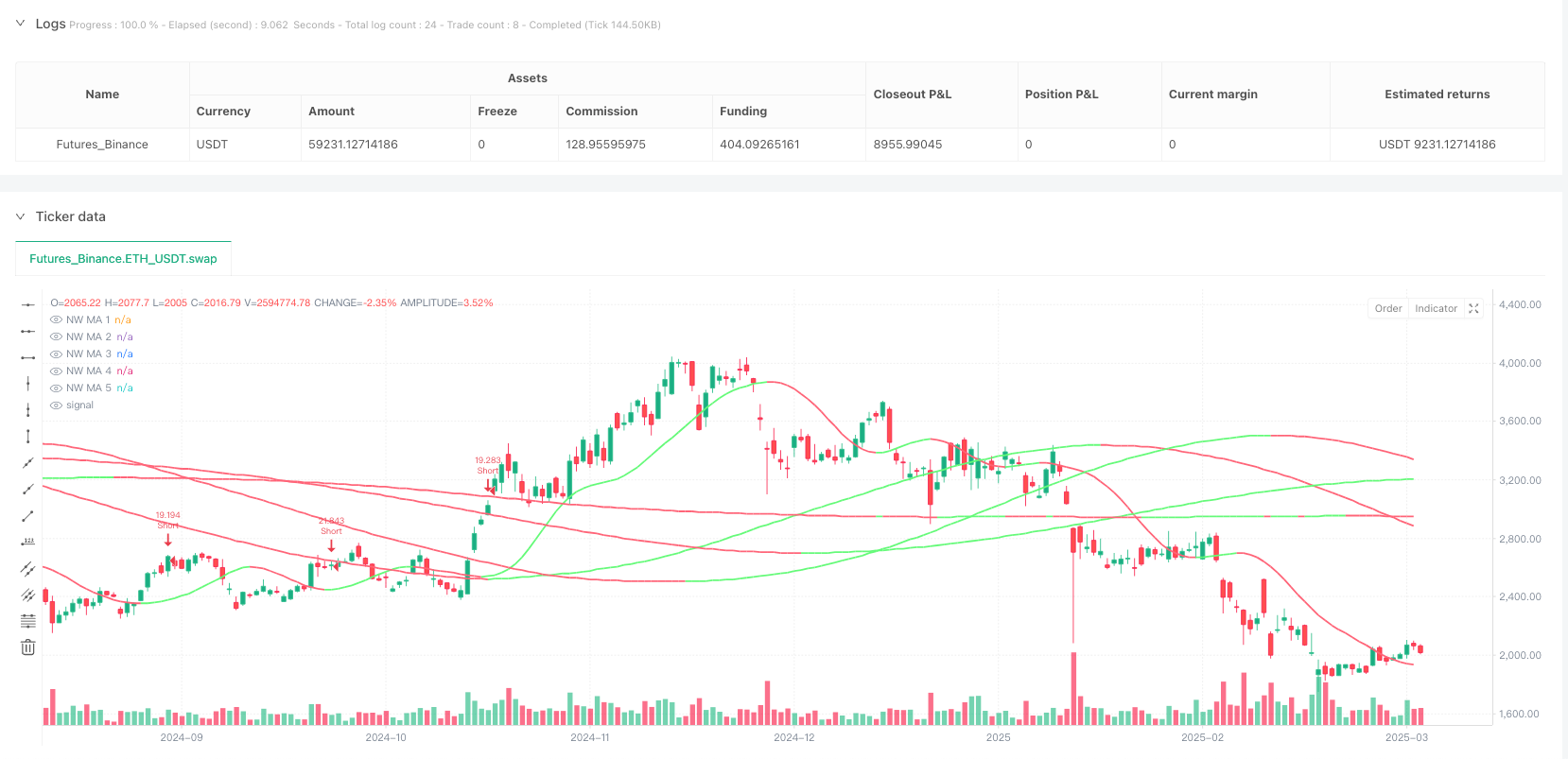
这个基于核平滑多重均线的自适应趋势追踪系统是一种高级量化交易策略,它整合了五条自定义移动平均线、多层过滤器和确认机制,以识别并利用持续的市场趋势。该策略采用了核平滑技术而非传统移动平均线,提供了更灵活的平滑效果和自适应能力,能够适应各种市场条件和时间框架。
|
|
|
|
核心功能包括:利用五条移动平均线构成的"均线带"视觉化表示当前市场趋势;通过RSI过滤器、趋势强度过滤器和趋势确认期减少噪音和虚假信号;仅在特定条件满足时才触发入场信号;以及采用多种退出选项(如百分比追踪止损、ATR追踪止损、ATR获利目标和硬性止损)来管理风险和保护利润。
|
|
|
|
## 策略原理
|
|
该策略的核心逻辑围绕以下关键组件展开:
|
|
|
|
1. **核平滑移动平均线**:策略使用核平滑技术替代标准移动平均线,提供比传统MA更灵活和自适应的平滑效果。支持三种核类型:
|
|
- Beta核:最全能的选项,允许通过`alpha`和`beta`参数独立控制正负滞后,使MA对价格上涨和下跌的反应速度不同。
|
|
- 高斯核:创建钟形加权,`bandwidth`参数控制钟形曲线的宽度。
|
|
- Epanechnikov核:类似高斯核但形状略有不同,同样使用`bandwidth`参数。
|
|
|
|
2. **均线带**:五条MA形成图表上的"均线带",其排列和相对位置提供趋势强度和方向的视觉指示。
|
|
|
|
3. **交叉检测**:策略监控均线带中连续MA之间的交叉,用户可以指定生成潜在信号所需的交叉数量。
|
|
|
|
4. **RSI过滤器**:帮助避免在市场过度延伸情况下入场。多头入场时,RSI必须低于超卖水平;空头入场时,必须高于超买水平。
|
|
|
|
5. **趋势强度过滤器**:使用某个移动平均线的RSI来衡量趋势强度,确保在强劲、已建立的趋势方向进行交易。
|
|
|
|
6. **趋势确认**:进一步减少虚假信号,要求入场条件(MA交叉、RSI和趋势强度)在实际触发交易前必须连续满足指定数量的K线。
|
|
|
|
7. **退出逻辑**:策略按以下顺序优先考虑退出:硬性止损、追踪止损(百分比或基于ATR)和获利(基于ATR)。这确保损失最小化并保护利润。
|
|
|
|
## 策略优势
|
|
1. **高度可定制的核平滑**:使用核平滑(尤其是Beta核)提供了对MA响应性的控制级别,这在标准MA中是不可用的。这允许对趋势追踪采取更加自适应和细微的方法。
|
|
|
|
2. **结合趋势强度和确认**:趋势强度过滤器(使用MA的RSI)和趋势确认期的结合提供了强大的过滤机制,超越了简单的MA交叉或RSI读数。这有助于过滤弱趋势和震荡行情。
|
|
|
|
3. **多种优先级退出选项**:策略的退出逻辑非常复杂,提供固定和动态止损以及获利水平的组合。优先级确保最保守的退出(硬性止损)首先触发,其次是追踪止损,最后是获利目标。
|
|
|
|
4. **全面的输入分组**:所有输入已分类到控制策略特定方面的组中,使用户能轻松快速定位和调整输入。
|
|
|
|
5. **交易方向控制**:与许多策略不同,该策略允许独立启用或禁用多头和空头交易。
|
|
|
|
6. **全方位趋势系统**:该指标结合了交易所需的多个方面:入场信号、止损计算、获利计算。
|
|
|
|
## 策略风险
|
|
1. **参数优化挑战**:由于策略有大量参数,可能面临过度拟合的风险。过于精细地调整参数可能导致策略在回测中表现良好,但在实际交易中失效。建议进行稳健的交叉验证和样本外测试,确保参数设置具有通用性。
|
|
|
|
2. **趋势变化反应延迟**:虽然策略旨在识别持续趋势,但在市场急剧反转时可能反应不够迅速,导致部分回撤。可以通过调整MA长度和核参数来平衡对趋势变化的敏感度和对噪音的过滤能力。
|
|
|
|
3. **MA交叉假信号**:即使有多层过滤,在震荡市场中仍可能产生虚假信号。建议在确定的趋势市场中使用此策略,或增加趋势确认期以减少虚假信号。
|
|
|
|
4. **止损触发过早**:在大波动市场中,止损可能被过早触发,导致错过后续的价格回调和趋势恢复。可以考虑基于ATR的止损并进行适当调整,以适应市场的波动性。
|
|
|
|
5. **复杂度风险**:策略的复杂性可能使故障排除和实时监控变得困难。建议从简单配置开始,逐步添加复杂功能,确保充分理解每个组件的作用。
|
|
|
|
## 策略优化方向
|
|
1. **时间框架适应性**:当前策略可以进一步优化,使其能根据不同时间框架自动调整参数。例如,可以添加基于时间框架的自动参数调整功能,使策略在日线、小时线或分钟线图表上都能有效运行。
|
|
|
|
2. **市场环境检测**:增加市场环境(趋势、区间或高波动性)的自动检测机制,并根据检测结果调整交易参数。例如,在区间市场中增加过滤强度或调整获利目标,在趋势市场中放宽过滤条件。
|
|
|
|
3. **动态RSI阈值**:将RSI的超买超卖阈值设计为动态而非静态,根据近期市场波动性自动调整。这可以提高策略在不同市场条件下的适应性。
|
|
|
|
4. **集成量化波动指标**:将策略与波动率指标(如Bollinger带宽)集成,以便在高波动性环境中调整止损和获利目标,降低被甩出有效趋势的风险。
|
|
|
|
5. **多时间框架确认**:添加更高时间框架的趋势确认,确保交易方向与更大趋势保持一致。例如,只有当日线趋势与小时线趋势方向一致时才进行交易。
|
|
|
|
6. **性能监控和自适应**:实现策略性能的实时监控系统,跟踪胜率、盈亏比和最大回撤等指标,当性能指标下降到预设阈值以下时自动调整参数或暂停交易。
|
|
|
|
7. **机器学习增强**:探索将机器学习算法集成到参数优化过程中,使策略能够从历史数据中学习最佳参数组合,并随着新数据的积累不断改进。
|
|
|
|
## 总结
|
|
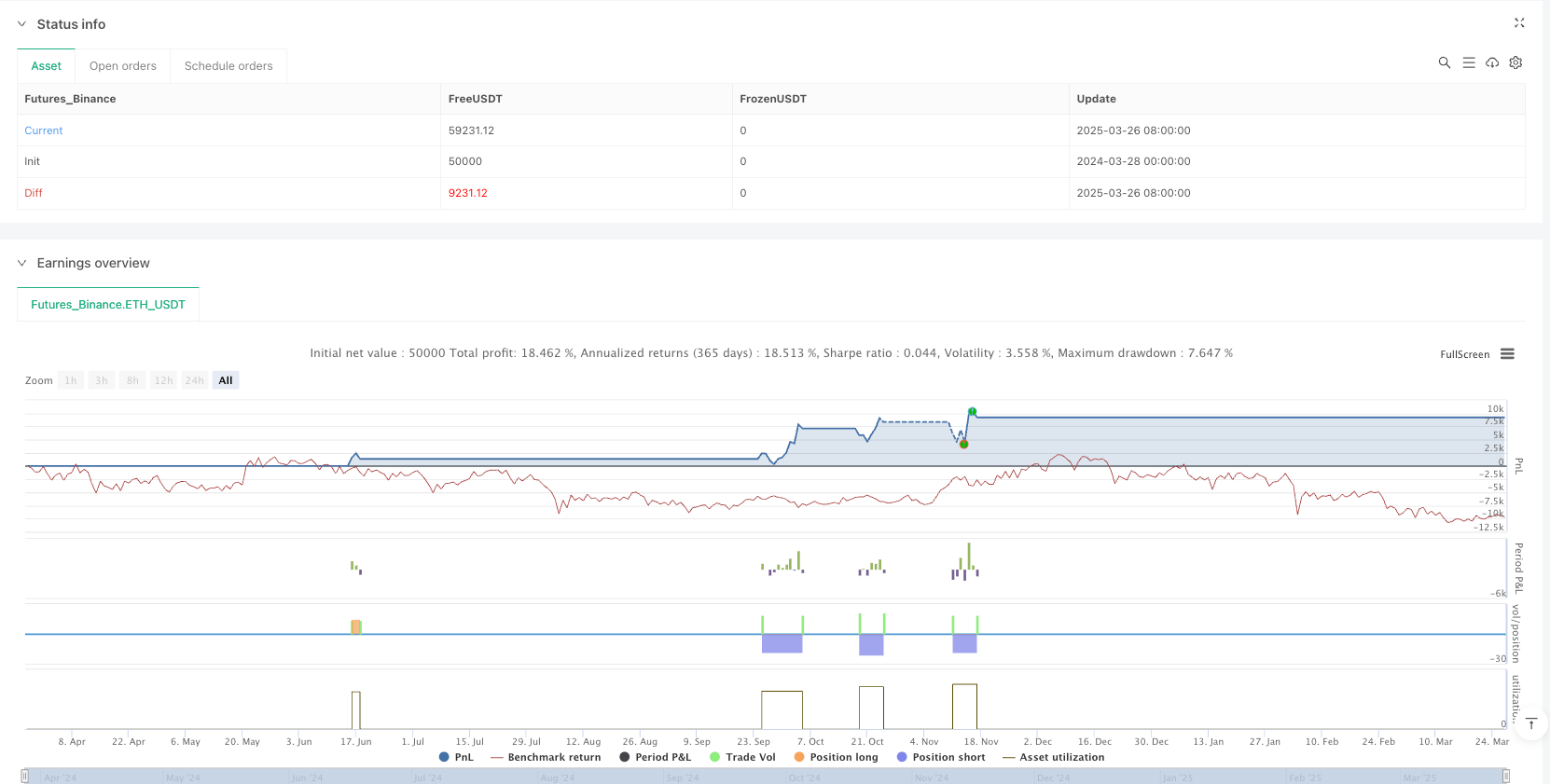
基于核平滑多重均线的自适应趋势追踪系统是一个强大而灵活的趋势跟踪工具,结合了移动平均线带的视觉清晰度与核平滑、RSI、趋势强度和多种退出选项的高级过滤和风险管理能力。它专为希望拥有可定制且强大的工具来识别和交易持续市场趋势的交易者而设计。
|
|
|
|
该策略最大的优势在于其高度可定制性和自适应性,使其能够适应各种市场条件。通过核平滑技术,它能提供比传统移动平均线更细微的控制,而多层过滤和确认机制有助于减少虚假信号。同时,综合的风险管理系统提供了多种退出策略,确保损失最小化并保护利润。
|
|
|
|
然而,使用者应注意参数优化的挑战,避免过度拟合,并根据具体市场环境调整策略。建议进行充分的回测和前向测试,确保策略在各种市场条件下都能稳健运行。通过定期评估和优化,该策略有潜力成为成功趋势交易者工具箱中的宝贵资产。 ||
|
|
|
|
## Overview
|
|
This Adaptive Trend Following System with Kernel-Smoothed Multiple Moving Averages is an advanced quantitative trading strategy that integrates five custom moving averages, multiple layers of filtering, and confirmation mechanisms to identify and capitalize on sustained market trends. The strategy employs kernel smoothing techniques instead of traditional moving averages, providing more flexible smoothing effects and adaptive capabilities that can adjust to various market conditions and timeframes.
|
|
|
|
Core functionalities include: utilizing a "ribbon" of five moving averages to visually represent the current market trend; reducing noise and false signals through an RSI filter, trend strength filter, and trend confirmation period; triggering entry signals only when specific conditions are met; and employing multiple exit options (including percentage trailing stop, ATR trailing stop, ATR take profit, and hard stop loss) to manage risk and protect profits.
|
|
|
|
## Strategy Principles
|
|
The core logic of this strategy revolves around the following key components:
|
|
|
|
1. **Kernel-Smoothed Moving Averages**: The strategy uses kernel smoothing techniques instead of standard moving averages, providing more flexible and adaptive smoothing than traditional MAs. It supports three kernel types:
|
|
- Beta Kernel: The most versatile option, allowing independent control of positive and negative lag through the `alpha` and `beta` parameters, making the MA react differently to price increases and decreases.
|
|
- Gaussian Kernel: Creates a bell-shaped weighting, with the `bandwidth` parameter controlling the width of the bell curve.
|
|
- Epanechnikov Kernel: Similar to the Gaussian kernel but with a slightly different shape, also using a `bandwidth` parameter.
|
|
|
|
2. **MA Ribbon**: The five MAs form a "ribbon" on the chart, with their alignment and relative positions providing a visual indication of trend strength and direction.
|
|
|
|
3. **Crossover Detection**: The strategy monitors the crossovers between consecutive MAs in the ribbon, with users able to specify how many crossovers are required to generate a potential signal.
|
|
|
|
4. **RSI Filter**: This helps avoid entries during overextended market conditions. For long entries, the RSI must be below the oversold level; for short entries, it must be above the overbought level.
|
|
|
|
5. **Trend Strength Filter**: This unique filter uses the RSI of one of the moving averages to measure the strength of the trend, ensuring that trades are entered in the direction of a strong, established trend.
|
|
|
|
6. **Trend Confirmation**: To further reduce false signals, the strategy requires that the entry conditions (MA crossovers, RSI, and trend strength) be met for a specified number of consecutive bars before a trade is actually triggered.
|
|
|
|
7. **Exit Logic**: The strategy prioritizes exits in the following order: Hard Stop Loss, Trailing Stop (Percentage or ATR-based), and Take Profit (ATR-based). This ensures that losses are minimized and profits are protected.
|
|
|
|
## Strategy Advantages
|
|
1. **Highly Customizable Kernel Smoothing**: The use of kernel smoothing, especially the Beta kernel, provides a level of control over MA responsiveness that is not available with standard MAs. This allows for a much more adaptive and nuanced approach to trend following.
|
|
|
|
2. **Combined Trend Strength and Confirmation**: The combination of the trend strength filter (using the RSI of an MA) and the trend confirmation period provides a robust filtering mechanism that goes beyond simple MA crossovers or RSI readings. This helps to filter out weak trends and whipsaws.
|
|
|
|
3. **Multiple, Prioritized Exit Options**: The strategy's exit logic is sophisticated, offering a combination of fixed and dynamic stops and take profit levels. The prioritization ensures that the most conservative exit (hard stop) is triggered first, followed by the trailing stops, and finally the take profit.
|
|
|
|
4. **Comprehensive Input Grouping**: All inputs have been sorted into groups that control certain aspects of the strategy, allowing users to easily and quickly locate and adjust inputs as needed.
|
|
|
|
5. **Trade Direction Control**: Unlike many strategies, this one allows users to independently enable or disable long and short trades.
|
|
|
|
6. **All-in-one Trend System**: This indicator combines multiple aspects needed for trading: entry signals, stop loss calculations, and take profit calculations.
|
|
|
|
## Strategy Risks
|
|
1. **Parameter Optimization Challenges**: With the large number of parameters in the strategy, there is a risk of overfitting. Over-tuning parameters may result in a strategy that performs well in backtesting but fails in live trading. It's recommended to perform robust cross-validation and out-of-sample testing to ensure parameter settings are generalizable.
|
|
|
|
2. **Delayed Reaction to Trend Changes**: While the strategy is designed to identify sustained trends, it may not react quickly enough to sharp market reversals, leading to partial retracements. The sensitivity to trend changes versus filtering out noise can be balanced by adjusting MA lengths and kernel parameters.
|
|
|
|
3. **MA Crossover False Signals**: Even with multiple layers of filtering, false signals can still occur in ranging markets. It's advisable to use this strategy in defined trending markets or increase the trend confirmation period to reduce false signals.
|
|
|
|
4. **Premature Stop Triggering**: In highly volatile markets, stops may be triggered prematurely, causing missed opportunities when price retraces and the trend resumes. Consider ATR-based stops with appropriate adjustments to accommodate market volatility.
|
|
|
|
5. **Complexity Risk**: The complexity of the strategy may make troubleshooting and real-time monitoring difficult. Start with a simpler configuration and gradually add complexity, ensuring a thorough understanding of each component's role.
|
|
|
|
## Strategy Optimization Directions
|
|
1. **Timeframe Adaptability**: The current strategy could be further optimized to automatically adjust parameters based on different timeframes. For example, an automatic parameter adjustment feature based on the timeframe could be added to make the strategy effective on daily, hourly, or minute charts.
|
|
|
|
2. **Market Environment Detection**: Add an automatic detection mechanism for market environments (trending, ranging, or high volatility) and adjust trading parameters accordingly. For example, increase filter strength or adjust profit targets in ranging markets, and relax filtering conditions in trending markets.
|
|
|
|
3. **Dynamic RSI Thresholds**: Design the RSI overbought/oversold thresholds to be dynamic rather than static, automatically adjusting based on recent market volatility. This can enhance the strategy's adaptability across different market conditions.
|
|
|
|
4. **Integrate Volatility Metrics**: Integrate the strategy with volatility indicators such as Bollinger Bandwidth to adjust stop losses and profit targets in high-volatility environments, reducing the risk of being shaken out of valid trends.
|
|
|
|
5. **Multi-timeframe Confirmation**: Add higher timeframe trend confirmation to ensure the trading direction aligns with the larger trend. For example, only trade when the daily trend is in the same direction as the hourly trend.
|
|
|
|
6. **Performance Monitoring and Adaptation**: Implement a real-time monitoring system for strategy performance, tracking metrics such as win rate, profit-to-loss ratio, and maximum drawdown, and automatically adjusting parameters or pausing trading when performance metrics fall below preset thresholds.
|
|
|
|
7. **Machine Learning Enhancement**: Explore integrating machine learning algorithms into the parameter optimization process, allowing the strategy to learn optimal parameter combinations from historical data and continuously improve as new data accumulates.
|
|
|
|
## Summary
|
|
The Adaptive Trend Following System with Kernel-Smoothed Multiple Moving Averages is a powerful and flexible trend following tool that combines the visual clarity of a moving average ribbon with the advanced filtering and risk management capabilities of kernel smoothing, RSI, trend strength, and multiple exit options. It's designed for traders who want a customizable and robust tool for identifying and trading sustained market trends.
|
|
|
|
The strategy's greatest strength lies in its high customizability and adaptability, making it capable of adjusting to various market conditions. Through kernel smoothing techniques, it offers more nuanced control than traditional moving averages, while its multiple layers of filtering and confirmation mechanisms help reduce false signals. At the same time, the comprehensive risk management system provides multiple exit strategies, ensuring losses are minimized and profits are protected.
|
|
|
|
However, users should be aware of the challenges in parameter optimization, avoid overfitting, and adjust the strategy according to specific market environments. It's recommended to conduct thorough backtesting and forward testing to ensure the strategy performs robustly under various market conditions. With regular evaluation and optimization, this strategy has the potential to become a valuable asset in a successful trend trader's toolkit.[/trans]
|
|
|
|
|
|
|
|
> Source (PineScript)
|
|
|
|
``` pinescript
|
|
/*backtest
|
|
start: 2024-03-28 00:00:00
|
|
end: 2025-03-27 00:00:00
|
|
period: 1d
|
|
basePeriod: 1d
|
|
exchanges: [{"eid":"Futures_Binance","currency":"ETH_USDT"}]
|
|
*/
|
|
|
|
//@version=5
|
|
strategy("B4100 - NW Trend Ribbon Strategy", overlay=true, default_qty_type = strategy.percent_of_equity, default_qty_value = 100, commission_type = strategy.commission.percent, commission_value = 0.02)
|
|
|
|
// === Optimized Functions ===
|
|
f_calculate_beta_kernel(length, alpha, beta) =>
|
|
kernel = array.new_float(length, 0)
|
|
sum = 0.0
|
|
for i = 0 to length - 1
|
|
x = i / (length - 1)
|
|
w = math.pow(x, alpha - 1) * math.pow(1 - x, beta - 1)
|
|
array.set(kernel, i, w)
|
|
sum += w
|
|
for i = 0 to length - 1
|
|
array.set(kernel, i, array.get(kernel, i) / sum)
|
|
kernel
|
|
|
|
f_calculate_gaussian_kernel(length, bandwidth) =>
|
|
kernel = array.new_float(length, 0)
|
|
sum = 0.0
|
|
for i = 0 to length - 1
|
|
x = i / (length - 1)
|
|
w = math.exp(-0.5 * math.pow((x - 0.5) / bandwidth, 2))
|
|
array.set(kernel, i, w)
|
|
sum += w
|
|
for i = 0 to length - 1
|
|
array.set(kernel, i, array.get(kernel, i) / sum)
|
|
kernel
|
|
|
|
f_calculate_epanechnikov_kernel(length, bandwidth) =>
|
|
kernel = array.new_float(length, 0)
|
|
sum = 0.0
|
|
for i = 0 to length - 1
|
|
x = i / (length - 1)
|
|
w = math.max(0.0, 1 - math.pow((x - 0.5) / bandwidth, 2))
|
|
array.set(kernel, i, w)
|
|
sum += w
|
|
for i = 0 to length - 1
|
|
array.set(kernel, i, array.get(kernel, i) / sum)
|
|
kernel
|
|
|
|
f_apply_kernel_ma(src, kernel, length) =>
|
|
sum = 0.0
|
|
for i = 0 to length - 1
|
|
sum += src[i] * array.get(kernel, i)
|
|
sum
|
|
|
|
f_trend_strength(ma, length) =>
|
|
ts = ta.rsi(ma, length) / 100
|
|
ts
|
|
|
|
// === Inputs ===
|
|
src = input.source(close, title="Price Source", tooltip="Select the price data used for calculations. 'Close' is the most common, but you can also use 'Open', 'High', 'Low', 'HL2' (typical price), etc.")
|
|
|
|
// MA Parameters
|
|
maGroup = "Moving Average Settings"
|
|
maCrossoverGroup = "Moving Average Crossover Settings"
|
|
rsiFilterGroup = "RSI Filter Settings"
|
|
trendStrengthGroup = "Trend Strength Filter Settings"
|
|
trendConfirmGroup = "Trend Confirmation Settings"
|
|
trailingStopGroup = "Trailing Stop Settings"
|
|
atrTrailingStopGroup = "ATR Trailing Stop Settings"
|
|
atrTakeProfitGroup = "ATR Take Profit Settings"
|
|
hardStopGroup = "Hard Stop Loss Settings"
|
|
tradeDirectionGroup = "Trade Direction Control"
|
|
|
|
length1 = input.int(20, title="MA1 Length", minval=1, tooltip="Number of bars used to calculate the first Moving Average.", group=maGroup)
|
|
kernelType1 = input.string(title="MA1 Kernel Type", defval="Beta", options=["Beta", "Gaussian", "Epanechnikov"], tooltip="Select the type of smoothing kernel for MA1. 'Beta' allows for lag adjustment. 'Gaussian' and 'Epanechnikov' use a bandwidth.", group=maGroup)
|
|
alpha1 = input.float(3.0, title="MA1 Beta Kernel +Lag", minval=1, maxval=10, tooltip="For Beta kernel only: Higher values increase *positive* lag (MA reacts *slower* to price increases).", group=maGroup)
|
|
beta1 = input.float(3.0, title="MA1 Beta Kernel -Lag", minval=1, maxval=10, tooltip="For Beta kernel only: Higher values increase *negative* lag (MA reacts *slower* to price decreases).", group=maGroup)
|
|
bandwidth1 = input.float(0.3, title="MA1 Bandwidth", minval=0.1, maxval=10.0, tooltip="For Gaussian/Epanechnikov kernels: Smaller values create a *tighter* fit to the price (more sensitive). Larger values create a *smoother*, less sensitive MA.", group=maGroup)
|
|
|
|
length2 = input.int(100, title="MA2 Length", minval=1, tooltip="Number of bars for the second Moving Average.", group=maGroup)
|
|
kernelType2 = input.string(title="MA2 Kernel Type", defval="Gaussian", options=["Beta", "Gaussian", "Epanechnikov"], tooltip="Kernel type for MA2 (see MA1 Kernel Type for details).", group=maGroup)
|
|
alpha2 = input.float(3.0, title="MA2 Beta Kernel +Lag", minval=1, maxval=10, tooltip="Beta kernel positive lag for MA2 (see MA1 Beta Kernel +Lag for details).", group=maGroup)
|
|
beta2 = input.float(3.0, title="MA2 Beta Kernel -Lag", minval=1, maxval=10, tooltip="Beta kernel negative lag for MA2 (see MA1 Beta Kernel -Lag for details).", group=maGroup)
|
|
bandwidth2 = input.float(0.3, title="MA2 Bandwidth", minval=0.1, maxval=10.0, tooltip="Bandwidth for MA2 (see MA1 Bandwidth for details).", group=maGroup)
|
|
|
|
length3 = input.int(150, title="MA3 Length", minval=1, tooltip="Number of bars for the third Moving Average.", group=maGroup)
|
|
kernelType3 = input.string(title="MA3 Kernel Type", defval="Epanechnikov", options=["Beta", "Gaussian", "Epanechnikov"], tooltip="Kernel type for MA3.", group=maGroup)
|
|
alpha3 = input.float(3.0, title="MA3 Beta Kernel +Lag", minval=1, maxval=10, tooltip="Beta kernel positive lag for MA3.", group=maGroup)
|
|
beta3 = input.float(3.0, title="MA3 Beta Kernel -Lag", minval=1, maxval=10, tooltip="Beta kernel negative lag for MA3.", group=maGroup)
|
|
bandwidth3 = input.float(0.3, title="MA3 Bandwidth", minval=0.1, maxval=10.0, tooltip="Bandwidth for MA3.", group=maGroup)
|
|
|
|
length4 = input.int(200, title="MA4 Length", minval=1, tooltip="Number of bars for the fourth Moving Average.", group=maGroup)
|
|
kernelType4 = input.string(title="MA4 Kernel Type", defval="Beta", options=["Beta", "Gaussian", "Epanechnikov"], tooltip="Kernel type for MA4.", group=maGroup)
|
|
alpha4 = input.float(3.0, title="MA4 Beta Kernel +Lag", minval=1, maxval=10, tooltip="Beta kernel positive lag for MA4.", group=maGroup)
|
|
beta4 = input.float(3.0, title="MA4 Beta Kernel -Lag", minval=1, maxval=10, tooltip="Beta kernel negative lag for MA4.", group=maGroup)
|
|
bandwidth4 = input.float(0.3, title="MA4 Bandwidth", minval=0.1, maxval=10.0, tooltip="Bandwidth for MA4.", group=maGroup)
|
|
|
|
length5 = input.int(250, title="MA5 Length", minval=1, tooltip="Number of bars for the fifth Moving Average.", group=maGroup)
|
|
kernelType5 = input.string(title="MA5 Kernel Type", defval="Gaussian", options=["Beta", "Gaussian", "Epanechnikov"], tooltip="Kernel type for MA5.", group=maGroup)
|
|
alpha5 = input.float(3.0, title="MA5 Beta Kernel +Lag", minval=1, maxval=10, tooltip="Beta kernel positive lag for MA5.", group=maGroup)
|
|
beta5 = input.float(3.0, title="MA5 Beta Kernel -Lag", minval=1, maxval=10, tooltip="Beta kernel negative lag for MA5.", group=maGroup)
|
|
bandwidth5 = input.float(0.3, title="MA5 Bandwidth", minval=0.1, maxval=10.0, tooltip="Bandwidth for MA5.", group=maGroup)
|
|
|
|
// Entry Logic
|
|
maCrossoversRequired = input.int(3, title="MA Crossovers Required", minval=1, maxval=5, tooltip="How many moving averages must cross each other to generate a potential trade signal. A higher number means a stronger (but potentially later) signal.", group=maCrossoverGroup)
|
|
useRsiFilter = input.bool(true, title="Use RSI Filter", tooltip="If enabled, the RSI must also be in overbought/oversold territory for a signal to be valid.", group=rsiFilterGroup)
|
|
rsiLength = input.int(7, title="RSI Length", minval=2, tooltip="Number of bars used to calculate the RSI.", group=rsiFilterGroup)
|
|
rsiOverbought = input.int(60, title="RSI Overbought", minval=50, maxval=100, tooltip="RSI level considered overbought (for short entries).", group=rsiFilterGroup)
|
|
rsiOversold = input.int(40, title="RSI Oversold", minval=0, maxval=50, tooltip="RSI level considered oversold (for long entries).", group=rsiFilterGroup)
|
|
|
|
// Trend Strength Filter
|
|
useTrendStrengthFilter = input.bool(true, title="Use Trend Strength Filter", tooltip="If enabled, the trend strength (measured by the RSI of a selected MA) must be above/below a threshold.", group=trendStrengthGroup)
|
|
trendStrengthLength = input.int(7, title="Trend Strength Length", minval=1, tooltip="Number of bars for the trend strength calculation (RSI of the selected MA).", group=trendStrengthGroup)
|
|
trendStrengthMa = input.int(1, title="Trend Strength MA", minval=1, maxval=5, tooltip="Which moving average (1-5) to use for calculating trend strength. 1 = MA1, 2 = MA2, etc.", group=trendStrengthGroup)
|
|
minTrendStrength = input.float(0.5, title="Min Trend Strength (Longs)", minval=0.0, maxval=1.0, step=0.01, tooltip="Minimum trend strength (0.0 - 1.0) required for long entries. 0.5 means the selected MA's RSI must be above 50.", group=trendStrengthGroup)
|
|
maxTrendStrength = input.float(0.5, title="Max Trend Strength (Shorts)", minval=0.0, maxval=1.0, step=0.01, tooltip="Maximum trend strength (0.0 - 1.0) required for short entries. 0.5 means the selected MA's RSI must be below 50.", group=trendStrengthGroup)
|
|
|
|
// Trend Confirmation
|
|
trendConfirmationPeriod = input.int(4, title="Trend Confirmation Period", minval=1, tooltip="Number of consecutive bars the entry conditions must be met before a trade is taken. This helps filter out false signals.", group=trendConfirmGroup)
|
|
|
|
|
|
// Exit Logic
|
|
useTrailingStop = input.bool(true, title="Use Percentage Trailing Stop", tooltip="Enable a percentage-based trailing stop loss.", group=trailingStopGroup)
|
|
trailingStopActivationPercent = input.float(2.0, title="Activation (%)", minval=0.1, step=0.1, tooltip="Percentage above/below the entry price at which the trailing stop activates.", group=trailingStopGroup) / 100
|
|
trailingStopOffsetPercent = input.float(1.0, title="Offset (%)", minval=0.1, step=0.1, tooltip="Percentage offset from the highest/lowest price reached since entry. This determines how tightly the stop trails the price.", group=trailingStopGroup) / 100
|
|
|
|
useAtrTrailingStop = input.bool(true, title="Use ATR Trailing Stop", tooltip="Enable a trailing stop based on the Average True Range (ATR).", group=atrTrailingStopGroup)
|
|
atrTrailingStopLength = input.int(1, title="ATR Length", minval=1, tooltip="Number of bars used to calculate the ATR.", group=atrTrailingStopGroup)
|
|
atrTrailingStopMult = input.float(200.0, title="ATR Multiplier", minval=0.1, tooltip="Multiplier for the ATR value. A larger multiplier creates a wider stop.", group=atrTrailingStopGroup)
|
|
|
|
useAtrTakeProfit = input.bool(false, title="Use ATR Take Profit", tooltip="Enable a take profit level based on the Average True Range (ATR).", group=atrTakeProfitGroup)
|
|
atrTakeProfitLength = input.int(14, title="ATR Length", minval=1, tooltip="Number of bars used to calculate the ATR for take profit.", group=atrTakeProfitGroup)
|
|
atrTakeProfitMultiplier = input.float(3.0, title="ATR Multiplier", minval=0.1, tooltip="Multiplier for the ATR value. A larger multiplier sets a further take profit target.", group=atrTakeProfitGroup)
|
|
|
|
useHardStopLoss = input.bool(false, title="Use Hard Stop Loss", tooltip="Enable a fixed stop loss.", group=hardStopGroup)
|
|
hardStopLossPercent = input.float(0.0, title="Hard Stop Loss (%)", minval=0.0, step=0.1, tooltip="Percentage below (long) or above (short) the entry price for the hard stop loss.", group=hardStopGroup) / 100
|
|
useAtrHardStopLoss = input.bool(false, title="Use ATR Hard Stop Loss", tooltip="Use ATR to calculate hard stop loss", group=hardStopGroup)
|
|
atrHardStopLossLength = input.int(14, title="ATR Hard Stop Loss Length", minval=1, tooltip="Length of the ATR for the hard stop loss", group=hardStopGroup)
|
|
atrHardStopLossMult = input.float(1.5, title="ATR Hard Stop Loss Multiplier", minval=0.1, tooltip="Multiplier of ATR for the hard stop loss", group=hardStopGroup)
|
|
|
|
// *** Trade Direction Control ***
|
|
enableLongs = input.bool(true, title="Enable Long Trades", group=tradeDirectionGroup)
|
|
enableShorts = input.bool(true, title="Enable Short Trades", group=tradeDirectionGroup)
|
|
|
|
// === Pre-calculate kernels (do this only once) ===
|
|
var kernel1 = array.new_float(length1, 0.0)
|
|
var kernel2 = array.new_float(length2, 0.0)
|
|
var kernel3 = array.new_float(length3, 0.0)
|
|
var kernel4 = array.new_float(length4, 0.0)
|
|
var kernel5 = array.new_float(length5, 0.0)
|
|
|
|
if barstate.isfirst
|
|
if kernelType1 == "Beta"
|
|
kernel1 := f_calculate_beta_kernel(length1, alpha1, beta1)
|
|
else if kernelType1 == "Gaussian"
|
|
kernel1 := f_calculate_gaussian_kernel(length1, bandwidth1)
|
|
else // Epanechnikov
|
|
kernel1 := f_calculate_epanechnikov_kernel(length1, bandwidth1)
|
|
|
|
if kernelType2 == "Beta"
|
|
kernel2 := f_calculate_beta_kernel(length2, alpha2, beta2)
|
|
else if kernelType2 == "Gaussian"
|
|
kernel2 := f_calculate_gaussian_kernel(length2, bandwidth2)
|
|
else // Epanechnikov
|
|
kernel2 := f_calculate_epanechnikov_kernel(length2, bandwidth2)
|
|
|
|
if kernelType3 == "Beta"
|
|
kernel3 := f_calculate_beta_kernel(length3, alpha3, beta3)
|
|
else if kernelType3 == "Gaussian"
|
|
kernel3 := f_calculate_gaussian_kernel(length3, bandwidth3)
|
|
else // Epanechnikov
|
|
kernel3 := f_calculate_epanechnikov_kernel(length3, bandwidth3)
|
|
|
|
if kernelType4 == "Beta"
|
|
kernel4 := f_calculate_beta_kernel(length4, alpha4, beta4)
|
|
else if kernelType4 == "Gaussian"
|
|
kernel4 := f_calculate_gaussian_kernel(length4, bandwidth4)
|
|
else // Epanechnikov
|
|
kernel4 := f_calculate_epanechnikov_kernel(length4, bandwidth4)
|
|
|
|
if kernelType5 == "Beta"
|
|
kernel5 := f_calculate_beta_kernel(length5, alpha5, beta5)
|
|
else if kernelType5 == "Gaussian"
|
|
kernel5 := f_calculate_gaussian_kernel(length5, bandwidth5)
|
|
else // Epanechnikov
|
|
kernel5 := f_calculate_epanechnikov_kernel(length5, bandwidth5)
|
|
|
|
// === Apply pre-calculated kernels to data ===
|
|
nw_ma1 = f_apply_kernel_ma(src, kernel1, length1)
|
|
nw_ma2 = f_apply_kernel_ma(src, kernel2, length2)
|
|
nw_ma3 = f_apply_kernel_ma(src, kernel3, length3)
|
|
nw_ma4 = f_apply_kernel_ma(src, kernel4, length4)
|
|
nw_ma5 = f_apply_kernel_ma(src, kernel5, length5)
|
|
|
|
// MA Array for easier iteration
|
|
ma_array = array.new_float(5)
|
|
array.set(ma_array, 0, nw_ma1)
|
|
array.set(ma_array, 1, nw_ma2)
|
|
array.set(ma_array, 2, nw_ma3)
|
|
array.set(ma_array, 3, nw_ma4)
|
|
array.set(ma_array, 4, nw_ma5)
|
|
|
|
// Calculate ATR values *unconditionally*
|
|
atrTrailingValue = ta.atr(atrTrailingStopLength)
|
|
atrTakeProfitValue = ta.atr(atrTakeProfitLength)
|
|
atrHardStopLossValue = ta.atr(atrHardStopLossLength)
|
|
|
|
// Calculate Trend Strength *unconditionally* (and only once)
|
|
trendStrengthValue = useTrendStrengthFilter ? f_trend_strength(array.get(ma_array, trendStrengthMa - 1), trendStrengthLength) : 0.0
|
|
|
|
// === Entry Logic ===
|
|
|
|
// MA Crossovers
|
|
longMaCrossovers = 0
|
|
shortMaCrossovers = 0
|
|
|
|
for i = 0 to 3
|
|
if array.get(ma_array, i) > array.get(ma_array, i + 1)
|
|
longMaCrossovers := longMaCrossovers + 1
|
|
if array.get(ma_array, i) < array.get(ma_array, i + 1)
|
|
shortMaCrossovers := shortMaCrossovers + 1
|
|
|
|
longCrossoverCondition = longMaCrossovers >= maCrossoversRequired
|
|
shortCrossoverCondition = shortMaCrossovers >= maCrossoversRequired
|
|
|
|
// RSI Filter
|
|
rsiValue = ta.rsi(src, rsiLength)
|
|
longRsiCondition = not useRsiFilter or (rsiValue < rsiOversold)
|
|
shortRsiCondition = not useRsiFilter or (rsiValue > rsiOverbought)
|
|
|
|
// Trend Strength Filter - Simplified Logic
|
|
longTrendStrengthCondition = not useTrendStrengthFilter or trendStrengthValue >= minTrendStrength
|
|
shortTrendStrengthCondition = not useTrendStrengthFilter or trendStrengthValue <= maxTrendStrength
|
|
|
|
|
|
// --- Trend Confirmation Logic ---
|
|
var int long_confirm_count = 0
|
|
var int short_confirm_count = 0
|
|
var bool confirmedLong = false
|
|
var bool confirmedShort = false
|
|
|
|
// Update confirmation counters
|
|
if longCrossoverCondition and longRsiCondition and longTrendStrengthCondition
|
|
long_confirm_count := long_confirm_count + 1
|
|
short_confirm_count := 0 // Reset opposite counter
|
|
else
|
|
long_confirm_count := 0
|
|
|
|
if shortCrossoverCondition and shortRsiCondition and shortTrendStrengthCondition
|
|
short_confirm_count := short_confirm_count + 1
|
|
long_confirm_count := 0 // Reset opposite counter
|
|
else
|
|
short_confirm_count := 0
|
|
|
|
// Check for confirmed trend
|
|
confirmedLong := long_confirm_count >= trendConfirmationPeriod
|
|
confirmedShort := short_confirm_count >= trendConfirmationPeriod
|
|
|
|
// Combined Entry Conditions (using confirmed trend)
|
|
longCondition = confirmedLong and enableLongs // Added trade direction check
|
|
shortCondition = confirmedShort and enableShorts // Added trade direction check
|
|
|
|
// === Exit Logic ===
|
|
var float longTrail = na
|
|
var float shortTrail = na
|
|
var float longTakeProfitPrice = na
|
|
var float shortTakeProfitPrice = na
|
|
var float longHardStopLossPrice = na
|
|
var float shortHardStopLossPrice = na
|
|
|
|
// Hard Stop Loss and Take Profit calculation on entry
|
|
if longCondition or shortCondition
|
|
// Calculate Hard Stop Loss
|
|
if useHardStopLoss
|
|
if useAtrHardStopLoss
|
|
longHardStopLossPrice := close - (atrHardStopLossValue * atrHardStopLossMult)
|
|
shortHardStopLossPrice := close + (atrHardStopLossValue * atrHardStopLossMult)
|
|
else
|
|
longHardStopLossPrice := close * (1 - hardStopLossPercent)
|
|
shortHardStopLossPrice := close * (1 + hardStopLossPercent)
|
|
else
|
|
longHardStopLossPrice := na
|
|
shortHardStopLossPrice := na
|
|
|
|
// Calculate Take Profit
|
|
if useAtrTakeProfit
|
|
longTakeProfitPrice := close + (atrTakeProfitValue * atrTakeProfitMultiplier)
|
|
shortTakeProfitPrice := close - (atrTakeProfitValue * atrTakeProfitMultiplier)
|
|
else
|
|
longTakeProfitPrice := na
|
|
shortTakeProfitPrice := na
|
|
|
|
// Trailing Stop Logic - updated for each bar
|
|
if strategy.position_size > 0
|
|
// Calculate trailing stop
|
|
float tempTrail = na
|
|
|
|
if useTrailingStop
|
|
if close > strategy.position_avg_price * (1 + trailingStopActivationPercent)
|
|
tempTrail := close * (1 - trailingStopOffsetPercent)
|
|
if na(longTrail) or tempTrail > longTrail
|
|
longTrail := tempTrail
|
|
|
|
if useAtrTrailingStop
|
|
float atrTrail = close - (atrTrailingValue * atrTrailingStopMult)
|
|
if na(longTrail) or atrTrail > longTrail
|
|
longTrail := atrTrail
|
|
|
|
if strategy.position_size < 0
|
|
// Calculate trailing stop
|
|
float tempTrail = na
|
|
|
|
if useTrailingStop
|
|
if close < strategy.position_avg_price * (1 - trailingStopActivationPercent)
|
|
tempTrail := close * (1 + trailingStopOffsetPercent)
|
|
if na(shortTrail) or tempTrail < shortTrail
|
|
shortTrail := tempTrail
|
|
|
|
if useAtrTrailingStop
|
|
float atrTrail = close + (atrTrailingValue * atrTrailingStopMult)
|
|
if na(shortTrail) or atrTrail < shortTrail
|
|
shortTrail := atrTrail
|
|
|
|
// === Strategy Execution ===
|
|
if longCondition
|
|
strategy.entry("Long", strategy.long)
|
|
longTrail := na // Reset on new entry
|
|
shortTrail := na // Reset on new entry
|
|
|
|
if shortCondition
|
|
strategy.entry("Short", strategy.short)
|
|
shortTrail := na // Reset on new entry
|
|
longTrail := na // Reset on new entry
|
|
|
|
// Unified exit logic with proper ordering
|
|
if strategy.position_size > 0
|
|
// Define effective stop level (combining hard stop and trailing stop)
|
|
float effectiveStopLevel = na
|
|
|
|
if not na(longHardStopLossPrice) and useHardStopLoss
|
|
effectiveStopLevel := longHardStopLossPrice
|
|
|
|
if not na(longTrail) and (useTrailingStop or useAtrTrailingStop)
|
|
if na(effectiveStopLevel) or longTrail > effectiveStopLevel
|
|
effectiveStopLevel := longTrail
|
|
|
|
// Combined exit strategy with proper parameters
|
|
strategy.exit("Long Exit", "Long",
|
|
limit = useAtrTakeProfit ? longTakeProfitPrice : na,
|
|
stop = effectiveStopLevel)
|
|
|
|
if strategy.position_size < 0
|
|
// Define effective stop level (combining hard stop and trailing stop)
|
|
float effectiveStopLevel = na
|
|
|
|
if not na(shortHardStopLossPrice) and useHardStopLoss
|
|
effectiveStopLevel := shortHardStopLossPrice
|
|
|
|
if not na(shortTrail) and (useTrailingStop or useAtrTrailingStop)
|
|
if na(effectiveStopLevel) or shortTrail < effectiveStopLevel
|
|
effectiveStopLevel := shortTrail
|
|
|
|
// Combined exit strategy with proper parameters
|
|
strategy.exit("Short Exit", "Short",
|
|
limit = useAtrTakeProfit ? shortTakeProfitPrice : na,
|
|
stop = effectiveStopLevel)
|
|
|
|
// === Plotting ===
|
|
plotColorMa1 = nw_ma1 > nw_ma1[1] ? color.rgb(100, 250, 120) : color.rgb(255, 100, 120)
|
|
plotColorMa2 = nw_ma2 > nw_ma2[1] ? color.rgb(100, 250, 120) : color.rgb(255, 100, 120)
|
|
plotColorMa3 = nw_ma3 > nw_ma3[1] ? color.rgb(100, 250, 120) : color.rgb(255, 100, 120)
|
|
plotColorMa4 = nw_ma4 > nw_ma4[1] ? color.rgb(100, 250, 120) : color.rgb(255, 100, 120)
|
|
plotColorMa5 = nw_ma5 > nw_ma5[1] ? color.rgb(100, 250, 120) : color.rgb(255, 100, 120)
|
|
|
|
plot(nw_ma1, title="NW MA 1", color=plotColorMa1, linewidth=2)
|
|
plot(nw_ma2, title="NW MA 2", color=plotColorMa2, linewidth=2)
|
|
plot(nw_ma3, title="NW MA 3", color=plotColorMa3, linewidth=2)
|
|
plot(nw_ma4, title="NW MA 4", color=plotColorMa4, linewidth=2)
|
|
plot(nw_ma5, title="NW MA 5", color=plotColorMa5, linewidth=2)
|
|
```
|
|
|
|
> Detail
|
|
|
|
https://www.fmz.com/strategy/488517
|
|
|
|
> Last Modified
|
|
|
|
2025-03-28 15:13:28
|