
211 lines
14 KiB
Markdown
211 lines
14 KiB
Markdown
|
||
> Name
|
||
|
||
均线突破固定利润目标自适应时间周期量化交易策略-Adaptive-Timeframe-SMA-Crossover-Strategy-with-Fixed-Profit-Targets
|
||
|
||
> Author
|
||
|
||
ianzeng123
|
||
|
||
> Strategy Description
|
||
|
||
|
||
|
||
|
||
|
||
|
||
|
||
[trans]#### 概述
|
||
|
||
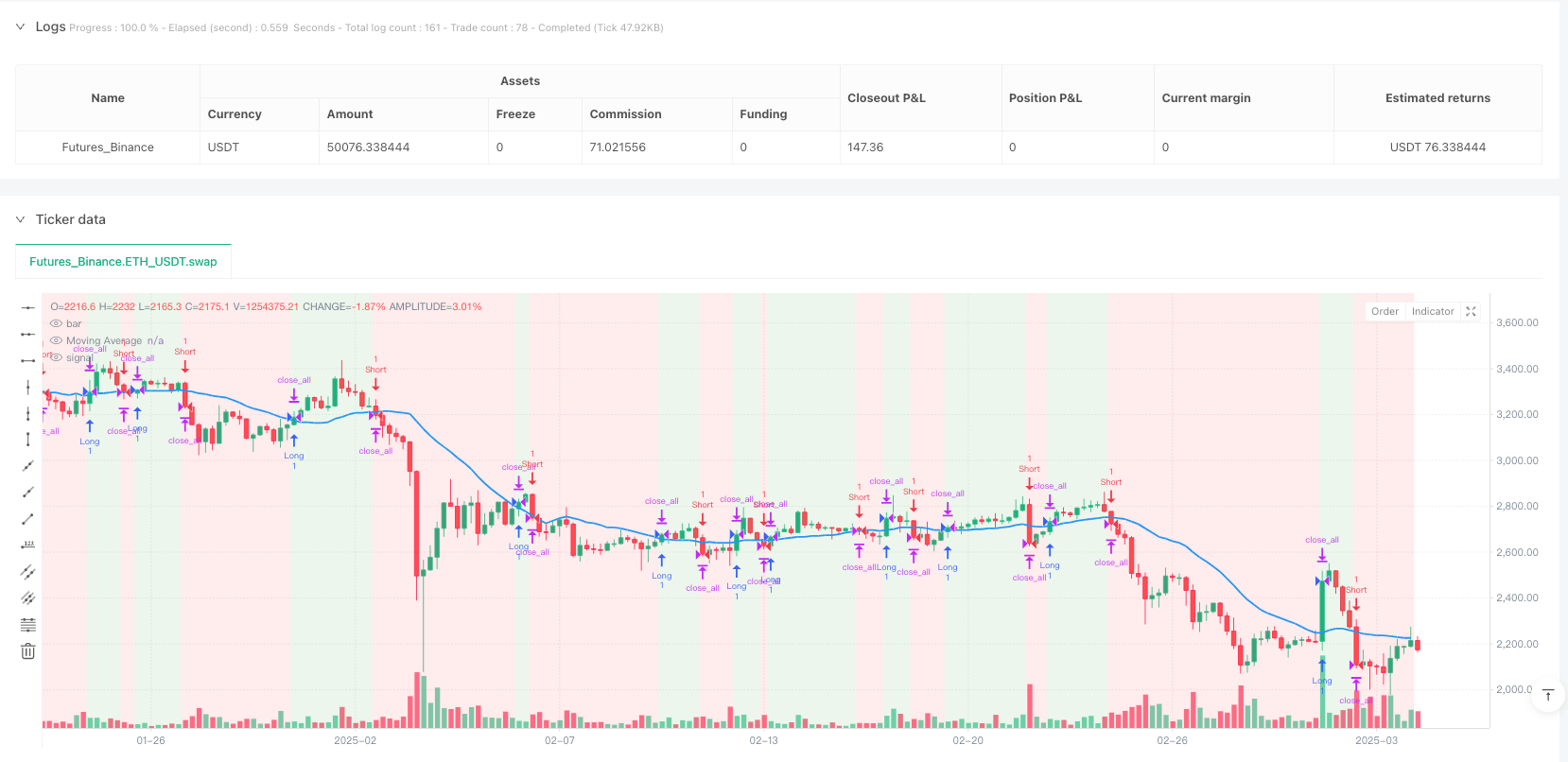
均线突破固定利润目标自适应时间周期量化交易策略是一种基于简单移动平均线(SMA)突破信号的短线交易策略,结合了固定利润目标和特定时间周期限制。该策略核心逻辑是利用价格与移动平均线的交叉关系生成多空信号,同时设定固定点数的利润目标来锁定收益,并且只在指定的时间周期内执行交易。这种设计使其特别适合于波动剧烈但具有一定趋势特性的市场环境中进行短线交易。
|
||
|
||
#### 策略原理
|
||
|
||
该策略的工作原理基于以下几个关键组件:
|
||
|
||
1. **移动平均线计算**:策略使用简单移动平均线(SMA)作为主要指标,默认周期为20,用户可以根据需要调整。这条移动平均线既作为趋势判断的依据,也作为交易信号的触发条件。
|
||
|
||
2. **入场条件**:
|
||
- 多头入场:当价格上穿移动平均线(CROSSOVER)且当前价格高于移动平均线时
|
||
- 空头入场:当价格下穿移动平均线(CROSSUNDER)且当前价格低于移动平均线时
|
||
|
||
3. **出场条件**:
|
||
- 多头出场:当价格最高点达到入场价格加上固定利润目标点数时
|
||
- 空头出场:当价格最低点达到入场价格减去固定利润目标点数时
|
||
|
||
4. **时间周期限制**:策略只在特定的时间周期内执行,默认为1分钟、3分钟和5分钟图表。如果当前图表时间周期不在指定范围内,策略会关闭所有持仓。
|
||
|
||
5. **视觉辅助**:
|
||
- 策略在图表上标记入场和出场点
|
||
- 根据价格相对于移动平均线的位置,使用绿色背景表示上升趋势,红色背景表示下降趋势
|
||
|
||
#### 策略优势
|
||
|
||
1. **明确的信号系统**:使用简单而有效的移动平均线交叉信号,减少了交易决策的主观性,使策略执行更加客观和纪律。
|
||
|
||
2. **固定利润目标**:预设利润目标有助于防止过度贪婪,确保在市场波动中锁定收益,避免利润回吐,这对短线交易尤为重要。
|
||
|
||
3. **时间周期优化**:通过限制策略只在特定的时间周期内执行,可以避免在不适合短线交易的较长时间周期上产生错误信号,提高了策略的适用性。
|
||
|
||
4. **视觉反馈系统**:图表上的入场/出场标记和背景色变化提供了直观的视觉反馈,有助于交易者理解策略逻辑和市场状态。
|
||
|
||
5. **参数灵活性**:关键参数如移动平均线长度、利润目标和适用时间周期都可以根据不同市场条件和交易者偏好进行调整,增强了策略的适应性。
|
||
|
||
#### 策略风险
|
||
|
||
1. **均线滞后性**:移动平均线本质上是滞后指标,在剧烈波动的市场中可能导致信号延迟,错过最佳入场点或产生错误信号。解决方法是调整均线周期或结合其他领先指标辅助判断。
|
||
|
||
2. **固定利润目标的局限性**:预设的固定利润目标可能在强趋势行情中过早离场,无法充分捕捉趋势移动。可以考虑实施动态利润目标或部分仓位管理策略。
|
||
|
||
3. **时间周期限制带来的机会成本**:仅在特定时间周期执行可能会错过其他时间周期的有效信号。解决方案是扩大适用时间周期范围或建立多时间周期策略组合。
|
||
|
||
4. **无止损机制**:当前策略没有明确的止损机制,在市场突然逆转时可能面临较大损失。建议增加止损条件以控制风险。
|
||
|
||
5. **单一指标依赖**:仅依赖移动平均线可能在横盘市场中产生频繁的错误信号。可以通过添加额外的过滤条件或确认指标来提高信号质量。
|
||
|
||
#### 策略优化方向
|
||
|
||
1. **增加止损机制**:为策略添加明确的止损条件,如基于ATR(平均真实波幅)的动态止损或固定点数止损,以限制单笔交易的最大损失。
|
||
|
||
2. **添加信号过滤器**:引入额外的技术指标如RSI(相对强弱指数)、MACD(移动平均线收敛发散)或成交量指标,作为交易信号的确认条件,减少假信号。
|
||
|
||
3. **实施动态利润目标**:根据市场波动性自动调整利润目标,例如在波动率高的市场中设置更大的利润目标,在波动率低的市场中设置更小的利润目标。
|
||
|
||
4. **多时间周期分析**:整合更高时间周期的趋势信息,只在主趋势方向执行交易,避免在大趋势的逆向进行短线交易。
|
||
|
||
5. **优化仓位管理**:实施分批进出场策略,允许部分利润随趋势继续运行,同时锁定一部分收益,平衡风险和收益。
|
||
|
||
6. **增加市场状态识别**:添加自动识别市场状态(趋势/震荡)的功能,在不同市场环境下应用不同的参数或策略变体。
|
||
|
||
#### 总结
|
||
|
||
均线突破固定利润目标自适应时间周期量化交易策略是一种设计简洁而实用的短线交易系统,通过结合移动平均线交叉信号、固定利润目标和时间周期限制,为交易者提供了一种纪律化的方法来捕捉短期价格波动。虽然策略在设计上相对简单,但其核心逻辑健全,并且有广阔的优化空间。通过增加止损机制、信号过滤器和动态参数调整,该策略可以进一步提高其稳健性和适应性。对于寻求在短时间周期内进行系统化交易的投资者而言,这是一个值得考虑的基础策略框架,可以根据个人风险偏好和市场特性进行进一步定制和优化。 || #### Overview
|
||
|
||
The Adaptive Timeframe SMA Crossover Strategy with Fixed Profit Targets is a scalping trading system based on Simple Moving Average (SMA) breakout signals, combined with fixed profit targets and specific timeframe restrictions. The core logic of this strategy utilizes the crossover relationship between price and moving average to generate long and short signals, while setting fixed point profit targets to secure gains, and only executing trades within specified timeframes. This design makes it particularly suitable for short-term trading in volatile markets with certain trending characteristics.
|
||
|
||
#### Strategy Principles
|
||
|
||
The strategy operates based on the following key components:
|
||
|
||
1. **Moving Average Calculation**: The strategy uses a Simple Moving Average (SMA) as its primary indicator, with a default period of 20, which users can adjust as needed. This moving average serves both as a trend determination reference and as a trigger condition for trade signals.
|
||
|
||
2. **Entry Conditions**:
|
||
- Long Entry: When price crosses above the moving average (CROSSOVER) and the current price is higher than the moving average
|
||
- Short Entry: When price crosses below the moving average (CROSSUNDER) and the current price is lower than the moving average
|
||
|
||
3. **Exit Conditions**:
|
||
- Long Exit: When the highest price reaches the entry price plus the fixed profit target points
|
||
- Short Exit: When the lowest price reaches the entry price minus the fixed profit target points
|
||
|
||
4. **Timeframe Restrictions**: The strategy only executes in specific timeframes, with defaults set to 1-minute, 3-minute, and 5-minute charts. If the current chart timeframe is not within the specified range, the strategy closes all positions.
|
||
|
||
5. **Visual Aids**:
|
||
- The strategy marks entry and exit points on the chart
|
||
- Uses green background to indicate uptrends and red background to indicate downtrends based on price position relative to the moving average
|
||
|
||
#### Strategy Advantages
|
||
|
||
1. **Clear Signal System**: Uses simple yet effective moving average crossover signals, reducing the subjectivity in trading decisions and making strategy execution more objective and disciplined.
|
||
|
||
2. **Fixed Profit Targets**: Preset profit targets help prevent excessive greed, ensure profit capture during market fluctuations, and avoid profit give-backs, which is especially important for short-term trading.
|
||
|
||
3. **Timeframe Optimization**: By restricting the strategy to execute only in specific timeframes, it avoids generating false signals on longer timeframes that are unsuitable for scalping, improving the strategy's applicability.
|
||
|
||
4. **Visual Feedback System**: Entry/exit markers and background color changes on the chart provide intuitive visual feedback, helping traders understand strategy logic and market conditions.
|
||
|
||
5. **Parameter Flexibility**: Key parameters such as moving average length, profit target, and applicable timeframes can all be adjusted according to different market conditions and trader preferences, enhancing the strategy's adaptability.
|
||
|
||
#### Strategy Risks
|
||
|
||
1. **Moving Average Lag**: Moving averages are inherently lagging indicators, which may cause delayed signals in volatile markets, missing optimal entry points or generating false signals. The solution is to adjust the MA period or incorporate other leading indicators to assist in decision-making.
|
||
|
||
2. **Limitations of Fixed Profit Targets**: Preset fixed profit targets may result in premature exits during strong trend movements, failing to fully capture trend momentum. Consider implementing dynamic profit targets or partial position management strategies.
|
||
|
||
3. **Opportunity Cost of Timeframe Restrictions**: Executing only in specific timeframes may miss effective signals in other timeframes. The solution is to expand the range of applicable timeframes or establish a multi-timeframe strategy combination.
|
||
|
||
4. **Lack of Stop-Loss Mechanism**: The current strategy lacks a clear stop-loss mechanism, which may face significant losses during sudden market reversals. Adding stop-loss conditions is recommended to control risk.
|
||
|
||
5. **Single Indicator Dependency**: Relying solely on moving averages may generate frequent false signals in sideways markets. This can be improved by adding additional filtering conditions or confirmation indicators to enhance signal quality.
|
||
|
||
#### Strategy Optimization Directions
|
||
|
||
1. **Add Stop-Loss Mechanism**: Incorporate explicit stop-loss conditions, such as ATR (Average True Range) based dynamic stops or fixed-point stops, to limit maximum loss per trade.
|
||
|
||
2. **Add Signal Filters**: Introduce additional technical indicators such as RSI (Relative Strength Index), MACD (Moving Average Convergence Divergence), or volume indicators as confirmation conditions for trade signals to reduce false signals.
|
||
|
||
3. **Implement Dynamic Profit Targets**: Automatically adjust profit targets based on market volatility, setting larger profit targets in high-volatility markets and smaller profit targets in low-volatility markets.
|
||
|
||
4. **Multi-Timeframe Analysis**: Integrate trend information from higher timeframes, only executing trades in the direction of the main trend, avoiding short-term trades against the major trend.
|
||
|
||
5. **Optimize Position Management**: Implement a scaled entry and exit strategy, allowing partial profits to run with the trend while securing some gains, balancing risk and reward.
|
||
|
||
6. **Add Market State Recognition**: Add functionality to automatically identify market states (trending/ranging) and apply different parameters or strategy variants in different market environments.
|
||
|
||
#### Summary
|
||
|
||
The Adaptive Timeframe SMA Crossover Strategy with Fixed Profit Targets is a concisely designed and practical short-term trading system that combines moving average crossover signals, fixed profit targets, and timeframe restrictions to provide traders with a disciplined approach to capturing short-term price movements. While relatively simple in design, the strategy's core logic is sound and offers broad optimization potential. By adding stop-loss mechanisms, signal filters, and dynamic parameter adjustments, this strategy can further enhance its robustness and adaptability. For investors seeking systematic trading in short timeframes, this represents a worthwhile basic strategy framework that can be further customized and optimized according to individual risk preferences and market characteristics.[/trans]
|
||
|
||
|
||
|
||
> Source (PineScript)
|
||
|
||
``` pinescript
|
||
/*backtest
|
||
start: 2025-01-01 00:00:00
|
||
end: 2025-03-06 00:00:00
|
||
period: 5h
|
||
basePeriod: 5h
|
||
exchanges: [{"eid":"Futures_Binance","currency":"ETH_USDT"}]
|
||
*/
|
||
|
||
//@version=6
|
||
strategy("NDX Scalping Strategy", shorttitle="NDX Scalper", overlay=true)
|
||
// Input Parameters
|
||
maLength = input.int(20, "Moving Average Length", minval=1)
|
||
profitTarget = input.int(20, "Profit Target (points)", minval=1)
|
||
chartTimeframes = input.string("1,3,5", "Applicable Timeframes (min)")
|
||
// Moving Average CalculaƟon
|
||
ma = ta.sma(close, maLength)
|
||
// Calculate crossover condiƟons globally
|
||
longCrossover = ta.crossover(close, ma)
|
||
shortCrossunder = ta.crossunder(close, ma)
|
||
// Entry CondiƟons
|
||
longEntry = close > ma and longCrossover
|
||
shortEntry = close < ma and shortCrossunder
|
||
// Exit CondiƟons (Profit Target)
|
||
longExit = high >= (strategy.position_avg_price + profitTarget)
|
||
shortExit = low <= (strategy.position_avg_price - profitTarget)
|
||
// Ploƫng the Moving Average
|
||
plot(ma, color=color.blue, linewidth=2, title="Moving Average")
|
||
// Long Entry Signal
|
||
if longEntry
|
||
strategy.entry("Long", strategy.long)
|
||
label.new(bar_index, low, text="Long", color=color.green, textcolor=color.white, size=size.normal)
|
||
// Short Entry Signal
|
||
if shortEntry
|
||
strategy.entry("Short", strategy.short)
|
||
label.new(bar_index, high, text="Short", color=color.red, textcolor=color.white, size=size.normal)
|
||
// Exit Long PosiƟon
|
||
if longExit
|
||
strategy.close("Long")
|
||
label.new(bar_index, high, text="Exit Long", color=color.orange, textcolor=color.black,size=size.normal)
|
||
// Exit Short PosiƟon
|
||
if shortExit
|
||
strategy.close("Short")
|
||
label.new(bar_index, low, text="Exit Short", color=color.orange, textcolor=color.black,size=size.normal)
|
||
// Apply Timeframe RestricƟon
|
||
timeframeValid = str.contains(chartTimeframes, str.tostring(timeframe.period))
|
||
if not timeframeValid
|
||
strategy.close_all()
|
||
// Background Color for Trend
|
||
bgcolor(close > ma ? color.new(color.green, 85) : color.new(color.red, 85))
|
||
```
|
||
|
||
> Detail
|
||
|
||
https://www.fmz.com/strategy/485288
|
||
|
||
> Last Modified
|
||
|
||
2025-03-07 09:49:32
|