
237 lines
9.4 KiB
Markdown
237 lines
9.4 KiB
Markdown
|
|
> Name
|
|
|
|
一目均衡趋势跟踪策略Ichimoku-Balance-Line-Strategy
|
|
|
|
> Author
|
|
|
|
ChaoZhang
|
|
|
|
> Strategy Description
|
|
|
|
|
|
[trans]
|
|
|
|
## 概述
|
|
|
|
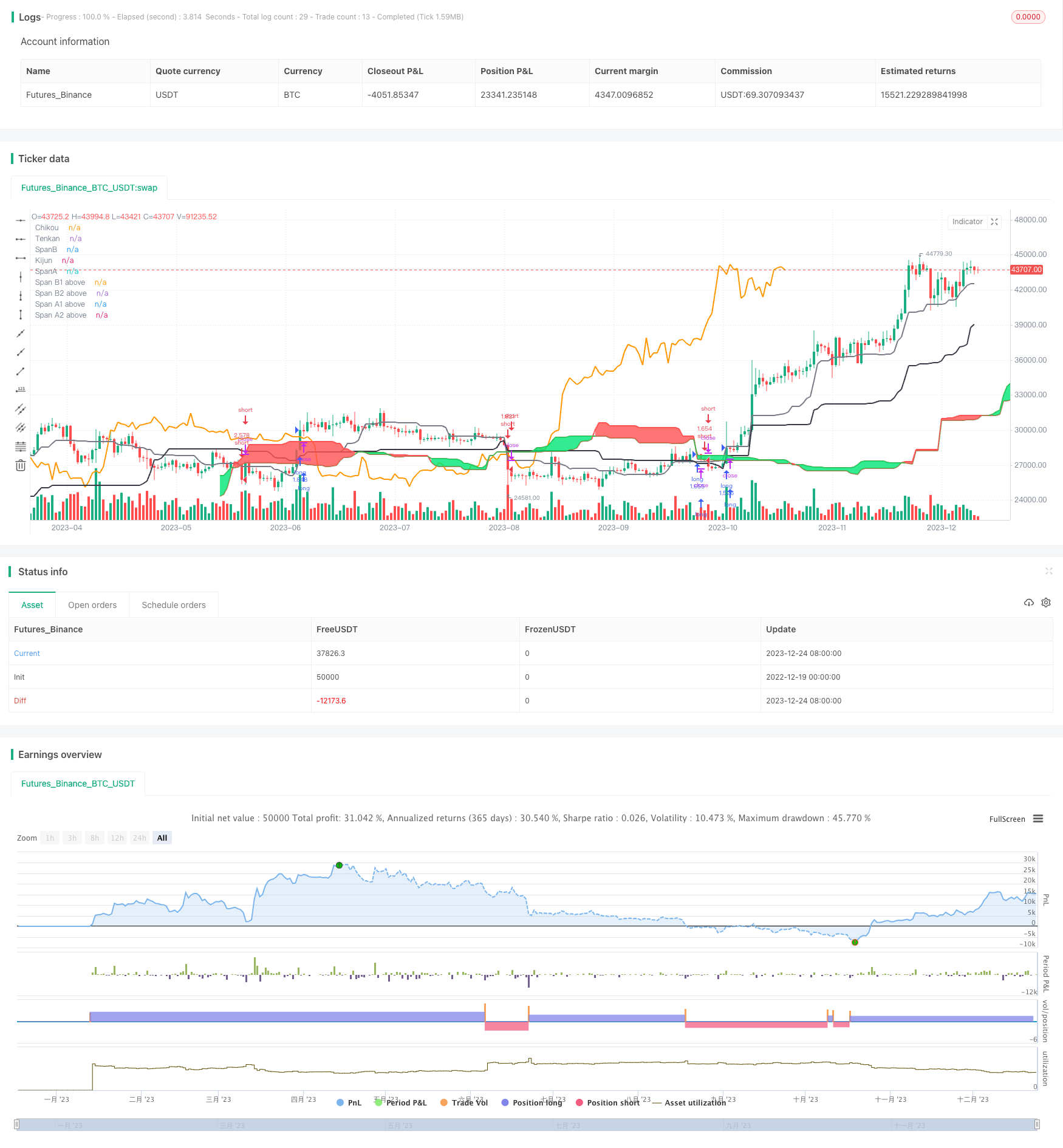
一目均衡策略是一种趋势跟踪策略,它通过计算均线并结合 Ichimoku Kinko Hyo指标判断趋势方向,实现低风险的趋势跟踪交易。
|
|
|
|
## 策略原理
|
|
|
|
该策略主要基于 Ichimoku Kinko Hyo 指标判断趋势方向。Ichimoku Kinko Hyo 又称“一目均衡表”,它由转换线(Tenkan-sen)、基准线(Kijun-sen)、先行线(Senkou Span A)和确认线(Senkou Span B)组成,形成前方和后方之间的均衡区域,称为“云带”。当价格在云带上方时为多头趋势,价格下破云带为空头信号。
|
|
|
|
此策略结合价格与均线的关系判断趋势方向。当价格上穿基准线和转换线时产生买入信号;当价格下破云带时产生卖出信号。通过这样的组合判断,可以有效过滤假突破,锁定趋势方向。
|
|
|
|
## 优势分析
|
|
|
|
- 利用 Ichimoku Kinko Hyo 指标判断趋势,避免被震荡市场的假突破误导
|
|
- 均线参数可调,可针对不同周期进行优化
|
|
- 结合均线关系判断,可有效锁定趋势方向
|
|
- 采用云带判断,可实现低风险的趋势跟踪交易
|
|
|
|
## 风险分析
|
|
|
|
- 震荡行情中容易产生错误信号
|
|
- 参数设置不当可能导致过于频繁或不及时地产生交易信号
|
|
- 需要人工判断趋势方向及参数调整
|
|
|
|
## 优化方向
|
|
|
|
该策略可以从以下几个方面进行优化:
|
|
|
|
1. 优化 Ichimoku 参数,适应更多时间周期
|
|
2. 增加止损策略,控制单笔损失
|
|
3. 结合其他指标判断强弱趋势,避免被震荡行情误导
|
|
4. 增加开仓条件,避免在极端行情中建仓
|
|
|
|
## 总结
|
|
|
|
整体来说,一目均衡策略通过 Ichimoku Kinko Hyo 指标判断趋势方向,可有效锁定趋势,并配合均线关系判断产生交易信号,实现低风险的趋势跟踪交易。该策略可通过参数调整和优化来适应不同的市场环境,值得投资者进一步研究和使用。
|
|
|
|
||
|
|
|
|
## Overview
|
|
|
|
The Ichimoku Balance Line strategy is a trend following strategy that determines trend direction by calculating moving averages combined with the Ichimoku Kinko Hyo indicator for low-risk trend trading.
|
|
|
|
## Strategy Principle
|
|
|
|
The strategy mainly uses the Ichimoku Kinko Hyo indicator to determine the trend direction. Ichimoku Kinko Hyo, also known as "Ichimoku Cloud", consists of the Tenkan-sen (Conversion Line), Kijun-sen (Base Line), Senkou Span A (Leading Span A), and Senkou Span B (Leading Span B). It forms an equilibrium zone between the front and back called the "Kumo Cloud". When price is above the cloud, it signals an upward trend. A breach below the cloud signals a downward trend.
|
|
|
|
The strategy combines the price relationship with moving averages to determine the trend direction. It generates a buy signal when the price crosses above the Base Line and Conversion Line. A sell signal is generated when the price breaks below the cloud. This combination helps to filter false breakouts and lock in the trend direction.
|
|
|
|
## Advantage Analysis
|
|
|
|
- Uses Ichimoku Kinko Hyo to determine the trend and avoid false breakouts in ranging markets
|
|
- Customizable moving average parameters for optimization across periods
|
|
- Combination with moving averages helps to effectively lock in trend direction
|
|
- Cloud bands allow low-risk trend trading
|
|
|
|
## Risk Analysis
|
|
|
|
- Prone to generating false signals in choppy market conditions
|
|
- Improper parameter settings may lead to overly frequent or delayed trade signals
|
|
- Manual judgement of trend direction and parameter adjustment required
|
|
|
|
## Optimization Directions
|
|
|
|
The strategy can be optimized in several ways:
|
|
|
|
1. Optimize Ichimoku parameters to suit more timeframes
|
|
2. Incorporate stop loss to limit losses per trade
|
|
3. Add indicators to gauge strong and weak trends to avoid whipsaws
|
|
4. Add more entry conditions to avoid opening positions in extreme market conditions
|
|
|
|
## Conclusion
|
|
|
|
In conclusion, the Ichimoku Balance Line Strategy uses the Ichimoku Cloud to determine trend direction, locks in trends effectively, and generates trade signals by combining price relationship with moving averages, allowing low-risk trend trading. The strategy can be adapted to different market environments through parameter tuning and optimizations, making it worthwhile for investors to research and utilize.
|
|
|
|
[/trans]
|
|
|
|
> Strategy Arguments
|
|
|
|
|
|
|
|
|Argument|Default|Description|
|
|
|----|----|----|
|
|
|v_input_1|2016|Backtest Start Year|
|
|
|v_input_2|true|Backtest Start Month|
|
|
|v_input_3|true|Backtest Start Day|
|
|
|v_input_4|2019|Backtest Stop Year|
|
|
|v_input_5|12|Backtest Stop Month|
|
|
|v_input_6|31|Backtest Stop Day|
|
|
|v_input_7|18|Tenkan|
|
|
|v_input_8|60|Kijun|
|
|
|v_input_9|30|Senkou B|
|
|
|v_input_10|52|Senkou A|
|
|
|v_input_11|52|Span Offset|
|
|
|v_input_12|true|Show Tenkan|
|
|
|v_input_13|true|Show Kijun|
|
|
|v_input_14|true|Show Span A|
|
|
|v_input_15|true|Show Span B|
|
|
|v_input_16|true|Show Chikou|
|
|
|
|
|
|
> Source (PineScript)
|
|
|
|
``` pinescript
|
|
/*backtest
|
|
start: 2022-12-19 00:00:00
|
|
end: 2023-12-25 00:00:00
|
|
period: 1d
|
|
basePeriod: 1h
|
|
exchanges: [{"eid":"Futures_Binance","currency":"BTC_USDT"}]
|
|
*/
|
|
|
|
//@version=3
|
|
// Credit for the initial code to nathanhoffer - I simply added the ability to select a time period
|
|
//
|
|
strategy("Cloud Breakout", overlay=true, initial_capital=10000, default_qty_type=strategy.percent_of_equity, default_qty_value=100, commission_type=strategy.commission.percent, commission_value=0.0)
|
|
|
|
/////////////// Component Code Start ///////////////
|
|
testStartYear = input(2016, "Backtest Start Year")
|
|
testStartMonth = input(1, "Backtest Start Month")
|
|
testStartDay = input(1, "Backtest Start Day")
|
|
testPeriodStart = timestamp(testStartYear,testStartMonth,testStartDay, 0, 0)
|
|
|
|
testStopYear = input(2019, "Backtest Stop Year")
|
|
testStopMonth = input(12, "Backtest Stop Month")
|
|
testStopDay = input(31, "Backtest Stop Day")
|
|
testPeriodStop = timestamp(testStopYear,testStopMonth,testStopDay, 0, 0)
|
|
|
|
testPeriod() => true
|
|
|
|
Ten = input(18, minval=1, title="Tenkan")
|
|
Kij = input(60, minval=1, title="Kijun")
|
|
LeadSpan = input(30, minval=1, title="Senkou B")
|
|
Displace = input(52, minval=1, title="Senkou A")
|
|
SpanOffset = input(52, minval=1, title="Span Offset")
|
|
|
|
sts = input(true, title="Show Tenkan")
|
|
sks = input(true, title="Show Kijun")
|
|
ssa = input(true, title="Show Span A")
|
|
ssb = input(true, title="Show Span B")
|
|
sc = input(true, title="Show Chikou")
|
|
|
|
source = close
|
|
|
|
//Script for Ichimoku Indicator
|
|
donchian(len) => avg(lowest(len), highest(len))
|
|
TS = donchian(Ten)
|
|
KS = donchian(Kij)
|
|
SpanA = avg(TS, KS)
|
|
SpanB = donchian(LeadSpan)
|
|
|
|
CloudTop = max(TS, KS)
|
|
|
|
Chikou = source[Displace]
|
|
SpanAA = avg(TS, KS)[SpanOffset]
|
|
SpanBB = donchian(LeadSpan)[SpanOffset]
|
|
|
|
//Kumo Breakout (Long)
|
|
SpanA_Top = SpanAA >= SpanBB ? 1 : 0
|
|
SpanB_Top = SpanBB >= SpanAA ? 1 : 0
|
|
|
|
SpanA_Top2 = SpanA >= SpanB ? 1 : 0
|
|
SpanB_Top2 = SpanB >= SpanA ? 1 : 0
|
|
|
|
SpanA1 = SpanA_Top2 ? SpanA : na
|
|
SpanA2 = SpanA_Top2 ? SpanB : na
|
|
|
|
SpanB1 = SpanB_Top2 ? SpanA : na
|
|
SpanB2 = SpanB_Top2 ? SpanB : na
|
|
|
|
//plot for Tenkan and Kijun (Current Timeframe)
|
|
p1= plot(sts and TS ? TS : na, title="Tenkan", linewidth = 2, color = gray)
|
|
p2 = plot(sks and KS ? KS : na, title="Kijun", linewidth = 2, color = black)
|
|
//p5 = plot(sc and KS ? KS : na, title="Chikou", linewidth = 2, color = orange)
|
|
p5 = plot(sc and Displace ? close: na, title="Chikou", linewidth = 2, offset=-Displace, color = orange)
|
|
|
|
//Plot for Kumo Cloud (Dynamic Color)
|
|
p3 = plot(ssa and SpanA ? SpanA : na, title="SpanA", linewidth=2, offset=Displace, color=green)
|
|
p4 = plot(ssb and SpanB ? SpanB : na, title="SpanB", linewidth=2, offset=Displace, color=red)
|
|
|
|
p8 = plot(ssa and SpanA1 ? SpanA1 : na, title="Span A1 above", style=linebr, linewidth=1, offset=Displace, color=green)
|
|
p9 = plot(ssa and SpanA2 ? SpanA2 : na, title="Span A2 above", style=linebr, linewidth=1, offset=Displace, color=green)
|
|
p10 = plot(ssb and SpanB1 ? SpanB1 : na, title="Span B1 above", style=linebr, linewidth=1, offset=Displace, color=red)
|
|
p11 = plot(ssb and SpanB2 ? SpanB2 : na, title="Span B2 above", style=linebr, linewidth=1, offset=Displace, color=red)
|
|
|
|
fill(p8, p9, color = lime, transp=70, title="Kumo Cloud Up")
|
|
fill (p10, p11, color=red, transp=70, title="Kumo Cloud Down")
|
|
|
|
LongSpan = (SpanA_Top and source[1] < SpanAA[1] and source > SpanAA) or (SpanB_Top and source[1] < SpanBB[1] and source > SpanBB) ? 1 : 0
|
|
cupSpan = LongSpan == 1 ? LongSpan : 0
|
|
|
|
Long_Breakout = (SpanA_Top ==1 and crossover(source, SpanAA)) or (SpanB_Top ==1 and crossover(source, SpanBB))
|
|
|
|
ShortSpan = (SpanB_Top and source[1] > SpanAA[1] and source < SpanAA) or (SpanA_Top and source[1] > SpanBB[1] and source < SpanBB) ? 1 : 0
|
|
cdnSpan = ShortSpan == 1 ? ShortSpan : 0
|
|
|
|
Short_Breakout = (SpanA_Top ==1 and crossunder(source, SpanBB)) or (SpanB_Top ==1 and crossunder(source, SpanAA))
|
|
|
|
//Kumo Twist
|
|
Kumo_Twist_Long = SpanA[1] < SpanB[1] and SpanA > SpanB ? 1 : 0
|
|
Kumo_Twist_Short = SpanA[1] > SpanB[1] and SpanA < SpanB ? 1 : 0
|
|
|
|
cupD = Kumo_Twist_Long == 1 ? Kumo_Twist_Long : 0
|
|
cdnD = Kumo_Twist_Short == 1 ? Kumo_Twist_Short : 0
|
|
|
|
Chikou_Above = close > Chikou
|
|
Chikou_Below = close < Chikou
|
|
|
|
long = (cross(TS, SpanA) or cross(TS, SpanB)) and TS>SpanA and TS>SpanB and TS>=KS
|
|
short = cross(TS, KS) and KS >= TS
|
|
|
|
if testPeriod()
|
|
strategy.entry("long", strategy.long, when=Long_Breakout)
|
|
strategy.entry("short", strategy.short, when=Short_Breakout)
|
|
```
|
|
|
|
> Detail
|
|
|
|
https://www.fmz.com/strategy/436652
|
|
|
|
> Last Modified
|
|
|
|
2023-12-26 16:13:42
|