162 lines
7.7 KiB
Markdown
162 lines
7.7 KiB
Markdown

|
|
||
|
|
> Name
|
||
|
|
|
||
|
|
基于动量增强型简单移动平均线和RSI的趋势跟踪策略-Momentum-Enhanced-Simple-Moving-Average-and-RSI-Strategy-for-Trend-Following
|
||
|
|
|
||
|
|
> Author
|
||
|
|
|
||
|
|
ianzeng123
|
||
|
|
|
||
|
|
> Strategy Description
|
||
|
|
|
||
|
|
|
||
|
|
|
||
|
|
|
||
|
|
|
||
|
|
|
||
|
|
|
||
|
|
[trans]
|
||
|
|
#### 概述
|
||
|
|
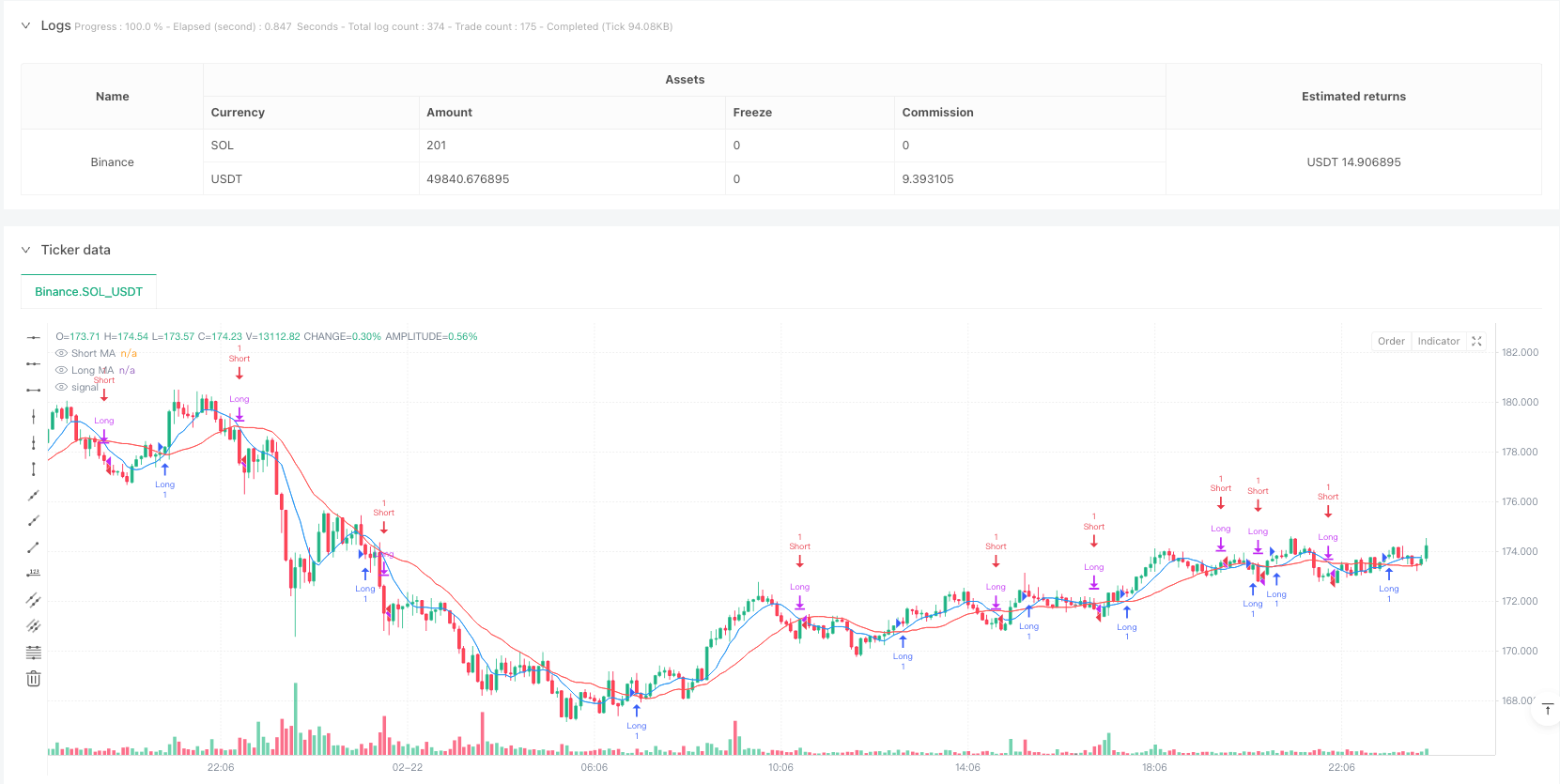
本策略是一个结合简单移动平均线(SMA)与相对强弱指标(RSI)的趋势跟踪交易系统。它通过短期和长期移动平均线的交叉来识别趋势方向,并利用RSI进行动量确认,从而在市场中寻找高概率的交易机会。该策略还包含了完整的风险管理模块,可以有效控制每笔交易的风险。
|
||
|
|
|
||
|
|
#### 策略原理
|
||
|
|
策略的核心逻辑基于两个技术指标的配合使用:
|
||
|
|
1. 双均线系统: 采用8周期和21周期的简单移动平均线,通过均线交叉识别趋势变化。当短期均线向上穿越长期均线时产生做多信号,向下穿越时产生做空信号。
|
||
|
|
2. RSI过滤器: 使用14周期的RSI指标进行动量确认。只有当RSI低于70时才执行做多,高于30时才执行做空,以避免在过度买入或卖出的区域进行交易。
|
||
|
|
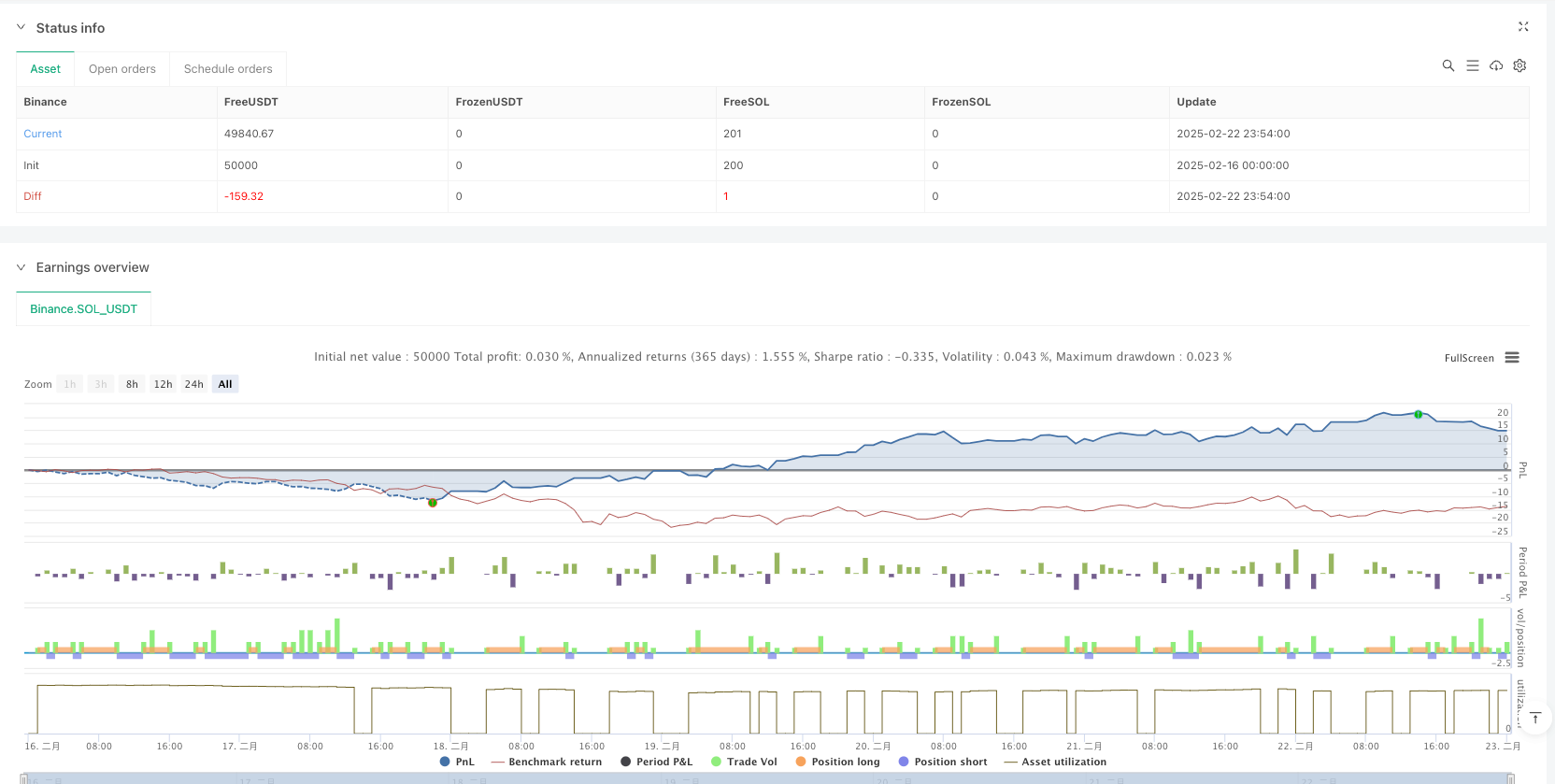
3. 风险控制: 每笔交易都设置了1%的止损和2%的止盈水平,以保护资金安全和锁定利润。
|
||
|
|
|
||
|
|
#### 策略优势
|
||
|
|
1. 指标组合优势: 结合了趋势跟踪和动量指标,能够更准确地识别市场转折点。
|
||
|
|
2. 风险管理完善: 内置止损和止盈机制,可以有效控制风险。
|
||
|
|
3. 参数灵活可调: 所有关键参数都可以根据不同市场环境进行优化。
|
||
|
|
4. 适用性广泛: 可应用于多个市场和多个时间周期。
|
||
|
|
5. 逻辑清晰简单: 策略规则明确,易于理解和执行。
|
||
|
|
|
||
|
|
#### 策略风险
|
||
|
|
1. 震荡市场风险: 在横盘震荡市场中可能产生频繁假信号。
|
||
|
|
2. 滞后性风险: 移动平均线本身具有滞后性,可能错过部分盈利机会。
|
||
|
|
3. 参数敏感性: 不同市场环境下可能需要调整参数以保持策略有效性。
|
||
|
|
4. 趋势依赖性: 策略在强趋势市场表现较好,但在其他市场环境下效果可能不佳。
|
||
|
|
|
||
|
|
#### 策略优化方向
|
||
|
|
1. 引入市场环境识别机制,在不同市场条件下使用不同的参数组合。
|
||
|
|
2. 增加成交量指标作为辅助确认信号。
|
||
|
|
3. 优化止损止盈机制,可考虑使用动态止损方案。
|
||
|
|
4. 添加趋势强度过滤器,只在强趋势市场下交易。
|
||
|
|
5. 开发自适应参数调整机制,提高策略的适应性。
|
||
|
|
|
||
|
|
#### 总结
|
||
|
|
这是一个结构完整、逻辑清晰的趋势跟踪策略。通过结合SMA和RSI,既能捕捉趋势,又能避免在过度买卖区域交易。内置的风险管理机制确保了策略的稳定性。虽然存在一些固有的局限性,但通过建议的优化方向可以进一步提升策略的性能。该策略特别适合追求稳健收益的交易者使用。
|
||
|
|
|
||
|
|
||
|
||
|
|
|
||
|
|
#### Overview
|
||
|
|
This strategy is a trend-following trading system that combines Simple Moving Averages (SMA) with the Relative Strength Index (RSI). It identifies trend directions through crossovers of short-term and long-term moving averages, uses RSI for momentum confirmation, and seeks high-probability trading opportunities in the market. The strategy includes a comprehensive risk management module for effective control of trading risks.
|
||
|
|
|
||
|
|
#### Strategy Principles
|
||
|
|
The core logic is based on the combination of two technical indicators:
|
||
|
|
1. Dual MA System: Uses 8-period and 21-period simple moving averages to identify trend changes. Buy signals are generated when the short-term MA crosses above the long-term MA, and sell signals when it crosses below.
|
||
|
|
2. RSI Filter: Employs a 14-period RSI for momentum confirmation. Long positions are only executed when RSI is below 70, and short positions when RSI is above 30, avoiding trades in overextended areas.
|
||
|
|
3. Risk Control: Each trade includes a 1% stop loss and 2% take profit level to protect capital and secure profits.
|
||
|
|
|
||
|
|
#### Strategy Advantages
|
||
|
|
1. Indicator Synergy: Combines trend-following and momentum indicators for more accurate identification of market turning points.
|
||
|
|
2. Robust Risk Management: Built-in stop loss and take profit mechanisms effectively control risk.
|
||
|
|
3. Flexible Parameters: All key parameters can be optimized for different market conditions.
|
||
|
|
4. Wide Applicability: Can be applied across multiple markets and timeframes.
|
||
|
|
5. Clear Logic: Strategy rules are explicit, easy to understand and execute.
|
||
|
|
|
||
|
|
#### Strategy Risks
|
||
|
|
1. Choppy Market Risk: May generate frequent false signals in sideways markets.
|
||
|
|
2. Lag Risk: Moving averages have inherent lag, potentially missing some profit opportunities.
|
||
|
|
3. Parameter Sensitivity: May require parameter adjustments in different market environments.
|
||
|
|
4. Trend Dependency: Strategy performs best in strong trending markets but may underperform in other conditions.
|
||
|
|
|
||
|
|
#### Optimization Directions
|
||
|
|
1. Introduce market environment recognition mechanism for different parameter combinations.
|
||
|
|
2. Add volume indicators as confirmatory signals.
|
||
|
|
3. Optimize stop loss and take profit mechanisms, consider implementing dynamic stop loss.
|
||
|
|
4. Add trend strength filters to trade only in strong trending markets.
|
||
|
|
5. Develop adaptive parameter adjustment mechanisms to improve strategy adaptability.
|
||
|
|
|
||
|
|
#### Summary
|
||
|
|
This is a comprehensively structured trend-following strategy with clear logic. By combining SMA and RSI, it captures trends while avoiding trades in overextended areas. The built-in risk management ensures strategy stability. While there are some inherent limitations, the suggested optimization directions can further enhance strategy performance. This strategy is particularly suitable for traders seeking stable returns.[/trans]
|
||
|
|
|
||
|
|
|
||
|
|
|
||
|
|
> Source (PineScript)
|
||
|
|
|
||
|
|
``` pinescript
|
||
|
|
/*backtest
|
||
|
|
start: 2025-02-16 00:00:00
|
||
|
|
end: 2025-02-23 00:00:00
|
||
|
|
period: 6m
|
||
|
|
basePeriod: 6m
|
||
|
|
exchanges: [{"eid":"Binance","currency":"SOL_USDT"}]
|
||
|
|
*/
|
||
|
|
|
||
|
|
//@version=6
|
||
|
|
strategy("WEN - SMA with RSI Strategy", overlay=true)
|
||
|
|
|
||
|
|
// Define input parameters
|
||
|
|
// SMA Inputs
|
||
|
|
shortLength = input(8, title="Short MA Length")
|
||
|
|
longLength = input(21, title="Long MA Length")
|
||
|
|
|
||
|
|
// RSI Inputs
|
||
|
|
rsiLength = input(14, title="RSI Length")
|
||
|
|
rsiOverbought = input(70, title="RSI Overbought")
|
||
|
|
rsiOversold = input(30, title="RSI Oversold")
|
||
|
|
|
||
|
|
// Calculate indicators
|
||
|
|
// Moving Averages
|
||
|
|
shortMA = ta.sma(close, shortLength)
|
||
|
|
longMA = ta.sma(close, longLength)
|
||
|
|
|
||
|
|
// RSI
|
||
|
|
rsi = ta.rsi(close, rsiLength)
|
||
|
|
|
||
|
|
// Plot indicators
|
||
|
|
plot(shortMA, title="Short MA", color=color.blue)
|
||
|
|
plot(longMA, title="Long MA", color=color.red)
|
||
|
|
// RSI is typically plotted in a separate panel in trading platforms
|
||
|
|
|
||
|
|
// Entry conditions with RSI confirmation
|
||
|
|
smaLongCondition = ta.crossover(shortMA, longMA)
|
||
|
|
smaShortCondition = ta.crossunder(shortMA, longMA)
|
||
|
|
|
||
|
|
rsiLongCondition = rsi < rsiOverbought // Not overbought for long entry
|
||
|
|
rsiShortCondition = rsi > rsiOversold // Not oversold for short entry
|
||
|
|
|
||
|
|
// Combined entry conditions
|
||
|
|
longCondition = smaLongCondition and rsiLongCondition
|
||
|
|
shortCondition = smaShortCondition and rsiShortCondition
|
||
|
|
|
||
|
|
// Execute trades
|
||
|
|
if (longCondition)
|
||
|
|
strategy.entry("Long", strategy.long)
|
||
|
|
if (shortCondition)
|
||
|
|
strategy.close("Long")
|
||
|
|
strategy.entry("Short", strategy.short)
|
||
|
|
|
||
|
|
// Set stop loss and take profit
|
||
|
|
stopLoss = input(1, title="Stop Loss (%)") / 100
|
||
|
|
takeProfit = input(2, title="Take Profit (%)") / 100
|
||
|
|
|
||
|
|
longStopLossPrice = strategy.position_avg_price * (1 - stopLoss)
|
||
|
|
longTakeProfitPrice = strategy.position_avg_price * (1 + takeProfit)
|
||
|
|
shortStopLossPrice = strategy.position_avg_price * (1 + stopLoss)
|
||
|
|
shortTakeProfitPrice = strategy.position_avg_price * (1 - takeProfit)
|
||
|
|
|
||
|
|
strategy.exit("Take Profit / Stop Loss", from_entry="Long", stop=longStopLossPrice, limit=longTakeProfitPrice)
|
||
|
|
strategy.exit("Take Profit / Stop Loss", from_entry="Short", stop=shortStopLossPrice, limit=shortTakeProfitPrice)
|
||
|
|
```
|
||
|
|
|
||
|
|
> Detail
|
||
|
|
|
||
|
|
https://www.fmz.com/strategy/483525
|
||
|
|
|
||
|
|
> Last Modified
|
||
|
|
|
||
|
|
2025-02-24 10:19:03
|