
8.5 KiB
Name
影子交易策略Shadow-Trading-Strategy
Author
ChaoZhang
Strategy Description
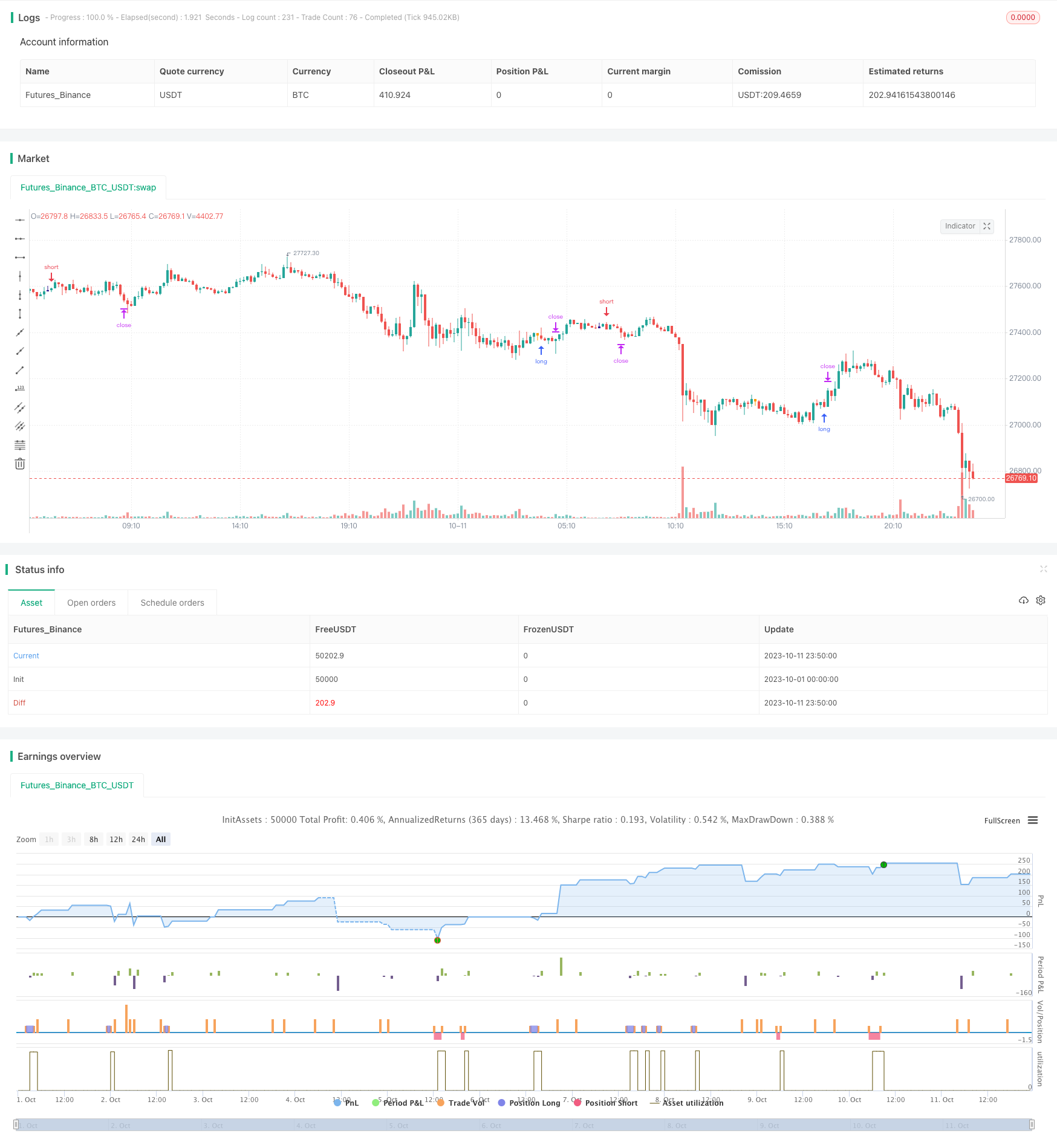 [trans]
概述
影子交易策略通过识别K线上出现长下影线或者长上影线的K线,来判断市场可能反转的时机。当识别到长下影线时,做多;当识别到长上影线时,做空。本策略主要利用长影线反转的普遍规律来进行交易。
策略原理
影子交易策略的核心逻辑是识别K线中出现的长上影线和长下影线。策略通过计算K线实体大小corpo和影线大小pinnaL、pinnaS,当影线大小大于实体大小的一定倍数时,认为可能出现反转机会。具体来说,策略包含以下步骤:
- 计算K线实体大小
corpo,即开盘价和收盘价的差价的绝对值。 - 计算上影线
pinnaL,即最高价和收盘价的差价的绝对值。 - 计算下影线
pinnaS,即最低价和收盘价的差价的绝对值。 - 判断上影线是否大于实体的一定倍数,通过
pinnaL > (corpo*size),size是可调参数。 - 判断下影线是否大于实体的一定倍数,通过
pinnaS > (corpo*size)。 - 如果上述条件成立,则在影线出现的K线收盘时,做空(长上影线)或做多(长下影线)。
此外,策略还判断K线波动大小dim是否大于最小值min,以过滤除去波动太小的无趣的K线。进场后设置止损和止盈退出。
策略优势分析
- 利用影线反转的普遍规律,是一种较为可靠的交易信号
- 策略逻辑简单清晰,参数设置直观,易于掌握
- 可通过调整参数控制进场频率,灵活控制交易风险
- 结合趋势、支持阻力等因素可进一步优化
风险及解决方案
- 长影线反转失败,未能反转的概率存在,可通过调整参数降低风险
- 需要combination with 趋势判断,避免逆势操作
- 针对具体品种参数需要优化,不同品种参数可不一样
- 可结合其他指标过滤进场机会,降低获利率以换取胜率提升
策略优化方向
- 根据不同品种参数进行优化,提高策略稳定性
- 结合移动均线等指标判断趋势,避免逆势操作
- 增加对突破前期高点或低点的判断,提高策略的有效性
- 优化和调整止损止盈位置,在保持盈利的前提下最大限度降低亏损风险
- 优化仓位控制,不同品种可设置不同仓位
总结
影子交易策略是一种较为简单实用的短线交易策略。它利用长影线反转的普遍规律产生交易信号。该策略逻辑简单,易于实现,可根据品种差异进行调整优化。同时,影子交易策略也存在一定的风险,需要结合趋势和其他因素进行过滤,降低错误交易概率。如果使用得当,影子交易策略可以成为量化交易体系中的一个有效组成部分。
||
Overview
The shadow trading strategy identifies K-line with long lower or upper shadows to determine potential market reversal opportunities. It goes long when a long lower shadow is identified and goes short when a long upper shadow is identified. The strategy mainly utilizes the general principle of shadow reversal for trading.
Strategy Logic
The core logic of the shadow trading strategy is to identify long upper and lower shadows in K-lines. The strategy calculates the size of the K-line body corpo and the size of the shadows pinnaL and pinnaS. When the size of the shadow is larger than the body size by a certain multiplier, it considers there may be reversal opportunities. Specifically, the strategy includes the following steps:
- Calculate K-line body size
corpo, which is the absolute value of the difference between open and close price. - Calculate upper shadow
pinnaL, which is the absolute value of the difference between highest price and close price. - Calculate lower shadow
pinnaS, which is the absolute value of the difference between lowest price and close price. - Check if upper shadow is larger than body size by a multiplier, through
pinnaL > (corpo*size), wheresizeis an adjustable parameter. - Check if lower shadow is larger than body size by a multiplier, through
pinnaS > (corpo*size). - If above conditions are met, go short (long upper shadow) or long (long lower shadow) at the close of the K-line with shadow.
In addition, the strategy also checks if the K-line range dim is greater than the minimum value min to filter out trivial K-lines with negligible range. Stop loss and take profit are used for exit.
Advantage Analysis
- Utilizes the general principle of shadow reversal, which is a relatively reliable trading signal
- Simple and clear strategy logic, intuitive parameter settings, easy to grasp
- Flexible risk control by adjusting parameters to change entry frequency
- Can be further optimized by combining trend, support/resistance etc.
Risks and Solutions
- Probability of failure in shadow reversal exists, can lower risk by adjusting parameters
- Needs combination with trend judgment to avoid counter trend trades
- Parameters need optimization for different products, may vary across products
- Can combine other indicators to filter entries, lower win rate for higher profitability
Optimization Directions
- Optimize parameters by product to improve stability
- Add trend judgment with moving averages etc. to avoid counter trend
- Add checks on breaking recent high/low points to improve efficacy
- Optimize stop loss and take profit to maximize profit while minimizing loss
- Optimize position sizing, can vary across different products
Conclusion
The shadow trading strategy is a simple and practical short-term trading strategy. It generates trading signals using the general principle of shadow reversals. The strategy logic is simple and easy to implement, and can be adjusted and optimized according to product differences. At the same time, shadow trading also carries certain risks. It needs to be combined with trend and other factors for filtration to reduce false trades. When used properly, shadow trading can become an effective component in a quant trading system.
[/trans]
Strategy Arguments
| Argument | Default | Description |
|---|---|---|
| v_input_1 | true | size |
| v_input_2 | 0.0018 | Tail Tollerance |
| v_input_3 | 0.001 | min |
| v_input_4 | false | offset |
| v_input_5 | true | monthBegin |
| v_input_6 | 2013 | yearBegin |
| v_input_7 | 20 | Target |
| v_input_8 | 70 | Stop |
| v_input_9 | false | Trailing |
Source (PineScript)
/*backtest
start: 2023-10-01 00:00:00
end: 2023-10-11 23:59:59
period: 10m
basePeriod: 1m
exchanges: [{"eid":"Futures_Binance","currency":"BTC_USDT"}]
*/

//@version=2
strategy("Shadow Trading", overlay=true)

size = input(1,type=float)
pinnaL = abs(high - close)
pinnaS = abs(low-close)
scarto = input(title="Tail Tollerance", type=float, defval=0.0018)
corpo = abs(close - open)
dim = abs(high-low)
min = input(0.001)
shortE = (open + dim)

longE = (open - dim)
barcolor(dim > min and (close > open) and (pinnaL > (corpo*size)) and (open-low<scarto) ? navy : na)

longcond = (dim > min) and (close > open) and (pinnaL > (corpo*size)) and (open-low<scarto)
minimo=low+scarto
massimo=high+scarto
barcolor( dim > min and(close < open) and (pinnaS > (corpo*size)) and (high-open<scarto) ? orange: na)
shortcond = (dim > min) and(close < open) and (pinnaS > (corpo*size)) and (high-open<scarto)
//plot(shortE)
//plot(longE)
//plot(open)
ss= shortcond ? close : na
ll=longcond ? close : na
offset= input(0.00000)

DayClose = 2
closup = barssince(change(strategy.opentrades)>0)  >= DayClose

longCondition = (close > open) and (pinnaL > (corpo*size)) and (open-low<scarto)

crossFlag = longcond ? 1 : 0
monthBegin = input(1,maxval = 12)
yearBegin = input(2013, maxval= 2015, minval=2000)

if(month(time)>monthBegin and year(time) >yearBegin)
    if (longcond)
        strategy.entry("short", strategy.short, stop = low - offset)
//strategy.close("short", when = closup)
shortCondition = (close < open) and (pinnaS > (corpo*size)) and (high-open<scarto)
if(month(time)>monthBegin and year(time) >yearBegin)
    if (shortcond)
        strategy.entry("long", strategy.long, stop = high + offset)
//strategy.close("long", when = closup)

Target =  input(20)
Stop = input(70) //- 2
Trailing = input(0)
CQ = 100

TPP = (Target > 0) ? Target*10: na
SLP = (Stop > 0) ? Stop*10 : na
TSP = (Trailing > 0) ? Trailing : na

strategy.exit("Close Long", "long", qty_percent=CQ, profit=TPP, loss=SLP, trail_points=TSP)
strategy.exit("Close Short", "short", qty_percent=CQ, profit=TPP, loss=SLP, trail_points=TSP)
Detail
https://www.fmz.com/strategy/430994
Last Modified
2023-11-03 16:03:59