
9.9 KiB
Name
双动量突破与波动率过滤量化策略Dual-Momentum-Breakthrough-and-Volatility-Filtering-Algorithmic-Trading-Strategy
Author
ChaoZhang
Strategy Description
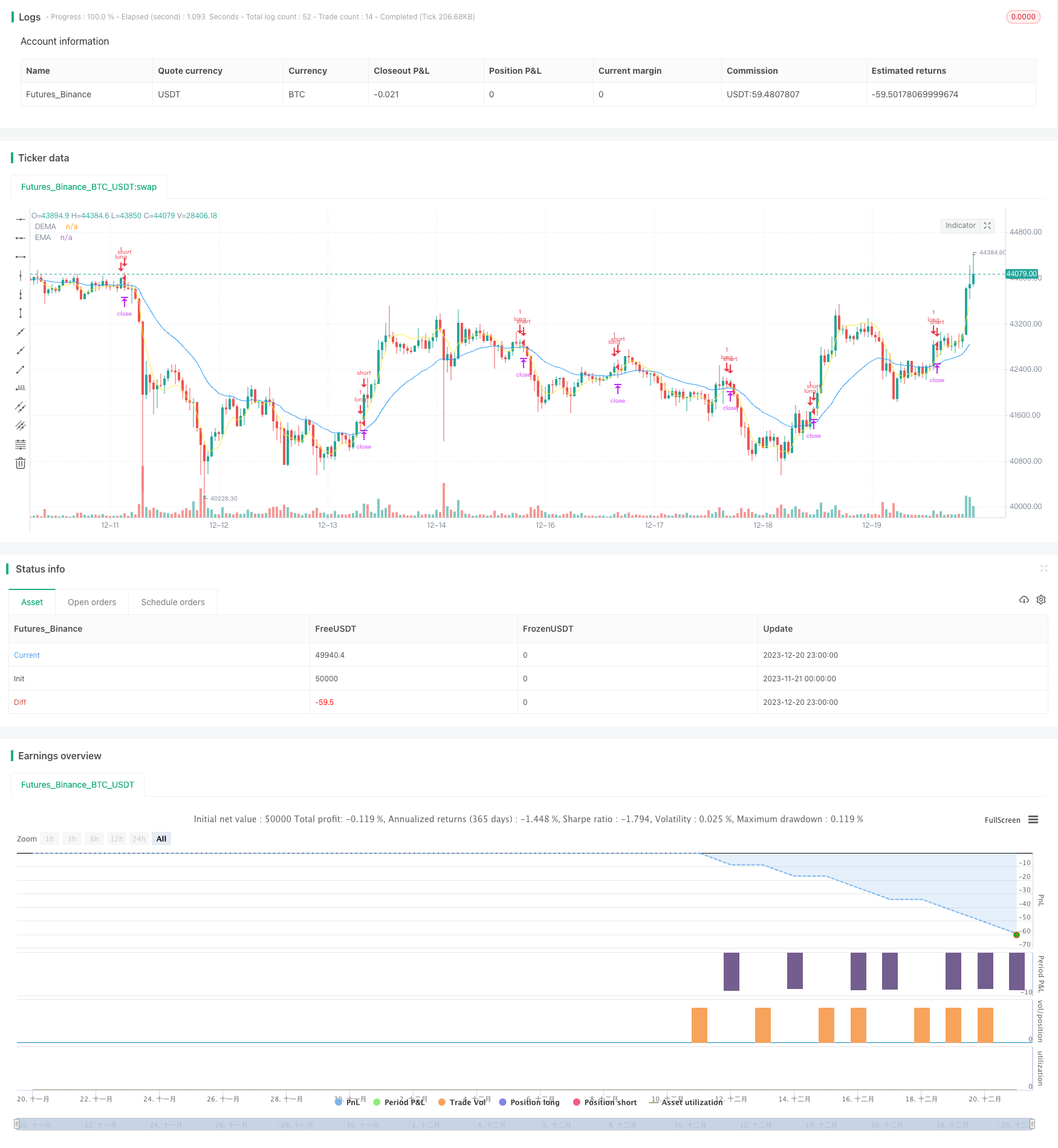 [trans]
概述
该策略主要通过计算价格的双重EMA动量和DEMA动量的交叉以识别趋势,并结合ATR波动率指标来过滤假突破,实现了一个双动量指标与波动率过滤的量化交易策略。
策略原理
该策略主要包含以下几个部分:
-
计算价格的EMA和DEMA作为双重动量指标。其中较长周期的EMA反映长期趋势,DEMA作为更敏感的短期动量指标。当DEMA上穿EMA时生成买入信号。
-
计算ATR波动率指标。通过ATR的大小判断市场的波动率和流动性情况。波动率过大时过滤掉动量指标的信号,避免假突破。
-
ATR波动率通过参数化移动平均线来判断高低。当ATR波动率低于移动平均线时,允许动量指标信号的触发。
-
通过参数控制ATR时间周期、ATR长度、ATR移动平均线类型和长度等。
-
建立多头仓位的止损、止盈和追踪止损规则。
优势分析
这种双EMA过滤的策略,可以明显减少普通EMA金叉死叉策略中的假信号和频繁交易。加入ATR波动率指标后,可以有效过滤细微波动带来的误导信号,避免被套。
相比单一动量指标,该策略采用双指标设计,可以提高判断效果。DEMA作为更加灵敏的短期动量指标,配合稳定的长线EMA,形成比较可靠的组合信号。
通过调节ATR参数,可以针对不同标的物设定合适的波动率条件,提高策略的适用性。
风险分析
该策略最大的风险在于参数设置不当可能导致交易信号过于稀少。DEMA和EMA长度设置过长,或者ATR波动率界限设置过高,都可能减弱策略的实际运作效果。这需要通过反复测试来调整至最佳参数组合。
另一个潜在风险是,在极端行情中,价格波动可能突破ATR参数的约束,从而带来亏损。这需要人为监控市场异常情况,暂停策略运行。
优化方向
-
测试不同的动量指标参数组合,找到最佳参数。
-
尝试将动量指标由双EMA调整为MACD或其他指标。
-
测试不同的波动率指标设定,如整体历史ATR,市场波动率指数等。
-
增加对交易量的过滤,避免价格不真实突破的风险。
-
优化止损止盈机制,使盈亏比更优。
总结
该策略整合了动量指标与波动率分析,在扎实的理论基础上设计。通过参数调整和规则优化,可以成为一个稳定可靠的量化交易策略。其交易信号清晰,风险可控,值得实盘验证与应用。
||
Overview
This strategy mainly uses the crossover of dual EMA momentum and DEMA momentum to identify trends, and incorporates the ATR volatility index to filter false breakouts, implementing a quantitative trading strategy with dual momentum indicators and volatility filtering.
Strategy Principle
The main components of this strategy include:
-
Calculate EMA and DEMA of price as dual momentum indicators. The longer period EMA reflects long-term trends, while DEMA serves as a more sensitive short-term momentum indicator. A buy signal is generated when DEMA crosses above EMA.
-
Calculate the ATR volatility index. Use the ATR value to determine market volatility and liquidity conditions. Filter momentum indicator signals when volatility is too high to avoid false breakouts.
-
ATR volatility is judged as high or low by a parameterized moving average line. Momentum indicator signals are only triggered when ATR volatility is below the moving average line.
-
Parameters control ATR timeframe, ATR length, ATR moving average type and length etc.
-
Establish stop loss, take profit and trailing stop rules for long positions.
Advantage Analysis
The dual EMA filter can significantly reduce false signals and overtrading compared to basic EMA cross strategies. Adding the ATR volatility index effectively filters out misleading signals from minor fluctuations and avoids being trapped.
Compared to single momentum indicators, the dual design can improve judgment effectiveness. As a more responsive short-term momentum indicator, DEMA combined with the stable long term EMA forms a reliable combo signal.
By tuning ATR parameters, appropriate volatility thresholds can be set for different tickers, improving strategy adaptability.
Risk Analysis
The biggest risk is that improper parameter settings may result in too few trading signals. Overly long DEMA and EMA lengths, or ATR volatility thresholds set too high, can all undermine actual strategy performance. Repeated backtests are needed to find the optimal parameter combination.
Another potential risk is that in extreme market conditions, price swings may breach ATR parameter constraints leading to losses. Manual monitoring of market anomalies is required to pause strategy execution when necessary.
Optimization Directions
-
Test different momentum indicator parameter combinations to find optimum settings.
-
Try substituting momentum indicators from dual EMA to MACD or other indicators.
-
Test different volatility index configurations, such as overall historical ATR, market volatility index etc.
-
Add volume filtering to avoid risk from false price breakouts.
-
Optimize stop loss and take profit mechanisms for improved risk-reward ratio.
Conclusion
This strategy integrates momentum analysis and volatility research with a solid theoretical basis. Through parameter tuning and logic optimization, it can become a stable and reliable algorithmic trading system. With clear trade signals and controllable risks, it is worth verifying and implementing in live trading.
[/trans]
Strategy Arguments
| Argument | Default | Description |
|---|---|---|
| v_input_1 | 10 | DEMA LENGTH |
| v_input_2_close | 0 | Source: close |
| v_input_3 | 25 | EMA Length |
| v_input_4_close | 0 | Source: close |
| v_input_5 | false | Offset |
| v_input_6 | D | ATR Timeframe |
| v_input_7 | 14 | ATR Lookback Period |
| v_input_8 | true | Show Moving Average? |
| v_input_9 | 0 | Moving Average Type: EMA |
| v_input_10 | 20 | Moving Average Period |
| v_input_11 | 50 | Trail stop loss (%) |
| v_input_12 | 3000 | Long Take Profit (%) |
| v_input_13 | true | From Month |
| v_input_14 | true | From Day |
| v_input_15 | 2017 | From Year |
| v_input_16 | true | To Month |
| v_input_17 | true | To Day |
| v_input_18 | 9999 | To Year |
Source (PineScript)
/*backtest
start: 2023-11-21 00:00:00
end: 2023-12-21 00:00:00
period: 1h
basePeriod: 15m
exchanges: [{"eid":"Futures_Binance","currency":"BTC_USDT"}]
*/

// This source code is subject to the terms of the Mozilla Public License 2.0 at https://mozilla.org/MPL/2.0/
// © Qorbanjf

//@version=4
strategy("ORIGIN DEMA/EMA & VOL LONG ONLY", shorttitle="ORIGIN DEMA/EMA & VOL LONG", overlay=true)

// DEMA
length = input(10, minval=1, title="DEMA LENGTH")
src = input(close, title="Source")
e1 = ema(src, length)
e2 = ema(e1, length)
dema1 = 2 * e1 - e2
plot(dema1, "DEMA", color=color.yellow)

//EMA
len = input(25, minval=1, title="EMA Length")
srb = input(close, title="Source")
offset = input(title="Offset", type=input.integer, defval=0, minval=-500, maxval=500)
ema1 = ema(srb, len)
plot(ema1, title="EMA", color=color.blue, offset=offset)


// Inputs
atrTimeFrame = input("D", title="ATR Timeframe", type=input.resolution)
atrLookback = input(defval=14,title="ATR Lookback Period",type=input.integer)
useMA = input(title = "Show Moving Average?", type = input.bool, defval = true)
maType = input(defval="EMA", options=["EMA", "SMA"], title = "Moving Average Type")
maLength = input(defval = 20, title = "Moving Average Period", minval = 1)
//longLossPerc = input(title="Long Stop Loss (%)",
    // type=input.float, minval=0.0, step=0.1, defval=1) * 0.01
longTrailPerc = input(title="Trail stop loss (%)",
     type=input.float, minval=0.0, step=0.1, defval=50) * 0.01
longProfitPerc = input(title="Long Take Profit (%)",
     type=input.float, minval=0.0, step=0.1, defval=3000) / 100

// === INPUT BACKTEST RANGE ===
FromMonth = input(defval = 1, title = "From Month", minval = 1, maxval = 12)
FromDay   = input(defval = 1, title = "From Day", minval = 1, maxval = 31)
FromYear  = input(defval = 2017, title = "From Year", minval = 2000)
ToMonth   = input(defval = 1, title = "To Month", minval = 1, maxval = 12)
ToDay     = input(defval = 1, title = "To Day", minval = 1, maxval = 31)
ToYear    = input(defval = 9999, title = "To Year", minval = 2017)


// ATR Logic // atrValue = atr(atrLookback) // atrp = (atrValue/close)*100 // plot(atrp, color=color.white, linewidth=2, transp = 30)

atrValue = security(syminfo.tickerid, atrTimeFrame, atr(atrLookback))
atrp = (atrValue/close)*100

// Moving Average Logic
ma(maType, src, length) =>
    maType == "EMA" ? ema(src, length) : sma(src, length) //Ternary Operator (if maType equals EMA, then do ema calc, else do sma calc)
maFilter = security(syminfo.tickerid, atrTimeFrame, ma(maType, atrp, maLength))

// variables for enter position
enterLong = crossover(dema1, ema1) and atrp < maFilter

// variables for exit position
sale = crossunder(dema1, ema1)

// stop loss
//longStopPrice  = strategy.position_avg_price * (1 - longLossPerc)

// trail stop
// Determine trail stop loss prices
longStopTrail = 0.0

longStopTrail := if (strategy.position_size > 0)
    stopValue = close * (1 - longTrailPerc)
    max(stopValue, longStopTrail[1])
else
    0
//Take profit Percentage
longExitPrice  = strategy.position_avg_price * (1 + longProfitPerc)

//Enter trades when conditions are met
strategy.entry(id="long",
 long=strategy.long,
 when=enterLong,
 comment="long")

//
strategy.close("long", when = sale, comment = "Sell")
//place exit orders (only executed after trades are active)

strategy.exit(id="sell",
 limit = longExitPrice,
 stop = longStopTrail,
 comment = "SL/TP")
Detail
https://www.fmz.com/strategy/436217
Last Modified
2023-12-22 12:01:21