
9.8 KiB
Name
威廉姆斯鳄鱼策略Williams-Alligator-Strategy
Author
ChaoZhang
Strategy Description
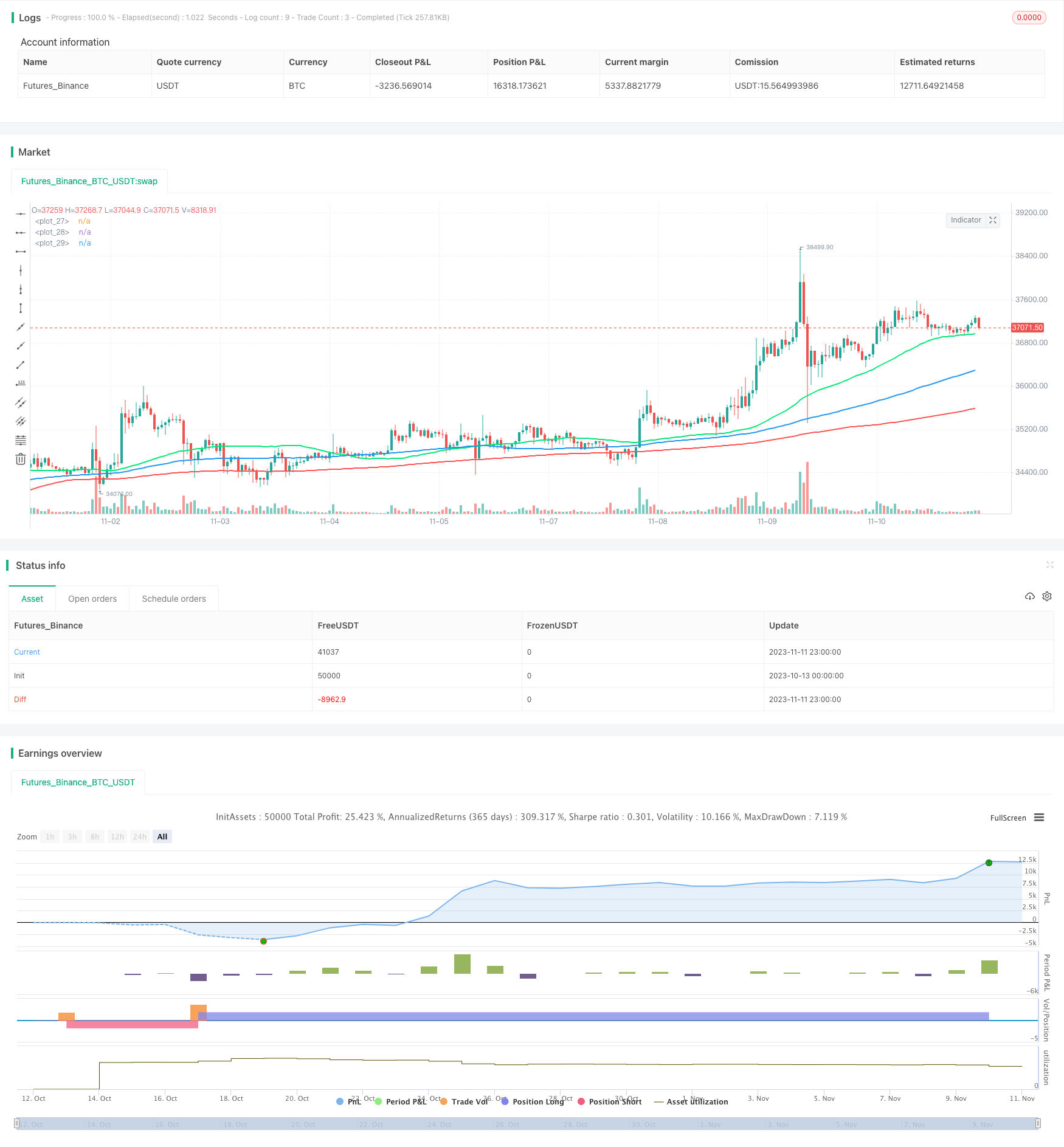
[trans]
概述
威廉姆斯鳄鱼策略是一种趋势跟踪策略,它利用三条不同周期的移动平均线形成的“鳄鱼口”形态判断趋势方向。当快线高于中线、中线高于慢线时,形成上升趋势的鳄鱼口,做多;当快线低于中线、中线低于慢线时,形成下降趋势的鳄鱼口,做空。该策略以Bill Williams发明的鳄鱼指标为基础,结合了移动平均线的趋势判断能力,可以有效捕捉市场趋势。
策略原理
该策略使用3条不同周期长度的SMA移动平均线,即快线sma1、中线sma2和慢线sma3。其中,sma1周期最短,sma3周期最长。
当sma1上穿sma2,且sma2上穿sma3时,表明市场处于上升趋势,形成上升鳄鱼口,根据趋势交易理论,这时应该入场做多。
反之,当sma1下穿sma2,且sma2下穿sma3时,表明市场处于下降趋势,形成下降鳄鱼口,这时应该入场做空。
做多和做空的出场条件为三条均线重新排列,快线低于中线或中线低于慢线,此时应平仓。
该策略还绘制了背景颜色来标识趋势方向,绿色代表上升趋势,红色代表下降趋势。
整体来说,该策略利用移动平均线的优势,以“鳄鱼口”形态判断趋势方向,并顺势入场,是一种较为典型的趋势跟踪策略。
优势分析
- 使用鳄鱼口判断,可以有效识别趋势方向。
- 采用不同周期线组合,可以提高形态判断的准确性。
- 顺势入场交易,符合趋势交易理论。
- 设置背景颜色辅助判断,直观可视。
- 交易逻辑简单清晰,容易实施。
风险分析
- 大周期震荡市场中,存在多次调整风险。
- 三线排列顺序改变时,平仓风险较大。
- 无法判断趋势强弱,存在不适合趋势入场的情况。
- 未考虑止损,大幅回撤风险较大。
- 固定周期无法适应市场变化,应采用自适应周期。
针对以上风险,可采取如下措施进一步优化:
-
增加趋势过滤条件,避免震荡市场频繁开仓。
-
优化出场条件,结合趋势指标判断平仓时机。
-
增加止损策略,控制单笔损失。
-
使用自适应移动平均线,使周期能动态调整。
优化方向
该策略可以从以下几个方面进行进一步优化:
-
增加趋势强弱判断,避免平稳或者震荡趋势过早入场。可以引入MACD,KDJ等辅助判断。
-
优化移动平均线周期参数,寻找最佳组合。可以通过回测多组参数找到最优参数。
-
利用自适应移动平均线,使周期能根据市场动能自适应变化。
-
增加止损策略,如跟踪止损、余额止损等,控制风险。
-
优化入场条件,可以考虑成交量,布林带等指标进行过滤,提高入场准确率。
-
优化出场条件,在三线交叉时结合趋势指标判断趋势反转概率,降低出场风险。
总结
威廉姆斯鳄鱼策略是一个典型的趋势跟踪策略。它通过快中慢三条移动平均线形成鳄鱼口判断趋势方向,并顺势入场。该策略优点是交易逻辑简单清晰,易于操作;缺点是对趋势判断准确性和风险控制能力较弱。未来可通过引入辅助指标、优化参数、止损等方式进行提升,使策略更适应复杂的市场环境。
||
Overview
Williams' Alligator Strategy is a trend following strategy that uses three moving average lines of different periods to form "alligator jaws" to determine the trend direction. When the fast line is above the middle line and the middle line is above the slow line, an upward trend alligator mouth is formed to go long. When the fast line is below the middle line and the middle line is below the slow line, a downward trend alligator mouth is formed to go short. It was invented by Bill Williams and combines the trend judging ability of moving averages to effectively capture market trends.
How it Works
The strategy uses three SMAs of different period lengths - fast line sma1, middle line sma2, and slow line sma3, where sma1 has the shortest period and sma3 has the longest.
When sma1 crosses above sma2, and sma2 crosses above sma3, it indicates the market is in an upward trend and forms an upward alligator mouth. According to trend trading theory, a long position should be entered.
Conversely, when sma1 crosses below sma2, and sma2 crosses below sma3, it indicates the market is in a downward trend and forms a downward alligator mouth. A short position should be entered.
The exit condition is when the three lines re-align, with the fast line below the middle line or the middle line below the slow line. Positions should be closed out.
The strategy also draws background colors to identify the trend direction - green for uptrend and red for downtrend.
In summary, the strategy utilizes the strengths of moving averages and "alligator mouth" patterns to determine trend direction and trade accordingly. It is a typical trend following strategy.
Advantage Analysis
- Alligator mouth effectively identifies trend direction.
- Combination of different period lines improves pattern accuracy.
- Trading with the trend aligns with trend trading theory.
- Background colors assist visual judgement.
- Simple and clear logic, easy to implement.
Risk Analysis
- Multiple whipsaw risks in ranging markets.
- High risk when lines re-align to close out positions.
- Unable to determine trend strength, may incorrectly enter trends.
- No stop loss, high drawdown risk.
- Fixed periods cannot adapt to market changes.
To address the risks, the following improvements can be made:
-
Add trend filter to avoid whipsaws in ranging markets.
-
Optimize exit conditions using trend indicators.
-
Add stop loss strategy to control single trade loss.
-
Use adaptive moving averages so periods adjust dynamically.
Improvement Directions
The strategy can be further optimized in the following aspects:
-
Add trend strength filter to avoid premature entry in weak trends. Indicators like MACD, KDJ can help.
-
Optimize moving average periods to find best combinations through backtesting.
-
Use adaptive moving averages so periods adapt based on market momentum.
-
Add stop loss strategies like trailing stop loss, account balance stop loss to control risks.
-
Improve entry conditions using volume, Bollinger Bands etc to increase accuracy.
-
Improve exit conditions by judging trend reversal probability with indicators when lines cross.
Conclusion
Williams' Alligator Strategy is a typical trend following strategy. It uses the alligator mouth formed by three moving averages to determine trend and trade accordingly. The advantages are its simple and clear logic. The disadvantages are weaker trend accuracy and risk control. Future improvements can be made by incorporating additional indicators, optimizing parameters, adding stop loss to make it more robust for complex market conditions.
[/trans]
Strategy Arguments
| Argument | Default | Description |
|---|---|---|
| v_input_1 | true | Long |
| v_input_2 | true | Short |
| v_input_3 | 100 | Lot |
| v_input_4 | 50 | MA 1 Length |
| v_input_5 | 100 | MA 2 Length |
| v_input_6 | 200 | MA 3 Length |
| v_input_7_close | 0 | Source: close |
| v_input_8 | false | Show Background |
| v_input_9 | 1900 | From Year |
| v_input_10 | 2100 | To Year |
| v_input_11 | true | From Month |
| v_input_12 | 12 | To Month |
| v_input_13 | true | From day |
| v_input_14 | 31 | To day |
Source (PineScript)
/*backtest
start: 2023-10-13 00:00:00
end: 2023-11-12 00:00:00
period: 1h
basePeriod: 15m
exchanges: [{"eid":"Futures_Binance","currency":"BTC_USDT"}]
*/

//Noro
//2019

//@version=3
strategy(title = "Noro's Alligator Strategy by Bill Williams", shorttitle = "Alligator", overlay = true, default_qty_type = strategy.percent_of_equity, default_qty_value = 100, pyramiding = 0)

//Settings
needlong = input(true, defval = true, title = "Long")
needshort = input(true, defval = true, title = "Short")
capital = input(100, defval = 100, minval = 1, maxval = 10000, title = "Lot")
len1 = input(50, defval = 50, minval = 1, title = "MA 1 Length")
len2 = input(100, defval = 100, minval = 1, title = "MA 2 Length")
len3 = input(200, defval = 200, minval = 1, title = "MA 3 Length")
src = input(close, title = "Source")
showbg = input(false, title = "Show Background")
fromyear = input(1900, defval = 1900, minval = 1900, maxval = 2100, title = "From Year")
toyear = input(2100, defval = 2100, minval = 1900, maxval = 2100, title = "To Year")
frommonth = input(01, defval = 01, minval = 01, maxval = 12, title = "From Month")
tomonth = input(12, defval = 12, minval = 01, maxval = 12, title = "To Month")
fromday = input(01, defval = 01, minval = 01, maxval = 31, title = "From day")
today = input(31, defval = 31, minval = 01, maxval = 31, title = "To day")

//MAs
sma1 = sma(src, len1)
sma2 = sma(src, len2)
sma3 = sma(src, len3)
plot(sma1, color = lime, linewidth = 2)
plot(sma2, color = blue, linewidth = 2)
plot(sma3, color = red, linewidth = 2)

//Signals
up = sma1 > sma2 and sma2 > sma3
dn = sma1 < sma2 and sma2 < sma3

//Background
trend = 0
trend := up ? 1 : dn ? -1 : trend[1]
col = showbg == false ? na : trend == 1 ? lime : red
bgcolor(col)

//Trading
size = strategy.position_size
lot = 0.0
lot := size != size[1] ? strategy.equity / close * capital / 100 : lot[1]
if up
    strategy.entry("Long", strategy.long, needlong ? lot : 0, when = (time > timestamp(fromyear, frommonth, fromday, 00, 00) and time < timestamp(toyear, tomonth, today, 23, 59)))
if dn
    strategy.entry("Short", strategy.short, needshort ? lot : 0, when = (time > timestamp(fromyear, frommonth, fromday, 00, 00) and time < timestamp(toyear, tomonth, today, 23, 59)))

if time > timestamp(toyear, tomonth, today, 23, 59)
    strategy.close_all()
Detail
https://www.fmz.com/strategy/431911
Last Modified
2023-11-13 10:58:22