
10 KiB
Name
KNN自适应参数化趋势跟踪策略-KNN-Based-Adaptive-Parametric-Trend-Following-Strategy
Author
ChaoZhang
Strategy Description
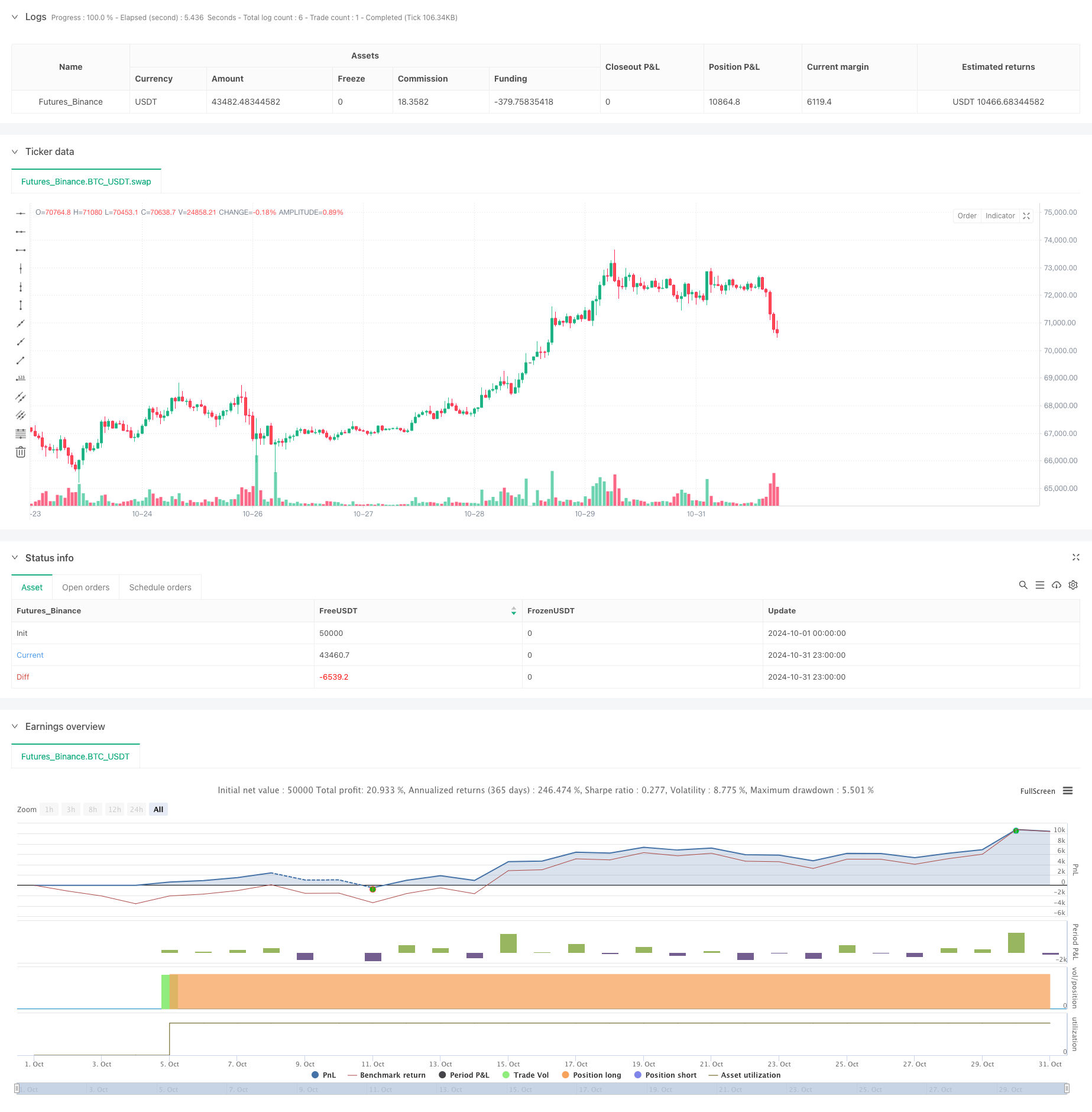
[trans]
概述
本策略是一个基于机器学习算法K近邻(KNN)的自适应参数化趋势跟踪系统。该策略通过KNN算法动态调整趋势跟踪参数,结合移动平均线进行交易信号的生成。系统能够根据市场环境的变化自动调整策略参数,提高策略的适应性和稳定性。该策略采用了机器学习方法来优化传统的趋势跟踪策略,是定量投资领域技术与创新的结合。
策略原理
策略的核心原理是利用KNN算法对历史价格数据进行分析,通过计算当前市场状态与历史数据的相似度来预测价格走势。具体实现步骤如下:
- 设定观察窗口大小和K值,收集历史价格数据形成特征向量
- 计算当前价格序列与历史数据之间的欧式距离
- 选择K个最相似的历史价格序列作为近邻样本
- 分析这K个近邻样本的后续价格变动
- 结合移动平均线,根据近邻样本的平均价格变化生成交易信号 当K个近邻样本的平均价格变化为正且当前价格位于移动平均线上方时,系统生成做多信号;反之则生成做空信号。
策略优势
- 自适应性强: KNN算法能够根据市场环境的变化自动调整参数,使策略具有较强的适应性
- 多维度分析: 结合了机器学习算法和技术指标,提供了更全面的市场分析视角
- 风险控制合理: 通过移动平均线作为辅助确认,降低了虚假信号的影响
- 计算逻辑清晰: 策略的执行过程透明,便于理解和优化
- 参数灵活可调: 可以根据不同市场环境调整K值和窗口大小等参数
策略风险
- 计算复杂度高: KNN算法需要计算大量历史数据,可能影响策略执行效率
- 参数敏感性: K值和窗口大小的选择对策略性能有重要影响
- 市场环境依赖: 在剧烈波动的市场环境下,历史相似性的参考价值可能降低
- 过拟合风险: 过于依赖历史数据可能导致策略过拟合
- 延迟风险: 由于需要收集足够的历史数据,可能存在信号滞后
策略优化方向
- 特征工程优化:
- 增加更多技术指标作为特征
- 引入市场情绪指标
- 优化特征标准化方法
- 算法效率提升:
- 使用KD树等数据结构优化近邻搜索
- 实现并行计算
- 优化数据存储和访问方式
- 风险控制增强:
- 添加止损止盈机制
- 引入波动率过滤器
- 设计动态仓位管理系统
- 参数优化方案:
- 实现自适应K值选择
- 动态调整观察窗口大小
- 优化移动平均线周期
- 信号生成机制改进:
- 引入信号强度评分系统
- 设计信号确认机制
- 优化入场出场时机
总结
该策略创新性地将KNN算法应用于趋势跟踪交易中,通过机器学习方法优化传统技术分析策略。策略具有较强的自适应性和灵活性,能够根据市场环境动态调整参数。虽然存在计算复杂度高和参数敏感等风险,但通过合理的优化和风险控制措施,策略仍具有较好的应用价值。建议投资者在实际应用中,注意根据市场特点调整参数,并结合其他分析方法进行交易决策。 ||
Overview
This strategy is an adaptive parametric trend following system based on the K-Nearest Neighbors (KNN) machine learning algorithm. The strategy dynamically adjusts trend following parameters through the KNN algorithm and generates trading signals in combination with moving averages. The system can automatically adjust strategy parameters based on changes in market conditions, improving strategy adaptability and stability. This strategy combines machine learning methods to optimize traditional trend following strategies, representing a fusion of technology and innovation in quantitative investment.
Strategy Principle
The core principle of the strategy is to analyze historical price data using the KNN algorithm and predict price trends by calculating the similarity between current market conditions and historical data. The specific implementation steps are:
- Set observation window size and K value, collect historical price data to form feature vectors
- Calculate Euclidean distance between current price sequence and historical data
- Select K most similar historical price sequences as neighbor samples
- Analyze subsequent price movements of these K neighbor samples
- Generate trading signals based on average price changes of neighbor samples combined with moving averages When the average price change of K neighbor samples is positive and current price is above the moving average, the system generates long signals; otherwise, it generates short signals.
Strategy Advantages
- Strong adaptability: KNN algorithm can automatically adjust parameters based on market environment changes
- Multi-dimensional analysis: Combines machine learning algorithms and technical indicators for more comprehensive market analysis
- Reasonable risk control: Uses moving averages as auxiliary confirmation to reduce impact of false signals
- Clear computational logic: Strategy execution process is transparent and easy to understand and optimize
- Flexible parameters: K value and window size can be adjusted according to different market environments
Strategy Risks
- High computational complexity: KNN algorithm requires calculating large amounts of historical data
- Parameter sensitivity: Choice of K value and window size significantly impacts strategy performance
- Market environment dependence: Reference value of historical similarity may decrease in volatile markets
- Overfitting risk: Over-reliance on historical data may lead to strategy overfitting
- Delay risk: Signal lag may exist due to need for sufficient historical data collection
Strategy Optimization Directions
- Feature Engineering Optimization:
- Add more technical indicators as features
- Introduce market sentiment indicators
- Optimize feature standardization methods
- Algorithm Efficiency Improvement:
- Optimize nearest neighbor search using KD-trees
- Implement parallel computing
- Optimize data storage and access methods
- Risk Control Enhancement:
- Add stop-loss and take-profit mechanisms
- Introduce volatility filters
- Design dynamic position management system
- Parameter Optimization Solutions:
- Implement adaptive K value selection
- Dynamically adjust observation window size
- Optimize moving average periods
- Signal Generation Mechanism Improvement:
- Introduce signal strength scoring system
- Design signal confirmation mechanism
- Optimize entry and exit timing
Summary
This strategy innovatively applies the KNN algorithm to trend following trading, optimizing traditional technical analysis strategies through machine learning methods. The strategy possesses strong adaptability and flexibility, capable of dynamically adjusting parameters based on market conditions. Although risks such as high computational complexity and parameter sensitivity exist, the strategy still has good application value through reasonable optimization and risk control measures. It is recommended that investors adjust parameters according to market characteristics and combine other analysis methods for trading decisions in practical applications.[/trans]
Source (PineScript)
/*backtest
start: 2024-10-01 00:00:00
end: 2024-10-31 23:59:59
period: 1h
basePeriod: 1h
exchanges: [{"eid":"Futures_Binance","currency":"BTC_USDT"}]
*/

//@version=6
strategy("Trend Following Strategy with KNN", overlay=true,commission_value=0.03,currency='USD', commission_type=strategy.commission.percent,default_qty_type=strategy.cash)


// Input parameters
k = input.int(5, title="K (Number of Neighbors)", minval=1)  // Number of neighbors for KNN algorithm
window_size = input.int(20, title="Window Size", minval=1)  // Window size for feature vector calculation
ma_length = input.int(50, title="MA Length", minval=1)  // Length of the moving average

// Calculate moving average
ma = ta.sma(close, ma_length)

// Initialize variables
var float[] features = na
var float[] distances = na
var int[] nearest_neighbors = na

if bar_index >= window_size - 1  // Ensure there is enough historical data
    features := array.new_float(0)  // Keep only the current window data
    for i = 0 to window_size - 1
        array.push(features, close[i])

    // Calculate distances
    distances := array.new_float(0)  // Clear the array for each calculation
    for i = 0 to window_size - 1  // Calculate the distance between the current price and all prices in the window
        var float distance = 0.0
        for j = 0 to window_size - 1
            distance += math.pow(close[j] - array.get(features, j), 2)
        distance := math.sqrt(distance)
        array.push(distances, distance)

    // Find the nearest neighbors
    if array.size(distances) > 0 and array.size(distances) >= k
        nearest_neighbors := array.new_int(0)
        for i = 0 to k - 1
            var int min_index = -1
            var float min_distance = na
            for j = 0 to array.size(distances) - 1
                if na(min_distance) or array.get(distances, j) < min_distance
                    min_index := j
                    min_distance := array.get(distances, j)
            if min_index != -1
                array.push(nearest_neighbors, min_index)
                array.remove(distances, min_index)  // Remove the processed neighbor

    // Calculate the average price change of the neighbors
    var float average_change = 0.0
    if array.size(nearest_neighbors) > 0
        for i = 0 to array.size(nearest_neighbors) - 1
            var int index = array.get(nearest_neighbors, i)
            // Ensure index + 1 is within range
            if index + 1 < bar_index
                average_change += (close[index] - close[index + 1])
        average_change := average_change / array.size(nearest_neighbors)

    // Generate trading signals
    if average_change > 0 and close > ma
        strategy.entry("Long", strategy.long)
    else if average_change < 0 and close < ma
        strategy.entry("Short", strategy.short)
Detail
https://www.fmz.com/strategy/473319
Last Modified
2024-11-29 10:54:49