
17 KiB
Name
智能动量混合指标零日期权策略模型-Intelligent-Momentum-Mixed-Indicator-Zero-Day-Options-Strategy-Model
Author
ianzeng123
Strategy Description
[trans]
概述
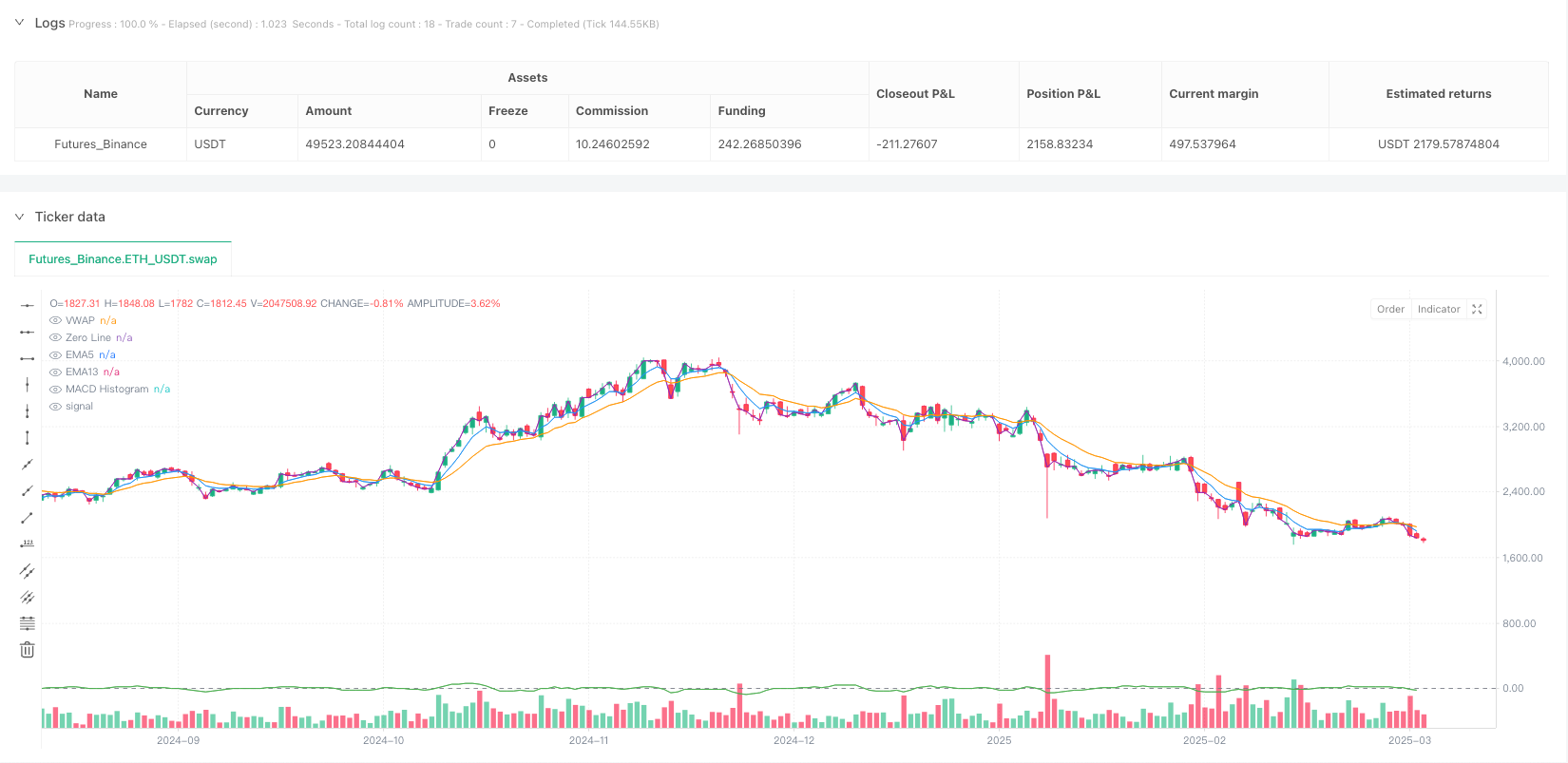
智能动量混合指标零日期权策略模型是一种结合了多种技术指标的短期期权交易系统,专为零日到期期权(0DTE)设计。该策略通过整合均线离散度(MACD)、成交量加权平均价格(VWAP)、相对强弱指数(RSI)以及两条不同周期的指数移动平均线(EMA5和EMA13),形成了一个多维度的交易信号生成机制。该策略旨在捕捉市场的短期走势变化,通过严格的入场条件筛选高概率交易机会,同时利用反转信号来管理风险。
策略原理
智能动量混合指标零日期权策略模型基于以下核心原理:
-
多指标协同确认:策略要求所有四个技术指标同时满足特定条件才会产生交易信号,大大提高了信号的可靠性。具体而言:
- MACD:判断短期动量方向,当快线在慢线之上时看涨,反之看跌。
- VWAP:作为重要的价格参考,判断当前价格相对于当日成交量加权平均价格的位置。
- RSI:测量市场超买超卖状态,使用7周期RSI,以50作为多空分界线。
- EMA交叉:使用5周期和13周期的EMA判断近期趋势方向。
-
逻辑严谨的信号体系:
- 看涨条件:MACD快线高于慢线 + 价格高于VWAP + RSI高于50 + EMA5高于EMA13。
- 看跌条件:MACD快线低于慢线 + 价格低于VWAP + RSI低于50 + EMA5低于EMA13。
-
反向信号平仓机制:当出现与持仓方向相反的信号时,策略会自动平仓,这种机制有助于及时止损并锁定利润。
-
资金管理:策略默认使用账户10%的资金进行每次交易,这有助于控制风险敞口和实现资金的有效利用。
策略优势
通过对代码的深入剖析,该策略具有以下显著优势:
-
多维度确认机制:通过要求四个不同类型的技术指标同时确认,有效过滤了单指标可能产生的误导信号,提高了交易的精确性。
-
适应短期市场波动:策略参数专为日内短期交易优化,MACD周期(6,13,5)、RSI周期(7)和EMA周期(5,13)都较传统设置更短,能够快速响应市场变化。
-
流动性考量:通过纳入VWAP作为关键参考线,策略考虑了市场流动性因素,有助于在价格合理的位置进行交易。
-
明确的交易规则:策略条件定义清晰,没有模糊地带,便于交易者执行和遵循,减少了主观判断的影响。
-
动态风险管理:反向信号平仓机制提供了动态的风险管理方案,不依赖固定止损点,而是根据市场状况调整持仓。
-
警报功能集成:代码内置了交易信号警报功能,使交易者能够及时获取信号通知,提高了策略的实用性。
策略风险
尽管该策略设计合理,但仍存在以下潜在风险:
-
过度交易风险:由于策略使用短周期参数,在高波动市场中可能产生频繁的交易信号,导致过度交易和增加交易成本。
- 解决方法:可考虑增加额外的过滤条件,如信号持续时间要求或交易时间窗口限制。
-
同向指标相关性风险:策略中的多个指标(如MACD和EMA)存在一定的相关性,可能在某些市场条件下集体失效。
- 解决方法:考虑增加非相关性指标,如基于波动率或交易量的独立指标。
-
零日期权特有风险:0DTE期权面临时间价值迅速衰减的问题,对时机把握要求极高。
- 解决方法:可以增加入场时间限制,避开期权价值快速衰减的最后交易时段。
-
参数敏感性:策略性能对参数设置(如RSI阈值50)可能较为敏感。
- 解决方法:进行全面的回测,测试不同参数组合在不同市场环境下的表现。
-
缺乏止损机制:策略只有反转信号平仓,缺乏明确的止损机制,在市场剧烈波动时可能面临较大损失。
- 解决方法:添加基于百分比或价格水平的硬性止损条件。
策略优化方向
基于代码分析,该策略还有以下几个优化方向:
-
增加时间过滤器:
- 针对0DTE交易特点,可添加交易时间窗口限制,如避开早盘30分钟和尾盘1小时的高波动时段。
- 原因:这些时段波动性较大,可能产生虚假信号,而且尾盘期权时间价值衰减更快。
-
优化信号确认机制:
- 可考虑在信号产生后增加持续时间要求(如信号需持续至少2个时间周期)。
- 原因:这有助于过滤短暂的市场噪音,提高信号质量。
-
引入波动率过滤条件:
- 添加基于隐含波动率或历史波动率的过滤条件。
- 原因:高波动环境下期权价格波动更大,风险更高,需谨慎交易。
-
动态调整头寸大小:
- 从固定比例(10%)改为基于市场波动性或信号强度的动态头寸管理。
- 原因:在不同的市场条件下,交易头寸大小应该有所差异,以优化风险回报比。
-
增加部分止盈机制:
- 在达到一定盈利水平时,可以考虑部分平仓锁定利润。
- 原因:鉴于0DTE期权的特性,建议采取更积极的利润锁定策略。
-
添加趋势过滤器:
- 引入更长周期的趋势指标作为方向过滤器。
- 原因:与更大的市场趋势一致的交易通常具有更高的成功率。
总结
智能动量混合指标零日期权策略模型是一种设计严谨的短期交易系统,通过整合MACD、VWAP、RSI和EMA等多重技术指标,为零日期权交易提供了一套完整的信号生成和管理框架。该策略的核心优势在于其多维度的信号确认机制,能有效过滤市场噪音,提高交易信号的可靠性。
尽管该策略在设计上考虑了多种市场因素,但在实际应用中仍需注意过度交易、指标相关性和零日期权特有的时间衰减风险。通过添加时间过滤器、优化信号确认机制、引入波动率考量、动态调整头寸大小和增强止盈止损机制,该策略有望进一步提升其性能和稳定性。
最重要的是,任何策略在实盘前都应进行充分的回测,并根据回测结果调整参数和规则。对于零日期权这类高风险产品,交易者更应保持谨慎态度,合理控制风险敞口。 ||
Overview
The Intelligent Momentum Mixed Indicator Zero-Day Options Strategy Model is a short-term options trading system that combines multiple technical indicators, specifically designed for zero-day to expiration options (0DTE). This strategy integrates Moving Average Convergence Divergence (MACD), Volume Weighted Average Price (VWAP), Relative Strength Index (RSI), and two Exponential Moving Averages (EMA5 and EMA13) to create a multi-dimensional trade signal generation mechanism. The strategy aims to capture short-term market trend changes by using strict entry conditions to filter high-probability trading opportunities while utilizing reversal signals for risk management.
Strategy Principles
The Intelligent Momentum Mixed Indicator Zero-Day Options Strategy Model is based on the following core principles:
-
Multi-Indicator Confirmation: The strategy requires all four technical indicators to simultaneously meet specific conditions before generating a trading signal, significantly improving signal reliability. Specifically:
- MACD: Determines short-term momentum direction, bullish when the fast line is above the slow line, bearish when reversed.
- VWAP: Serves as an important price reference, judging the current price position relative to the day's volume-weighted average price.
- RSI: Measures market overbought/oversold conditions, using a 7-period RSI with 50 as the bullish/bearish dividing line.
- EMA Cross: Uses 5-period and 13-period EMAs to determine recent trend direction.
-
Logically Rigorous Signal System:
- Bullish (Call) Condition: MACD fast line above signal line + Price above VWAP + RSI above 50 + EMA5 above EMA13.
- Bearish (Put) Condition: MACD fast line below signal line + Price below VWAP + RSI below 50 + EMA5 below EMA13.
-
Reversal Signal Exit Mechanism: When a signal opposite to the current position appears, the strategy automatically closes the position, helping to limit losses and secure profits promptly.
-
Capital Management: The strategy defaults to using 10% of the account equity for each trade, helping to control risk exposure and achieve effective capital utilization.
Strategy Advantages
Through in-depth analysis of the code, this strategy demonstrates the following significant advantages:
-
Multi-dimensional Confirmation Mechanism: By requiring four different types of technical indicators to confirm simultaneously, the strategy effectively filters out potentially misleading signals from single indicators, improving trading accuracy.
-
Adaptation to Short-term Market Fluctuations: Strategy parameters are optimized for intraday short-term trading, with MACD periods (6,13,5), RSI period (7), and EMA periods (5,13) all shorter than traditional settings, allowing for quick responses to market changes.
-
Liquidity Consideration: By incorporating VWAP as a key reference line, the strategy takes market liquidity factors into account, helping to execute trades at reasonable price levels.
-
Clear Trading Rules: Strategy conditions are clearly defined without ambiguity, making it easy for traders to execute and follow, reducing the impact of subjective judgment.
-
Dynamic Risk Management: The reversal signal exit mechanism provides a dynamic risk management solution that doesn't rely on fixed stop-loss points but adjusts positions according to market conditions.
-
Alert Function Integration: The code includes built-in trade signal alerts, allowing traders to receive timely signal notifications, enhancing the strategy's practicality.
Strategy Risks
Despite its rational design, the strategy still presents the following potential risks:
-
Overtrading Risk: Due to the short-period parameters used, the strategy may generate frequent trading signals in highly volatile markets, leading to overtrading and increased transaction costs.
- Solution: Consider adding additional filtering conditions, such as signal duration requirements or trading time window restrictions.
-
Correlated Indicator Risk: Multiple indicators in the strategy (such as MACD and EMA) have certain correlations and may collectively fail under specific market conditions.
- Solution: Consider adding non-correlated indicators, such as independent indicators based on volatility or trading volume.
-
0DTE-Specific Risks: Zero-day options face the issue of rapidly decaying time value, requiring extremely precise timing.
- Solution: Add entry time restrictions to avoid the last trading sessions when options value decays most rapidly.
-
Parameter Sensitivity: Strategy performance may be sensitive to parameter settings (such as the RSI threshold of 50).
- Solution: Conduct comprehensive backtesting to test different parameter combinations under various market environments.
-
Lack of Stop-Loss Mechanism: The strategy only closes positions on reversal signals and lacks explicit stop-loss mechanisms, potentially facing significant losses during extreme market fluctuations.
- Solution: Add hard stop-loss conditions based on percentage or price levels.
Strategy Optimization Directions
Based on code analysis, the strategy has the following optimization potential:
-
Add Time Filters:
- For 0DTE trading characteristics, add trading time window restrictions, such as avoiding the first 30 minutes of the market open and the last hour of high volatility sessions.
- Reason: These periods have higher volatility that may generate false signals, and option time value decays faster near the close.
-
Optimize Signal Confirmation Mechanism:
- Consider adding duration requirements after signal generation (e.g., signals must persist for at least 2 time periods).
- Reason: This helps filter out temporary market noise and improves signal quality.
-
Introduce Volatility Filtering Conditions:
- Add filtering conditions based on implied volatility or historical volatility.
- Reason: Options prices fluctuate more in high-volatility environments, increasing risk and warranting more cautious trading.
-
Dynamic Position Sizing:
- Change from a fixed percentage (10%) to dynamic position management based on market volatility or signal strength.
- Reason: Position sizes should vary under different market conditions to optimize the risk-reward ratio.
-
Add Partial Profit-Taking Mechanisms:
- Consider partial position closing when reaching certain profit levels.
- Reason: Given the characteristics of 0DTE options, a more aggressive profit-locking strategy is recommended.
-
Add Trend Filters:
- Introduce longer-period trend indicators as directional filters.
- Reason: Trades aligned with larger market trends typically have higher success rates.
Summary
The Intelligent Momentum Mixed Indicator Zero-Day Options Strategy Model is a rigorously designed short-term trading system that provides a comprehensive framework for signal generation and management in zero-day options trading by integrating multiple technical indicators including MACD, VWAP, RSI, and EMA. The core advantage of this strategy lies in its multi-dimensional signal confirmation mechanism, which effectively filters market noise and improves the reliability of trading signals.
Although the strategy considers various market factors in its design, users should still be aware of risks related to overtrading, indicator correlation, and the time decay specific to zero-day options when applying it in practice. By adding time filters, optimizing signal confirmation mechanisms, incorporating volatility considerations, dynamically adjusting position sizes, and enhancing profit-taking and stop-loss mechanisms, this strategy has the potential to further improve its performance and stability.
Most importantly, any strategy should undergo thorough backtesting before live trading, with parameters and rules adjusted based on backtesting results. For high-risk products like zero-day options, traders should maintain a cautious attitude and reasonably control risk exposure.[/trans]
Source (PineScript)
/*backtest
start: 2024-04-01 00:00:00
end: 2025-03-31 00:00:00
period: 1d
basePeriod: 1d
exchanges: [{"eid":"Futures_Binance","currency":"ETH_USDT"}]
*/

// This Pine Script™ code is subject to the terms of the Mozilla Public License 2.0 at https://mozilla.org/MPL/2.0/
// © oxycodine

//@version=5
strategy("Pierre's 0DTE Option Strategy with MACD, VWAP, RSI, EMA5/13", overlay=true, initial_capital=100000, default_qty_type=strategy.percent_of_equity, default_qty_value=10)

// INPUTS for 0DTE parameters
rsiPeriod    = input.int(7, title="RSI Period (0DTE)")
rsiThreshold = input.int(50, title="RSI Threshold (0DTE)")
macdFast     = input.int(6, title="MACD Fast Length (0DTE)")
macdSlow     = input.int(13, title="MACD Slow Length (0DTE)")
macdSignal   = input.int(5, title="MACD Signal Smoothing (0DTE)")

// INDICATOR CALCULATIONS
[macdLine, signalLine, histLine] = ta.macd(close, macdFast, macdSlow, macdSignal)
vwapValue = ta.vwap(close)
rsiValue  = ta.rsi(close, rsiPeriod)
emaShort = ta.ema(close, 5)   // Faster EMA for quick moves
emaLong  = ta.ema(close, 13)  // Longer EMA for trend confirmation

// PLOT INDICATORS
plot(emaShort, color=color.blue, title="EMA5")
plot(emaLong, color=color.orange, title="EMA13")
plot(vwapValue, color=color.purple, title="VWAP")

// SIGNAL CONDITIONS FOR 0DTE
// A bullish (Call) signal is generated when:
// • MACD is bullish (macdLine > signalLine)
// • Price is above VWAP
// • RSI is above threshold
// • Short EMA is above long EMA
callCondition = (macdLine > signalLine) and (close > vwapValue) and (rsiValue > rsiThreshold) and (emaShort > emaLong)

// A bearish (Put) signal is generated when the opposite conditions hold
putCondition  = (macdLine < signalLine) and (close < vwapValue) and (rsiValue < rsiThreshold) and (emaShort < emaLong)

// EXECUTE STRATEGY ENTRIES
if callCondition
    strategy.entry("Call", strategy.long)
if putCondition
    strategy.entry("Put", strategy.short)

// OPTIONAL: Close positions on reversal signals
strategy.close("Call", when=putCondition)
strategy.close("Put",  when=callCondition)

// ADDITIONAL PLOTS
hline(0, title="Zero Line", color=color.gray)
plot(macdLine - signalLine, color=color.green, title="MACD Histogram")

// ALERT CONDITIONS
alertcondition(callCondition, title="Call Signal", message="Call Option Signal")
alertcondition(putCondition, title="Put Signal", message="Put Option Signal")
Detail
https://www.fmz.com/strategy/489011
Last Modified
2025-04-01 10:20:03