
20 KiB
Name
斐波那契趋势反转策略-Fibonacci-Trend-Reversal-Strategy
Author
ChaoZhang
Strategy Description
 [trans]
概述
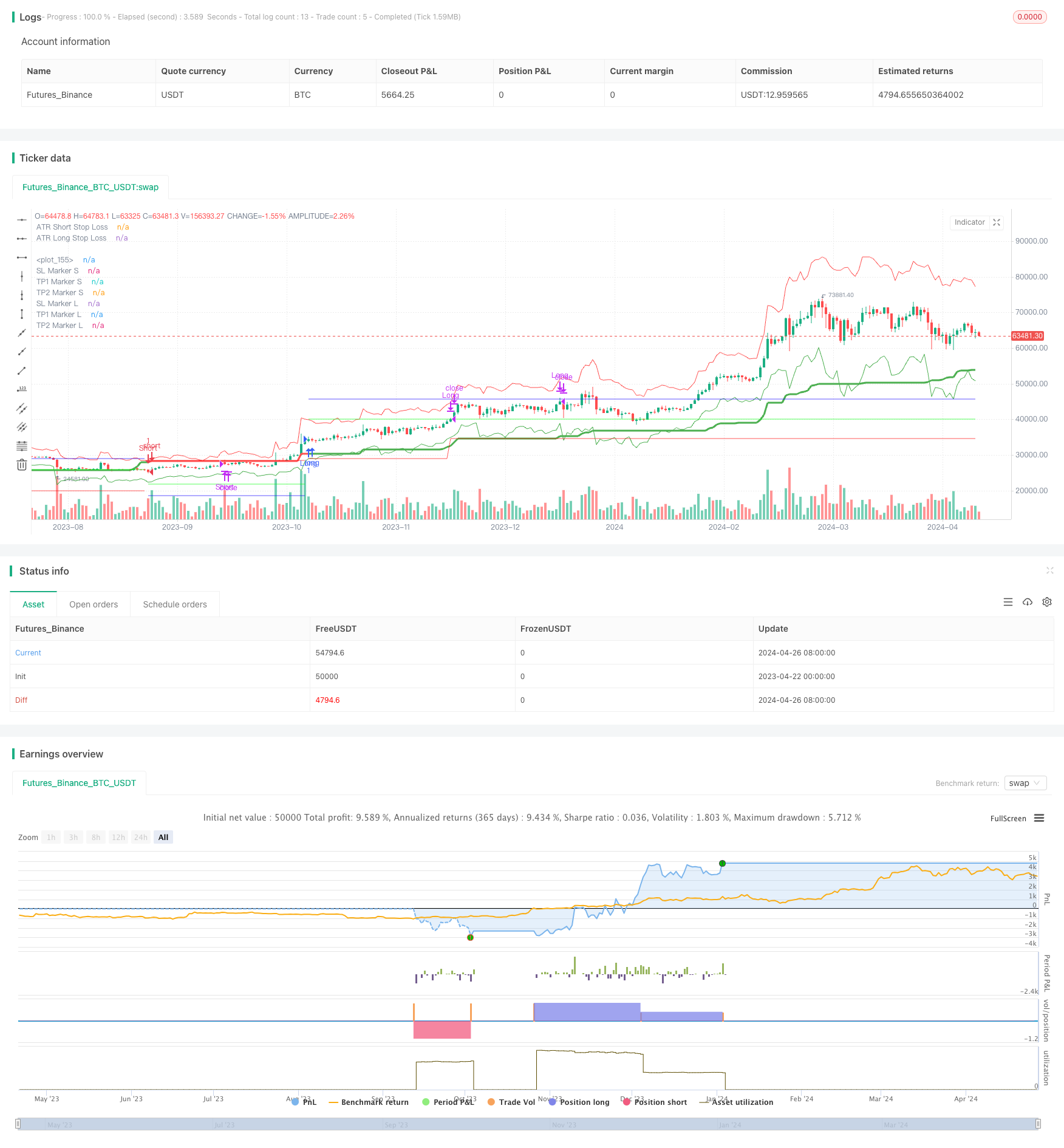
"斐波那契趋势反转策略"是一种利用斐波那契回撤水平和趋势强度指标(TSOT)来捕捉市场趋势反转点的交易策略。该策略通过动态ATR止损和部分止盈,实现了风险管理和利润的最大化。策略适用于5分钟的可扩展市场。
策略原理
该策略使用斐波那契回撤水平(0.236、0.5和0.786)来识别潜在的趋势反转点。同时,利用TSOT指标通过价格的百分位数排名来衡量趋势强度。当价格突破中间的斐波那契水平(0.5)并且TSOT指标显示看涨/看跌信号时,策略开仓做多/做空。止损位置使用动态ATR计算,止盈则设置了部分止盈和风险回报比。此外,策略还允许根据新的TSOT信号反转仓位。
策略优势
- 结合斐波那契回撤和趋势强度指标,能够更准确地捕捉趋势反转点。
- 动态ATR止损根据当前市场波动率调整,实现了有效的风险管理。
- 部分止盈设置可以在达到目标盈利时及时获利了结,同时让利润继续奔跑。
- 允许根据新信号反转仓位,提高了策略的适应性和灵活性。
策略风险
- 在震荡市或趋势不明朗时,频繁的反转信号可能导致过度交易和损失。
- 虽然动态止损和部分止盈有助于控制风险,但极端行情下仍可能出现较大回撤。
- 策略参数(如斐波那契水平、TSOT计算等)的选择需要根据不同市场和时间周期进行优化,不恰当的参数可能影响策略表现。
策略优化方向
- 引入更多确认信号(如交易量、动量指标等)来过滤假信号,提高开仓准确性。
- 优化止盈止损逻辑,如结合趋势强度动态调整止盈目标,或者引入追踪止损等。
- 对于频繁反转的情况,可以设置反转次数限制或加入反转过滤条件,以减少过度交易。
- 针对不同的市场特点和交易品种,对策略参数进行细致的优化和测试。
总结
"斐波那契趋势反转策略"通过斐波那契回撤水平和TSOT指标的结合,能够有效捕捉趋势反转点,并通过动态止损和部分止盈实现风险控制和利润目标。策略在趋势明确的市场中表现出色,但在震荡市需要谨慎应对。未来可以从信号确认、止盈止损优化、反转管理等方面对策略进行进一步的改进和完善,以提升其稳健性和盈利能力。
||
Overview
The "Fibonacci Trend Reversal Strategy" is a trading strategy that utilizes Fibonacci retracement levels and the Trend Strength Over Time (TSOT) indicator to capture potential trend reversal points in the market. The strategy implements dynamic ATR stop-loss and partial take-profit to manage risk and maximize profits. It is optimized for scalping (5-minute timeframe) in the expandable market.
Strategy Principles
The strategy employs Fibonacci retracement levels (0.236, 0.5, and 0.786) to identify potential trend reversal points. Additionally, the TSOT indicator measures trend strength using percentile rankings of price action. When the price surpasses the mid Fibonacci level (0.5) with a bullish/bearish TSOT signal, the strategy enters a long/short position. Stop-loss levels are dynamically calculated using ATR, while take-profit levels are set based on partial profit-taking and risk-reward ratio. Moreover, the strategy allows for position reversal based on new TSOT signals.
Strategy Advantages
- By combining Fibonacci retracements with the trend strength indicator, the strategy can more accurately identify trend reversal points.
- Dynamic ATR stop-loss adjusts according to current market volatility, ensuring effective risk management.
- Partial take-profit settings enable timely profit-taking when targets are reached while allowing profits to run further.
- The ability to reverse positions based on new signals enhances the adaptability and flexibility of the strategy.
Strategy Risks
- In choppy markets or unclear trend conditions, frequent reversal signals may lead to overtrading and losses.
- Although dynamic stop-loss and partial take-profit help control risk, significant drawdowns may still occur in extreme market conditions.
- The selection of strategy parameters (e.g., Fibonacci levels, TSOT calculation) requires optimization for different markets and timeframes; improper parameters may impact strategy performance.
Strategy Optimization Directions
- Incorporate additional confirmation signals (e.g., volume, momentum indicators) to filter out false signals and improve entry accuracy.
- Optimize the take-profit and stop-loss logic, such as dynamically adjusting take-profit targets based on trend strength or implementing trailing stop-losses.
- For frequent reversal scenarios, consider setting a limit on the number of reversals or introducing reversal filtering conditions to reduce overtrading.
- Conduct thorough optimization and testing of strategy parameters tailored to specific market characteristics and trading instruments.
Summary
The "Fibonacci Trend Reversal Strategy" effectively captures trend reversal points by combining Fibonacci retracement levels with the TSOT indicator, while managing risk and profit targets through dynamic stop-loss and partial take-profit. The strategy performs well in markets with clear trends but requires caution in choppy conditions. Future improvements can focus on signal confirmation, optimization of take-profit and stop-loss, and reversal management to enhance the strategy's robustness and profitability. [/trans]
Strategy Arguments
| Argument | Default | Description |
|---|---|---|
| v_input_float_1 | 18 | (?Fib Sensitivity)Sensitive |
| v_input_int_1 | 14 | (?ATR SL Finder)Length |
| v_input_string_1 | 0 | Smoothing: RMA |
| v_input_1 | 3.5 | Multiplier |
| v_input_string_2 | Both | (?Strategy Execution)Trade Direction |
| v_input_float_2 | 2 | Risk Reward Ratio |
| v_input_bool_1 | true | Use Partial Take Profit |
| v_input_bool_2 | true | Allow Reversing of Position |
| v_input_bool_3 | true | Show Entry Visuals |
Source (PineScript)
/*backtest
start: 2023-04-22 00:00:00
end: 2024-04-27 00:00:00
period: 1d
basePeriod: 1h
exchanges: [{"eid":"Futures_Binance","currency":"BTC_USDT"}]
*/

// This Pine Script™ code is subject to the terms of the Mozilla Public License 2.0 at https://mozilla.org/MPL/2.0/
// © nioboi

//@version=5
strategy("Fibonacci Trend Reversals", overlay=true, process_orders_on_close = true, commission_value = 0.055, initial_capital = 1000)

// =========================================
// Input Groups
// =========================================
string rsi_group = "RSI"
string main_group = "Fib Sensitivity"
string atr_sl_finder_group = "ATR SL Finder"
string trade_execution_group = "Strategy Execution"

// =========================================
// Fibonacci Retracement Trend Reversal
// =========================================
sensitivity_input = input.float(title = 'Sensitive', step = 0.1, defval = 18, group = main_group)
var bool is_long_trend_started = false
var bool is_short_trend_started = false
var bool is_trend_change = na
var bool is_long_trend = false
var bool is_short_trend = false
var bool can_long = false
var bool can_short = false

sensitivity = sensitivity_input
sensitivity *= 10

high_line = ta.highest(high, int(sensitivity))
low_line = ta.lowest(low, int(sensitivity))
channel_range = high_line - low_line
fib_236 = high_line - channel_range * (0.236)
fib_5 = high_line - channel_range * 0.5
fib_786 = high_line - channel_range * (0.786)
imba_trend_line = fib_5

// =========================================
// TSOT | Trend Strength Over Time
// =========================================

// Calculate 75th percentile of price for each length
percentile_13H = ta.percentile_nearest_rank(high, 13, 75)
percentile_21H = ta.percentile_nearest_rank(high, 21, 75)
percentile_34H = ta.percentile_nearest_rank(high, 34, 75)
percentile_55H = ta.percentile_nearest_rank(high, 55, 75)
percentile_89H = ta.percentile_nearest_rank(high, 89, 75)

// Calculate 25th percentile of  price for each length
percentile_13L =  ta.percentile_nearest_rank(low, 13, 25)
percentile_21L =  ta.percentile_nearest_rank(low, 21, 25)
percentile_34L =  ta.percentile_nearest_rank(low, 34, 25)
percentile_55L = ta.percentile_nearest_rank(low, 55, 25)
percentile_89L = ta.percentile_nearest_rank(low, 89, 25)

// Calculate 75th and 25th for length 144 (longest length)
highest_high = ta.percentile_nearest_rank(high, 144, 75)
lowest_low = ta.percentile_nearest_rank(low, 144, 25)

// Calculate trend strength conditions
trendBull1 = percentile_13H > highest_high
trendBull2 = percentile_21H > highest_high
trendBull3 = percentile_34H > highest_high
trendBull4 = percentile_55H > highest_high
trendBull5 = percentile_89H > highest_high
trendBull6 = percentile_13L > highest_high
trendBull7 = percentile_21L > highest_high
trendBull8 = percentile_34L > highest_high
trendBull9 = percentile_55L > highest_high
trendBull10 = percentile_89L > highest_high

trendBear1 = percentile_13H < lowest_low
trendBear2 = percentile_21H < lowest_low
trendBear3 = percentile_34H < lowest_low
trendBear4 = percentile_55H < lowest_low
trendBear5 = percentile_89H < lowest_low
trendBear6 = percentile_13L < lowest_low
trendBear7 = percentile_21L < lowest_low
trendBear8 = percentile_34L < lowest_low
trendBear9 = percentile_55L < lowest_low
trendBear10 = percentile_89L < lowest_low

countBull =
     (trendBull1 ? 1 : 0) +
     (trendBull2 ? 1 : 0) +
     (trendBull3 ? 1 : 0) +
     (trendBull4 ? 1 : 0) +
     (trendBull5 ? 1 : 0) +
     (trendBull6 ? 1 : 0) +
     (trendBull7 ? 1 : 0) +
     (trendBull8 ? 1 : 0) +
     (trendBull9 ? 1 : 0) +
     (trendBull10 ? 1 : 0)

countBear =
     (trendBear1 ? 1 : 0) +
     (trendBear2 ? 1 : 0) +
     (trendBear3 ? 1 : 0) +
     (trendBear4 ? 1 : 0) +
     (trendBear5 ? 1 : 0) +
     (trendBear6 ? 1 : 0) +
     (trendBear7 ? 1 : 0) +
     (trendBear8 ? 1 : 0) +
     (trendBear9 ? 1 : 0) +
     (trendBear10 ? 1 : 0)

// Calculate weak bull count
weakBullCount =
     (percentile_13L < highest_high and percentile_13L > lowest_low ? 1 : 0) +
     (percentile_21L < highest_high and percentile_21L > lowest_low ? 1 : 0) +
     (percentile_34L < highest_high and percentile_34L > lowest_low ? 1 : 0) +
     (percentile_55L < highest_high and percentile_55L > lowest_low ? 1 : 0) +
     (percentile_89L < highest_high and percentile_89L > lowest_low ? 1 : 0)

// Calculate weak bear count
weakBearCount =
     (percentile_13H > lowest_low and percentile_13H < highest_high ? 1 : 0) +
     (percentile_21H > lowest_low and percentile_21H < highest_high ? 1 : 0) +
     (percentile_34H > lowest_low and percentile_34H < highest_high ? 1 : 0) +
     (percentile_55H > lowest_low and percentile_55H < highest_high ? 1 : 0) +
     (percentile_89H > lowest_low and percentile_89H < highest_high ? 1 : 0)

// Calculate bull strength and bear strength
bullStrength = 10 * (countBull + 0.5*weakBullCount - 0.5*weakBearCount - countBear)
bearStrength = 10 * (countBear + 0.5*weakBearCount - 0.5*weakBullCount - countBull)

// Calculate the current trend
currentTrendValue = bullStrength - bearStrength

tsot_bullish = currentTrendValue > 0
tsot_bearish = currentTrendValue < 0

// CAN LONG/SHORT
can_long := close >= imba_trend_line and close >= fib_236 and not is_long_trend and tsot_bullish
can_short := close <= imba_trend_line and close <= fib_786 and not is_short_trend and tsot_bearish

if can_long
    is_long_trend := true
    is_short_trend := false
    is_long_trend_started := is_long_trend_started ? false : true
else if can_short
    is_short_trend := true
    is_long_trend := false
    is_short_trend_started := is_short_trend_started ? false : true
else
    is_trend_change := false
    can_long := false
    can_short := false
    is_short_trend_started := false
    is_long_trend_started := false

is_trend_change := is_short_trend_started or is_long_trend_started
plotshape(is_long_trend and is_long_trend_started ? imba_trend_line : na, title="Long", style=shape.triangleup, location=location.belowbar, color=color.green, size=size.small)
plotshape(is_short_trend and is_short_trend_started ? imba_trend_line : na, title="Short", style=shape.triangledown, location=location.abovebar, color=color.red, size=size.small)
plot(imba_trend_line, color = is_long_trend[1] ? color.green : color.red, linewidth = 3)

// =========================================
// ATR SL Finder
// =========================================
atrlength = input.int(title='Length', defval=14, minval=1, group = atr_sl_finder_group)
smoothing = input.string(title='Smoothing', defval='RMA', options=['RMA', 'SMA', 'EMA', 'WMA'], group = atr_sl_finder_group)
m = input(3.5, 'Multiplier', group = atr_sl_finder_group)
src1 = high
src2 = low
ma_function(source, length) =>
    if smoothing == 'RMA'
        ta.rma(source, length)
    else
        if smoothing == 'SMA'
            ta.sma(source, length)
        else
            if smoothing == 'EMA'
                ta.ema(source, length)
            else
                ta.wma(source, length)

x = ma_function(ta.tr(true), atrlength) * m + src1 // SHORT SL
x2 = src2 - ma_function(ta.tr(true), atrlength) * m // LONG SL

p1 = plot(x, title="ATR Short Stop Loss", color=color.red)
p2 = plot(x2, title="ATR Long Stop Loss", color=color.green)

// =========================================
// Strategy Execution
// =========================================

tradeDirection = input.string("Both", "Trade Direction", ["Long Only", "Short Only", "Both"], group = trade_execution_group, tooltip = "Select if you want this strategy to run only Long or Only Short positions, or Both")

risk_reward_ratio = input.float(2, "Risk Reward Ratio", group = trade_execution_group)
partialTp = input.bool(true, "Use Partial Take Profit", tooltip = "Enable this if you want to exit 50% of your position when half point of your Risk Reward is reached.", group = trade_execution_group)
allowReversePosition = input.bool(true, "Allow Reversing of Position", tooltip = "Enable this if you want to reverse position when new opposite signal occurs", group = trade_execution_group)

// Long or Short Conditions
enterLong = can_long and (tradeDirection == "Long Only" or tradeDirection == "Both")
enterShort = can_short and (tradeDirection == "Short Only" or tradeDirection == "Both")

// Long Entry Variables
var bool plotMarkers_long = false
var bool firstTPHit_long = false
var float sl_long = na
var float breakEven_long = na
var float tp1_long = na
var float tp2_long = na
var float entryPrice_long = na
var bool inLongPosition = false

// Short Entry Variables
var bool plotMarkers_short = false
var bool firstTPHit_short = false
var float sl_short = na
var float breakEven_short = na
var float tp1_short = na
var float tp2_short = na
var float entryPrice_short = na
var bool inShortPosition = false


// Reversal Logic
if inLongPosition and can_short and allowReversePosition // in a long position and signal to enter short and havent yet hit first tp
    strategy.close("Long", "Reversing Long to Short") // close Long in preparation to enter short in the next few lines
    inLongPosition := false
else if inShortPosition and can_long and allowReversePosition // in a short position and signal to enter long and havent yet hit first tp
    strategy.close("Short", "Reversing Short to Long") // close Short in preparation to enter long in the next few lines
    inShortPosition := false

// Long Entries
if enterLong
    entryPrice_long := close
    sl_long := x2
    risk = entryPrice_long - sl_long
    tp1_long := entryPrice_long + ((risk_reward_ratio * risk) / 2)
    tp2_long := entryPrice_long + (risk_reward_ratio * risk)
    breakEven_long := entryPrice_long + (entryPrice_long * 0.002)
    strategy.entry("Long", strategy.long)
    if not partialTp
        strategy.exit("Exit Long", "Long", limit = tp2_long, stop = sl_long)
    firstTPHit_long := false
    inLongPosition := true

// Short Entries
if enterShort
    entryPrice_short := close
    sl_short := x
    risk = sl_short - entryPrice_short
    tp1_short := entryPrice_short - ((risk_reward_ratio * risk)/2)
    tp2_short := entryPrice_short - (risk_reward_ratio * risk)
    breakEven_short := entryPrice_short - (entryPrice_short * 0.002)
    strategy.entry("Short", strategy.short)
    if not partialTp
        strategy.exit("Exit Short", "Short", limit = tp2_short, stop = sl_short)
    firstTPHit_short := false
    inShortPosition := true

// Dynamic TP and exit strategy for Longs
if inLongPosition and partialTp // in long position and partial TP for exit strategy is enabled
    if high >= tp1_long and not firstTPHit_long // high of candle hit first TP of long, and not yet hit first TP before
        strategy.close("Long", "TP-1 Long", qty_percent = 50) // close 50% of our long position
        sl_long := breakEven_long
        firstTPHit_long := true // set the first TP checker flag to true
    else if high >= tp2_long and firstTPHit_long // already hit the first TP and we hit our 2nd tp
        strategy.close("Long", "TP-2 long") // close the remaining of the long position
        inLongPosition := false // not in long position anymore
    else if low <= sl_long and not firstTPHit_long // not yet hit first TP but hit our SL
        strategy.close("Long", "SL long") // close the entire long position
        inLongPosition := false // not in long position anymore
    else if low <= breakEven_long and firstTPHit_long // already hit first TP and retraced back to breakEven
        strategy.close("Long", "BE Long")
        inLongPosition := false // not in long position anymore

// Dynamic TP and exit strategy for Shorts
if inShortPosition and partialTp // in short position and partial TP for exit strategy is enabled
    if low <= tp1_short and not firstTPHit_short // low of candle hit first TP of short, and not yet hit first TP before
        strategy.close("Short", "TP-1 Short", qty_percent = 50) // close 50% of our short position
        firstTPHit_short := true // set the first TP checker flag to true
        sl_short := breakEven_short
    else if low <= tp2_short and firstTPHit_short // already hit the first TP and we hit our 2nd tp
        strategy.close("Short", "TP-2 Short") // close the remaining of the short position
        inShortPosition := false // not in short position anymore
    else if high >= sl_short and not firstTPHit_short // not yet hit first TP but hit our SL
        strategy.close("Short", "SL Short") // close the entire long position
        inShortPosition := false // not in long position anymore
    else if high >= breakEven_short and firstTPHit_short // already hit first TP and retraced back to breakEven
        strategy.close("Short", "BE Short")
        inShortPosition := false // not in long position anymore

// =========================================
// Entry Visuals
// =========================================

// Entry Visual Flags
if inLongPosition
    plotMarkers_long := true
    plotMarkers_short := false
else if inShortPosition
    plotMarkers_long := false
    plotMarkers_short := true

showEntryVisuals = input.bool(true, "Show Entry Visuals", group = trade_execution_group)
plot(plotMarkers_long and showEntryVisuals?sl_long:na, "SL Marker L", color = #ff0000a4, linewidth = 1, style = plot.style_linebr)
plot(plotMarkers_long and showEntryVisuals?tp1_long:na, "TP1 Marker L", color = #00ff08a8, linewidth = 1, style = plot.style_linebr)
plot(plotMarkers_long and showEntryVisuals?tp2_long:na, "TP2 Marker L", color = #1100ffa9, linewidth = 1, style = plot.style_linebr)
plot(plotMarkers_short and showEntryVisuals?sl_short:na, "SL Marker S", color = #ff0000a4, linewidth = 1, style = plot.style_linebr)
plot(plotMarkers_short and showEntryVisuals?tp1_short:na, "TP1 Marker S", color = #00ff08a8, linewidth = 1, style = plot.style_linebr)
plot(plotMarkers_short and showEntryVisuals?tp2_short:na, "TP2 Marker S", color = #1100ffa9, linewidth = 1, style = plot.style_linebr)
Detail
https://www.fmz.com/strategy/449716
Last Modified
2024-04-28 14:05:45