
7.3 KiB
Name
多时间框架随机指标波段交易策略与动态止盈止损系统-Multi-Timeframe-Stochastic-Oscillator-Swing-Trading-Strategy-with-Dynamic-Take-Profit-and-Stop-Loss
Author
ianzeng123
Strategy Description
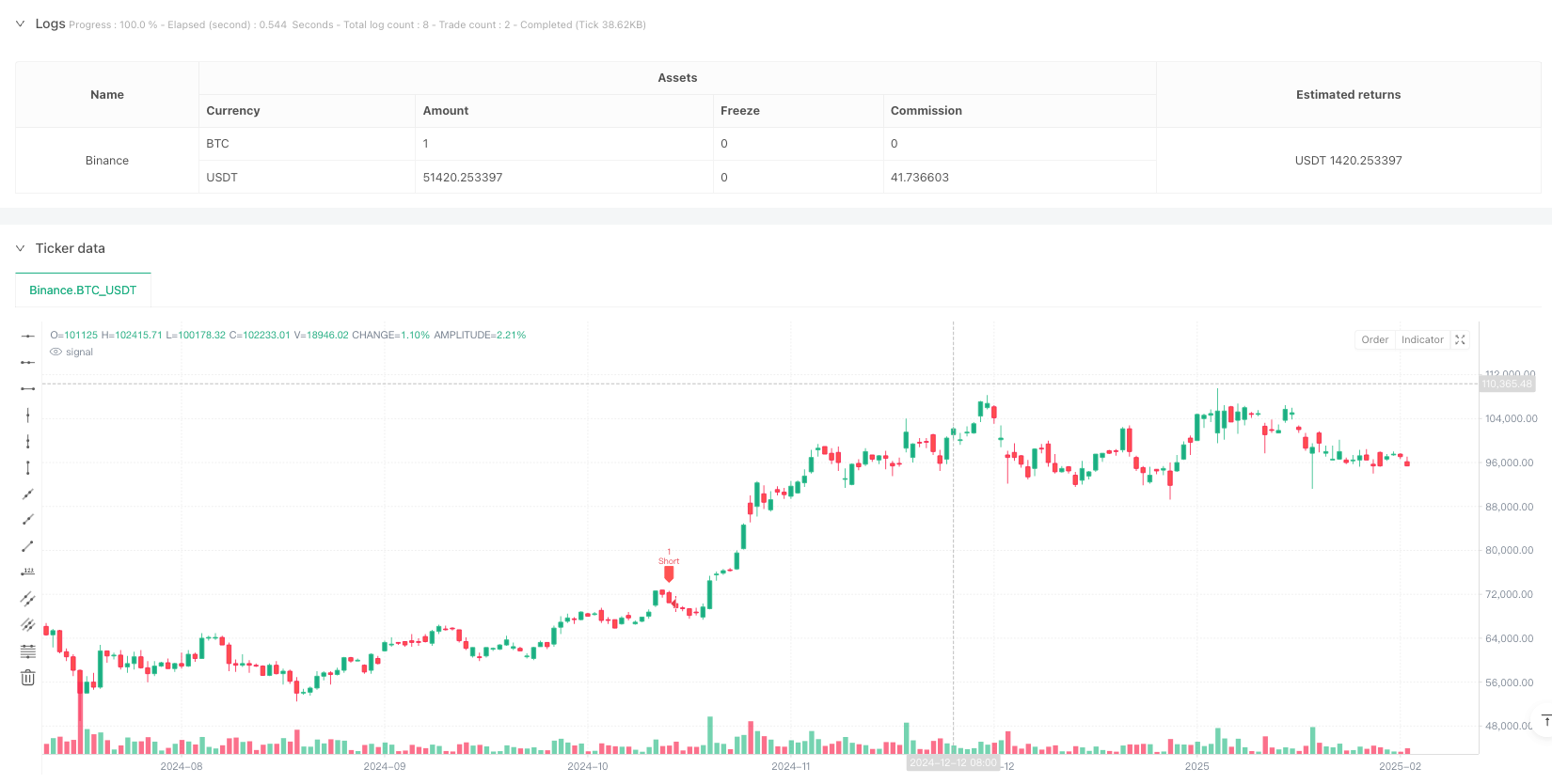
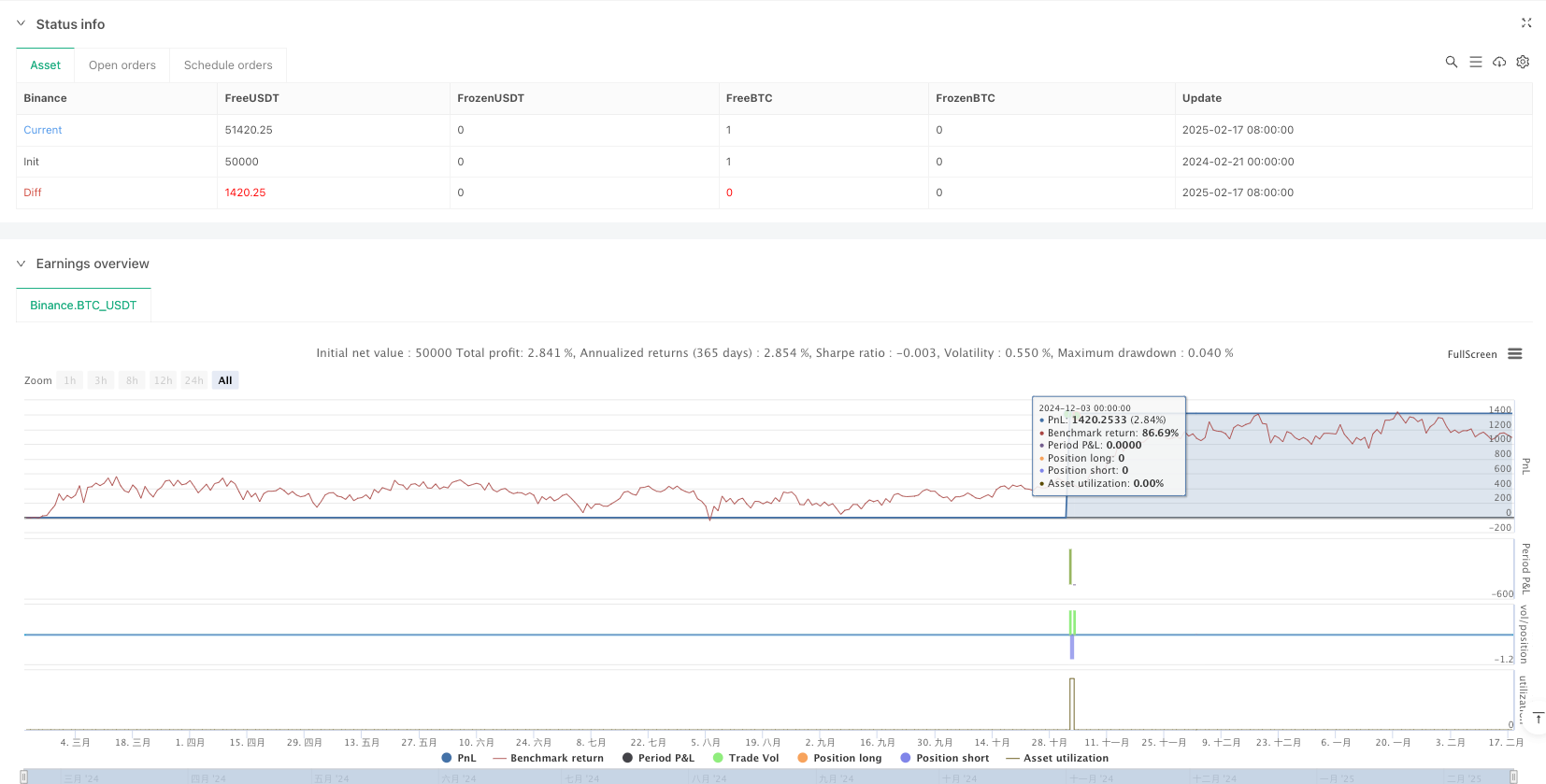
[trans]
概述
本策略是一个基于随机指标(Stochastic Oscillator)的多时间框架波段交易系统。它通过结合当前时间框架和更高时间框架的随机指标信号来确定交易机会,并使用动态止盈止损来管理风险。该策略适用于波动性较大的市场,通过捕捉价格的短期波动来获取收益。
策略原理
策略的核心逻辑基于以下几个关键要素:
- 使用随机指标在两个时间框架(当前和更高级别)上进行信号确认
- 在超买超卖区域寻找交叉信号
- 买入条件:当前时间框架K线上穿D线,且K值<20;更高时间框架K值<20且K>D
- 卖出条件:当前时间框架K线下穿D线,且K值>80;更高时间框架K值>80且K<D
- 采用基于入场价格的动态止盈止损系统,止盈止损倍数可调
策略优势
- 多时间框架信号确认提高了交易的可靠性,有效降低了虚假信号
- 在超买超卖区域进行交易,增加了趋势反转的概率
- 动态止盈止损系统可以根据市场波动自动调整,提高了资金管理的灵活性
- 图形界面直观显示交易信号和止盈止损位置,便于交易者理解和操作
- 策略参数可调,适应不同市场环境
策略风险
- 在剧烈波动市场中可能出现止损频繁的情况
- 双重时间框架确认可能导致错过一些交易机会
- 固定倍数的止盈止损可能不适合所有市场环境
- 在趋势强劲时可能过早止盈
- 需要合理设置参数以平衡收益和风险
策略优化方向
- 引入自适应止盈止损机制,根据市场波动率动态调整
- 增加趋势过滤器,在强趋势中调整交易方向
- 加入成交量指标作为辅助确认信号
- 开发更智能的仓位管理系统
- 考虑加入市场情绪指标来优化入场时机
总结
这是一个结合了技术分析和风险管理的完整交易系统。通过多时间框架的信号确认和动态止盈止损,策略在保证稳定性的同时也具备了较好的收益潜力。但是,使用者需要根据自己的交易风格和市场环境对参数进行优化,并始终保持严格的风险控制。 ||
Overview
This strategy is a multi-timeframe swing trading system based on the Stochastic Oscillator. It identifies trading opportunities by combining stochastic signals from current and higher timeframes, using dynamic take-profit and stop-loss levels for risk management. The strategy is designed for volatile markets, aiming to capture short-term price movements for profit.
Strategy Principles
The core logic is based on several key elements:
- Using Stochastic Oscillator confirmation on two timeframes (current and higher)
- Looking for crossover signals in overbought/oversold zones
- Buy conditions: K line crosses above D line in current timeframe with K<20; higher timeframe K<20 and K>D
- Sell conditions: K line crosses below D line in current timeframe with K>80; higher timeframe K>80 and K<D
- Dynamic take-profit and stop-loss system based on entry price, with adjustable multipliers
Strategy Advantages
- Multi-timeframe signal confirmation improves reliability and reduces false signals
- Trading in overbought/oversold zones increases probability of trend reversal
- Dynamic TP/SL system automatically adjusts to market volatility, enhancing money management flexibility
- Visual interface clearly displays trading signals and TP/SL levels for better understanding
- Adjustable parameters allow adaptation to different market conditions
Strategy Risks
- Frequent stop-losses may occur in highly volatile markets
- Dual timeframe confirmation might cause missed trading opportunities
- Fixed multiplier TP/SL may not suit all market conditions
- Potential early profit taking in strong trends
- Requires careful parameter optimization to balance reward and risk
Optimization Directions
- Implement adaptive TP/SL mechanism based on market volatility
- Add trend filter for adjusting trade direction in strong trends
- Incorporate volume indicators as confirmation signals
- Develop more sophisticated position sizing system
- Consider adding market sentiment indicators for entry timing optimization
Summary
This is a comprehensive trading system combining technical analysis and risk management. Through multi-timeframe signal confirmation and dynamic TP/SL, the strategy maintains stability while offering good profit potential. However, users need to optimize parameters according to their trading style and market conditions, always maintaining strict risk control.[/trans]
Source (PineScript)
/*backtest
start: 2024-02-21 00:00:00
end: 2025-02-18 08:00:00
period: 1d
basePeriod: 1d
exchanges: [{"eid":"Binance","currency":"BTC_USDT"}]
*/

//@version=5
strategy("Swing Fairas Oil", overlay=true)

// Input parameters
kLength = input(14, title="Stochastic K Length")
dLength = input(3, title="Stochastic D Length")
smoothK = input(3, title="Smooth K")
tfHigher = input.timeframe("30", title="Higher Timeframe")
takeProfit = input(1.7, title="Take Profit Multiplier")
stopLoss = input(1.7, title="Stop Loss Multiplier")

// Calculate Stochastic Oscillator for current timeframe
k = ta.sma(ta.stoch(close, high, low, kLength), smoothK)
d = ta.sma(k, dLength)

// Calculate Stochastic Oscillator for higher timeframe
kHTF = request.security(syminfo.tickerid, tfHigher, ta.sma(ta.stoch(close, high, low, kLength), smoothK))
dHTF = request.security(syminfo.tickerid, tfHigher, ta.sma(kHTF, dLength))

// Buy and sell conditions (confirmation from two timeframes)
buyCondition = ta.crossover(k, d) and k < 20 and kHTF < 20 and kHTF > dHTF
sellCondition = ta.crossunder(k, d) and k > 80 and kHTF > 80 and kHTF < dHTF

// Define Take Profit and Stop Loss levels
longStopLoss = close * (1 - stopLoss / 100)
longTakeProfit = close * (1 + takeProfit / 100)
shortStopLoss = close * (1 + stopLoss / 100)
shortTakeProfit = close * (1 - takeProfit / 100)

// Execute Trades
if buyCondition
    strategy.entry("Long", strategy.long)
    strategy.exit("Long Exit", from_entry="Long", limit=longTakeProfit, stop=longStopLoss)
if sellCondition
    strategy.entry("Short", strategy.short)
    strategy.exit("Short Exit", from_entry="Short", limit=shortTakeProfit, stop=shortStopLoss)

// Plot buy/sell signals on candlestick chart
plotshape(series=buyCondition, location=location.belowbar, color=color.green, style=shape.labelup, size=size.small, title="Buy Signal")
plotshape(series=sellCondition, location=location.abovebar, color=color.red, style=shape.labeldown, size=size.small, title="Sell Signal")

// Highlight candles for buy and sell conditions
barcolor(buyCondition ? color.green : sellCondition ? color.red : na)

// Draw Take Profit and Stop Loss levels dynamically with labels
var float tpLevel = na
var float slLevel = na
if buyCondition
    tpLevel := longTakeProfit
    slLevel := longStopLoss

if sellCondition
    tpLevel := shortTakeProfit
    slLevel := shortStopLoss
Detail
https://www.fmz.com/strategy/482837
Last Modified
2025-02-20 14:49:38