
9.2 KiB
Name
多因子趋势追踪量化策略-Multi-Factor-Trend-Following-Quantitative-Strategy
Author
ianzeng123
Strategy Description
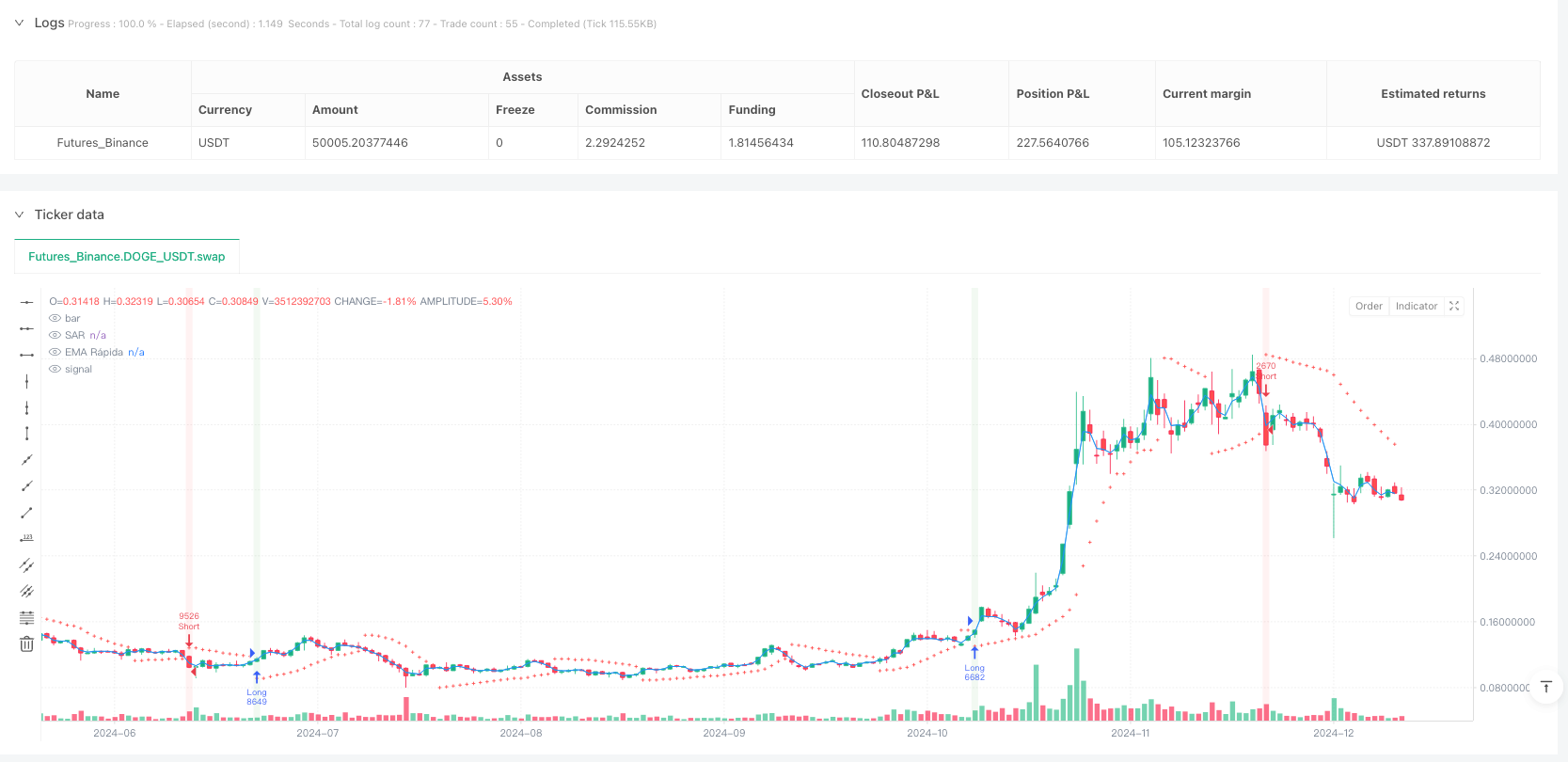
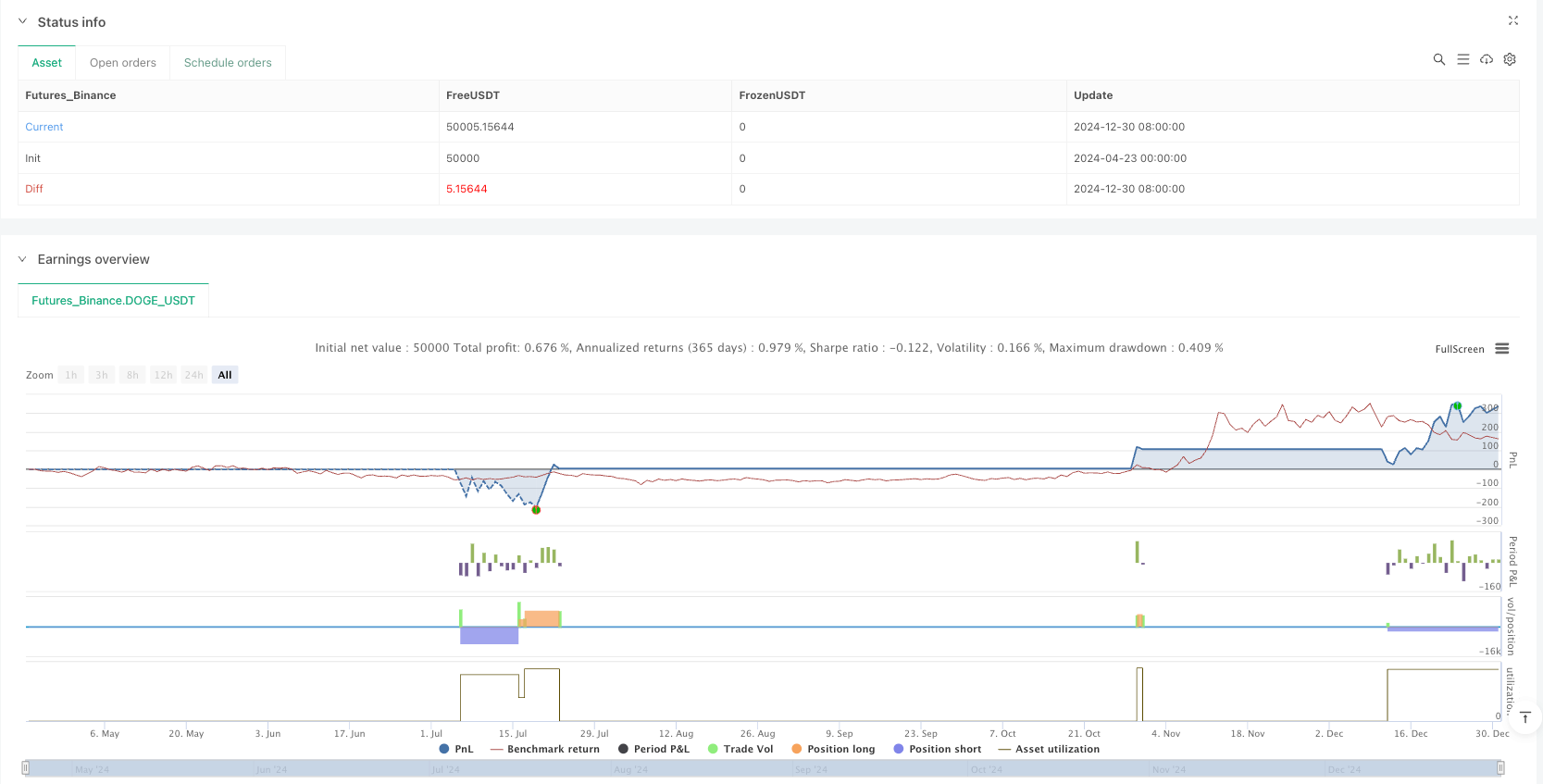
[trans]
概述
该策略是一个结合了抛物线转向指标(SAR)、指数移动平均线(EMA)、相对强弱指数(RSI)和平均趋向指数(ADX)的多因子趋势跟踪系统。它通过多个技术指标的协同作用来识别潜在的趋势方向,并在趋势确认时发出交易信号。策略还采用了基于平均真实波幅(ATR)的动态风险管理方法,自动计算止损和止盈水平。
策略原理
- 趋势确认:当价格突破抛物线转向指标(SAR)且收盘价高于快速EMA时,确认上升趋势;当价格跌破SAR且收盘价低于快速EMA时,确认下降趋势。
- 动量过滤:使用RSI指标过滤信号,要求做多时RSI>60,做空时RSI<40,确保交易在动量较强的方向上进行。
- 趋势强度验证:通过ADX指标(阈值30)验证趋势强度,避免在震荡市中交易。
- 风险管理:基于ATR计算动态止损(1.5倍ATR)和止盈(2倍ATR),并根据账户资金的固定百分比(默认2%)计算仓位大小。
策略优势
- 多因子验证:通过SAR、EMA、RSI和ADX四个指标的多重验证,显著提高信号质量。
- 动态风险管理:ATR-based的止损止盈能自动适应市场波动性变化。
- 趋势强度过滤:ADX阈值有效过滤假突破,只在强趋势市场交易。
- 自动化仓位计算:基于风险的仓位管理确保每笔交易风险一致。
- 清晰的视觉反馈:通过彩色背景直观显示交易信号。
策略风险
- 滞后性风险:SAR和EMA都是趋势跟随指标,在趋势反转时可能出现滞后。
- 参数敏感度:RSI长度(6)和EMA周期(2)的短周期设置可能导致过度交易。
- ADX阈值风险:固定ADX阈值(30)可能在不同市场条件下表现不稳定。
- 波动性放大风险:ATR乘数固定可能导致极端波动期间止损过宽。
解决方案:
- 对ADX阈值和RSI参数进行动态优化
- 增加波动性过滤器(如VIX指标)
- 采用渐进式仓位管理替代固定百分比
优化方向
- 参数动态化:将固定参数改为基于市场状态的动态参数,如使用波动率调整ATR乘数。
- 机器学习集成:用历史数据训练模型优化指标参数组合。
- 多时间框架确认:加入更高时间框架的趋势确认。
- 异常波动过滤:在重大新闻事件前后暂停交易。
- 复合退出策略:结合追踪止损和时间退出等多种退出机制。
总结
该多因子趋势策略通过指标协同和严格风险管理,在趋势市场中表现优异。核心优势在于信号的多重验证和动态风险控制,但需注意其参数敏感性和滞后风险。未来优化应聚焦于参数自适应机制和市场状态识别,以提升策略的稳健性。
||
Overview
This strategy is a multi-factor trend-following system combining Parabolic SAR, Exponential Moving Average (EMA), Relative Strength Index (RSI), and Average Directional Index (ADX). It identifies potential trend directions through the synergistic effect of multiple technical indicators and generates trading signals upon trend confirmation. The strategy also incorporates dynamic risk management based on Average True Range (ATR) to automatically calculate stop-loss and take-profit levels.
Strategy Logic
- Trend Confirmation: An uptrend is confirmed when price breaks above Parabolic SAR and closes above fast EMA; a downtrend is confirmed when price breaks below SAR and closes below fast EMA.
- Momentum Filter: Uses RSI to filter signals, requiring RSI>60 for longs and RSI<40 for shorts, ensuring trades align with strong momentum.
- Trend Strength Validation: ADX (threshold 30) verifies trend strength, avoiding trades in ranging markets.
- Risk Management: Dynamic stops (1.5x ATR) and targets (2x ATR) based on volatility, with position sizing calculated as fixed percentage (default 2%) of account equity.
Advantages
- Multi-Factor Validation: Four-indicator confirmation significantly improves signal quality.
- Dynamic Risk Control: ATR-based stops/targets automatically adapt to changing volatility.
- Trend Strength Filter: ADX threshold effectively filters false breakouts.
- Automated Position Sizing: Risk-based sizing ensures consistent trade exposure.
- Clear Visual Feedback: Colored background provides intuitive signal display.
Risks
- Lagging Nature: SAR and EMA may lag during trend reversals.
- Parameter Sensitivity: Short RSI length (6) and EMA period (2) may cause overtrading.
- ADX Threshold Risk: Fixed ADX threshold (30) may underperform in different market regimes.
- Volatility Spike Risk: Fixed ATR multiplier may create excessively wide stops during extreme volatility.
Solutions:
- Dynamic optimization of ADX and RSI parameters
- Add volatility filters (e.g. VIX)
- Implement progressive position sizing
Optimization Directions
- Dynamic Parameters: Replace fixed values with market-condition-adjusted parameters.
- Machine Learning: Use historical data to train optimal parameter combinations.
- Multi-Timeframe Confirmation: Incorporate higher timeframe trend validation.
- Event Volatility Filters: Pause trading around major news events.
- Composite Exits: Combine trailing stops, time exits and other exit mechanisms.
Conclusion
This multi-factor trend strategy excels in trending markets through indicator synergy and rigorous risk control. Its core strengths lie in multi-layered signal validation and dynamic risk management, though parameter sensitivity and lag risks require attention. Future optimizations should focus on adaptive parameter mechanisms and market regime detection to enhance robustness.
[/trans]
Source (PineScript)
/*backtest
start: 2024-04-23 00:00:00
end: 2024-12-31 00:00:00
period: 1d
basePeriod: 1d
exchanges: [{"eid":"Futures_Binance","currency":"DOGE_USDT"}]
*/

//@version=5
strategy("? Estrategia SAR+EMA+RSI con Alertas", overlay=true)

// ———— PARÁMETROS ————
riskPerTrade = input.float(2.0, title="Riesgo por operación (%)", minval=0.5, step=0.5)
sarStart = input.float(0.02, title="SAR Start", minval=0.001)
sarIncrement = input.float(0.02, title="SAR Increment", minval=0.001)
sarMax = input.float(0.2, title="SAR Max", minval=0.1)
rsiLength = input.int(6, title="RSI Length", minval=3, maxval=10)
emaFastLength = input.int(2, title="EMA Rápida", minval=1, maxval=5)
adxThreshold = input.int(30, title="ADX mínimo", minval=20, maxval=50)
atrMultiplier = input.float(1.5, title="Multiplicador ATR para SL", step=0.1)

// ———— INDICADORES ————
sar = ta.sar(sarStart, sarIncrement, sarMax)
emaFast = ta.ema(close, emaFastLength)
rsi = ta.rsi(close, rsiLength)
[diplus, diminus, adx] = ta.dmi(14, 14) // Ahora pasamos length y adxSmoothing

atr = ta.atr(14)

// ———— CONDICIONES ————
longCondition = ta.crossover(close, sar) and close > emaFast and rsi > 60 and adx >= adxThreshold
shortCondition = ta.crossunder(close, sar) and close < emaFast and rsi < 40 and adx >= adxThreshold

// ———— FUNCIÓN MENSAJE ALERTA ————
getAlertMessage(isLong) =>
    slPoints = atr * atrMultiplier
    message = (isLong ? "? COMPRA " : "? VENTA ") + syminfo.ticker + "\n" +
      "Precio: " + str.tostring(math.round(close, 2)) + "\n" +
      "SL: " + str.tostring(math.round(isLong ? (close - slPoints) : (close + slPoints), 2)) + "\n" +
      "TP: " + str.tostring(math.round(isLong ? (close + slPoints * 2) : (close - slPoints * 2), 2)) + "\n" +
      "RSI: " + str.tostring(math.round(rsi, 1)) + "\n" +
      "ADX: " + str.tostring(math.round(adx, 1))
    message

// ———— ALERTAS ————
if (longCondition)
    alert(getAlertMessage(true), alert.freq_once_per_bar_close)

if (shortCondition)
    alert(getAlertMessage(false), alert.freq_once_per_bar_close)


if (longCondition)
    alert(getAlertMessage(true), alert.freq_once_per_bar_close)

if (shortCondition)
    alert(getAlertMessage(false), alert.freq_once_per_bar_close)

// ———— ENTRADAS DE ESTRATEGIA ————
riskAmount = strategy.equity * (riskPerTrade / 100)
slPoints = atr * atrMultiplier
qty = riskAmount / close

if (longCondition)
    strategy.entry("Long", strategy.long, qty=qty)
    strategy.exit("Exit Long", "Long", stop=close - slPoints, limit=close + slPoints * 2)

if (shortCondition)
    strategy.entry("Short", strategy.short, qty=qty)
    strategy.exit("Exit Short", "Short", stop=close + slPoints, limit=close - slPoints * 2)

// ———— VISUALIZACIÓN ————
plot(sar, title="SAR", color=color.red, style=plot.style_cross)
plot(emaFast, title="EMA Rápida", color=color.blue)
bgcolor(longCondition ? color.new(color.green, 90) : shortCondition ? color.new(color.red, 90) : na)
Detail
https://www.fmz.com/strategy/491897
Last Modified
2025-04-24 17:23:29