
7.2 KiB
Name
基于K线方向的趋势追踪策略Trend-Following-Strategy-Based-on-Candlestick-Direction
Author
ChaoZhang
Strategy Description
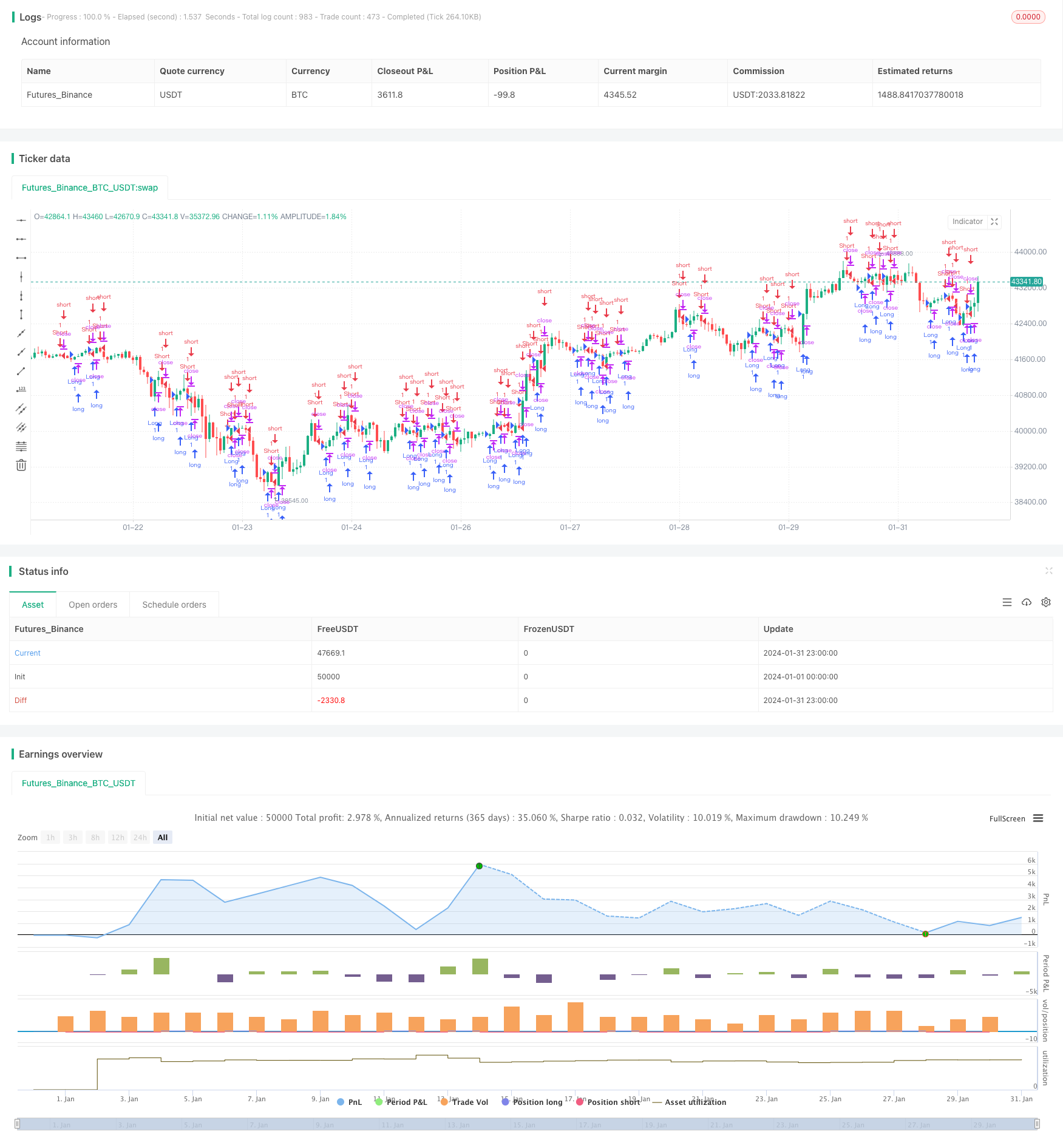 [trans]
概述
本策略基于K线的收盘价和开盘价的关系,判断当前趋势方向,从而产生长仓或者短仓的信号。具体来说,如果收盘价高于开盘价,则产生做多信号;如果收盘价低于开盘价,则产生做空信号。
策略原理
该策略主要基于以下两个判断条件来产生交易信号:
-
开仓信号判断:如果收盘价高于开盘价(close > open),并且已经到达开盘时间,则产生做多信号;如果收盘价低于开盘价(close < open),并且已经到达开盘时间,则产生做空信号。
-
平仓条件:和开仓信号相反,如果已做多,则亏损条件为收盘价低于开盘价加上ATR的值,止盈条件为收盘价高于开盘价加上ATR乘以止盈比例;如果已做空,则相反。
通过这样的设计,本策略充分利用了K线方向的信息,判断当前趋势方向,能够及时追踪趋势产生信号。同时,止损和止盈标准都基于ATR这个动态指标,避免了固定点数带来的问题。
策略优势
本策略最大的优势在于利用K线方向判断趋势追踪能力强。进场信号判断简单清晰,容易理解,同时结合开盘时间条件,避免了隔夜风险。止损止盈标准动态变化,可自动调整仓位规模。
整体来说,该策略反应灵敏,追踪能力强,适合中间周期如1小时、4小时进行趋势捕捉。
策略风险
本策略可能存在的主要风险有:
-
交易次数可能较多,容易被交易费用和滑点影响。可以适当调整止盈倍数进行优化。
-
K线若出现背驰等情况,则可能产生错误信号。可以结合其他指标进行滤除。
-
ATR参数设置会影响止损止盈的效果。ATR长度和止盈倍数需要根据市场调整。
-
开盘时间设置也会影响信号效果。不同市场需要设置不同的开盘时间。
策略优化
本策略还可进一步优化的方面包括:
-
结合移动平均线等指标进行信号过滤,处理因价格震荡产生的错误信号。
-
增加仓位管理机制,通过波动率等指标控制单次投入资金规模。
-
利用机器学习等方法动态优化止损止盈的参数,使之能根据实时市场调整。
-
结合情绪指标等方法判断市场热度,控制整体仓位。
总结
本策略整体曾反应灵敏,能够有效捕捉趋势。通过简单的K线收盘价和开盘价比较,判断方向并产生信号。同时,止盈止损标准采用动态ATR指标,可以根据波动率调整仓位。优化空间还很大,可进一步结合其他指标进行过滤以及参数调优。
||
Overview
This strategy generates long or short signals based on the relationship between the closing price and opening price of candlesticks to determine the current trend direction. Specifically, if the closing price is higher than the opening price, a long signal is generated. If the closing price is lower than the opening price, a short signal is generated.
Strategy Logic
The strategy mainly relies on the following two conditions to generate trading signals:
-
Entry signal logic: If the closing price is higher than the opening price (close > open) and it has reached the opening hour, a long signal is generated. If the closing price is lower than the opening price (close < open) and it has reached the opening hour, a short signal is generated.
-
Exit conditions: Contrary to entry signals, if already long, the loss condition is closing price below opening price plus ATR value, profit condition is closing price higher than opening price plus ATR multiplied by profit ratio. Vice versa if already short.
With this design, this strategy leverages the directional information from candlesticks to determine trend direction and timely follows the trend. Also, the stop loss and take profit standards dynamically adapt based on ATR, avoiding issues with fixed values.
Advantages
The biggest advantage of this strategy is the strong trend following capability utilizing candlestick direction. Entry signals are simple and clear, combined with opening hour condition to avoid overnight risks. Stop loss and take profit standards change dynamically to auto adjust position sizing.
Overall, this strategy has quick reaction and strong tracking ability, suitable for catching trends on middle timeframes like 1H, 4H.
Risks
Main risks of this strategy include:
-
High trading frequency, easily affected by transaction costs and slippage. Can optimize by adjusting profit ratio.
-
Wrong signals may happen if candlestick divergence occurs. Can filter with other indicators.
-
ATR parameter settings affect stop loss/take profit performance. ATR length and profit ratio need market adjustment.
-
Opening hour setting also impacts signal quality. Different markets need different opening hour.
Optimization
Aspects that this strategy can further optimize on:
-
Add filters like moving averages to handle wrong signals from price fluctuations.
-
Incorporate position sizing to control single bet size based on volatility.
-
Utilize machine learning to dynamically optimize stop loss/take profit parameters to adapt to the market.
-
Judge market sentiment using indicators to manage overall position.
Conclusion
In summary, this strategy has quick reaction and effectively catches trends. It determines direction and generates signals simply based on relationship between candlestick closing and opening prices. Also, dynamic ATR is used for stop loss/take profit standards to adjust position sizing based on volatility. Huge potential to further optimize by adding filters and fine tuning parameters.
[/trans]
Strategy Arguments
| Argument | Default | Description |
|---|---|---|
| v_input_1 | 9 | Start Hour for Entries |
| v_input_2 | true | Activate Long |
| v_input_3 | true | Activate Short |
| v_input_4 | 1.5 | Take Profit Ratio |
Source (PineScript)
/*backtest
start: 2024-01-01 00:00:00
end: 2024-01-31 23:59:59
period: 1h
basePeriod: 15m
exchanges: [{"eid":"Futures_Binance","currency":"BTC_USDT"}]
*/

//@version=5
strategy("Go with Trend Strategy", overlay=true)

// Input settings
startHour = input(9, title="Start Hour for Entries")
activateLong = input(true, title="Activate Long")
activateShort = input(true, title="Activate Short")
takeProfitRatio = input(1.5, title="Take Profit Ratio")

// Calculate ATR
atrLength = 14  // You can change this value as needed
atrValue = ta.atr(atrLength)

// Calculate entry conditions
enterLong = close > open and hour >= startHour
enterShort = close < open and hour >= startHour

// Strategy logic
if (activateLong and enterLong)
    strategy.entry("Long", strategy.long)

if (activateShort and enterShort)
    strategy.entry("Short", strategy.short)

// Stop loss and take profit conditions
strategy.exit("Exit Long", from_entry="Long", loss=close - atrValue, profit=close + takeProfitRatio * atrValue)
strategy.exit("Exit Short", from_entry="Short", loss=close + atrValue, profit=close - takeProfitRatio * atrValue)
Detail
https://www.fmz.com/strategy/442076
Last Modified
2024-02-19 10:36:00