
14 KiB
Name
基于广义支撑-阻力的反转交易策略Reversal-Trading-Strategy-Based-on-Generalized-Support-Resistance
Author
ChaoZhang
Strategy Description
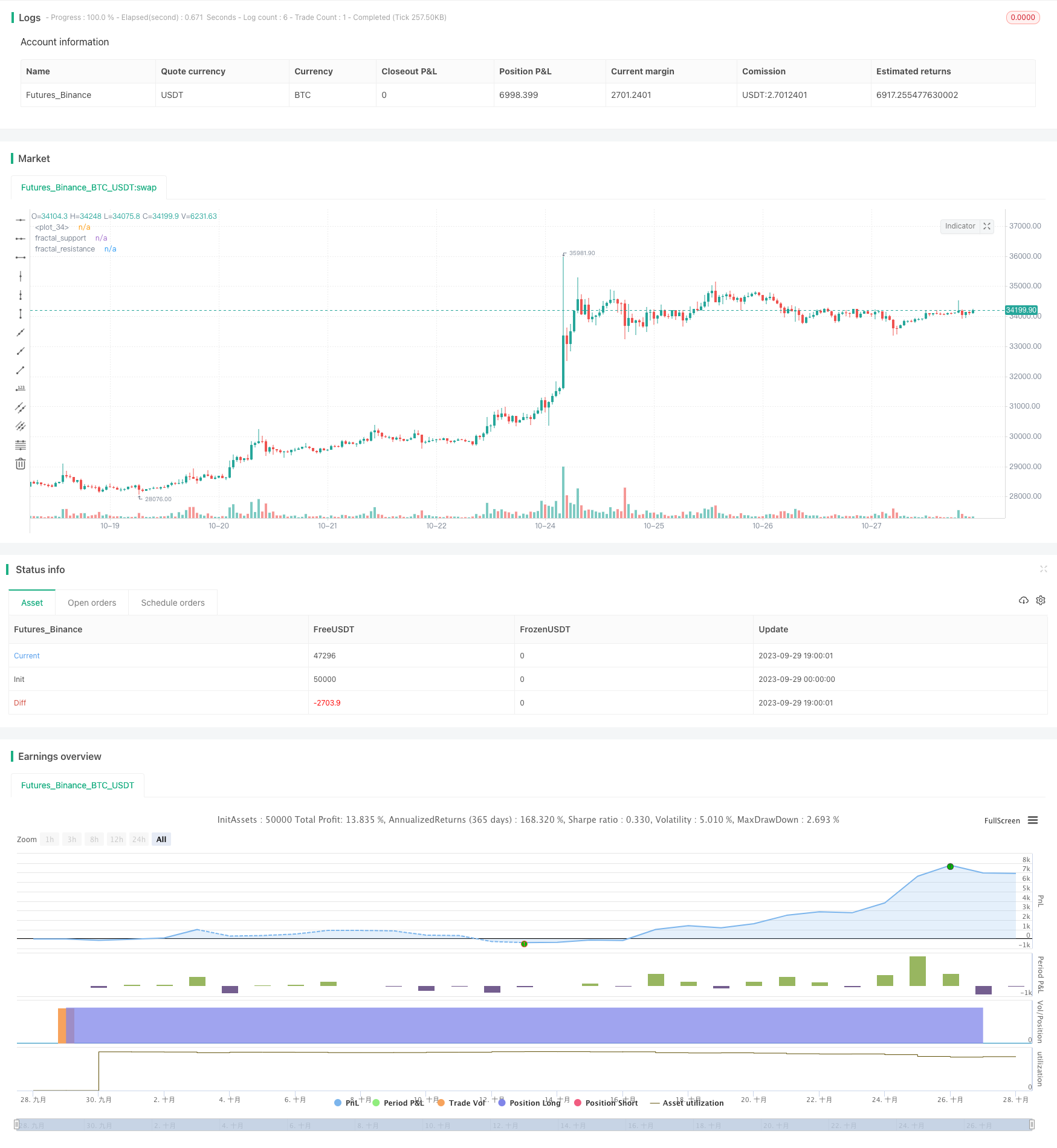
[trans]
概述
本策略基于指标多空因子采取反转交易,同时设置了目标获利点。多空因子核心为基于交易量的扩展形态“广义支撑/阻力”,适用于具备高交易量和波动的标的。策略优势在于可捕捉到较大的中短期趋势反转机会,能快速获利;但也存在被套风险。
策略原理
-
基于交易量的“广义支撑/阻力”识别多空因子
-
使用K线形态识别经典支撑/阻力,以较大交易量过滤假突破
-
广义支撑/阻力比经典形态具有更好的包含性
-
突破广义支撑为多因子信号,突破广义阻力为空因子信号
-
-
反转交易
-
因子信号发出后,进行反向操作
-
若已持仓,则进行反向减仓或反向开仓
-
-
设置获利目标
-
根据ATR设定止损
-
设置1R/2R/3R等多个目标获利点
-
达到不同获利目标后分批减仓
-
优势分析
-
可捕捉中短期较大幅度反转
支撑阻力突破代表较强趋势反转信号,具有一定的可靠性,可捕捉中短期较大幅度反转。
-
快速获利,回撤小
通过止损和多档获利目标设定,可实现快速获利,并限制个股回撤。
-
适用于具有大量机构资金且波动较大的标的
该策略依赖交易量指标,需要有充足的机构资金流入支持趋势;同时需要一定的波动空间来实现盈利。
风险分析
-
被困于震荡行情的风险
行情震荡时,止损退出再反向入场的操作可能造成频繁被套。
-
支撑阻力失效风险
广义支撑阻力并不绝对可靠,存在失败测试反转的概率。
-
单边持仓风险
策略为纯反转,不考虑趋势跟踪,有可能错过较大方向性机会。
-
风控方面
-
可适当放宽反转交易的因子条件,不必每一次突破都反转
-
可结合其它指标过滤,如量价背离
-
可优化止损策略,降低被困概率
-
优化方向
-
优化口径参数
优化广义支撑阻力的参数,识别更可靠的因子
-
优化获利策略
可增加更多档位的获利目标,也可以采用非固定目标获利
-
优化止损策略
调整ATR参数或使用istics止损,减少不必要激烈止损造成的交易成本
-
结合趋势及其它因子
可引入均线等趋势判断,避免与趋势严重对抗;也可引入其它辅助因子
总结
本策略核心在于利用反转交易来捕捉中短期较大波动。策略思路简单直接,通过参数调整可获得不错的实盘效果。但反转策略较为激进,存在一定的回撤和被套风险,需要进一步优化止损和盈利策略,并适当结合趋势判断,以减少不必要的损失。
||
Overview
This strategy adopts reversal trading based on bullish/bearish factors, with preset profit-taking levels. The core of the factors is the extended pattern "Generalized Support/Resistance" based on trading volume, suitable for stocks with high volume and volatility. The advantages lie in capturing larger reversal opportunities in medium-short terms and profiting quickly, while it bears the risk of being trapped.
Strategy Logic
-
Identifying bullish/bearish factors based on "Generalized Support/Resistance" with volume
-
Using candlestick patterns to identify classic S/R levels, filtered by significant volume
-
Generalized S/R has better coverage than classic patterns
-
Breaking generalized support signals long factor, breaking generalized resistance signals short factor
-
-
Reversal trading
-
Take reverse position when factor signal triggers
-
If already in position, reduce or add reverse position
-
-
Setting profit target levels
-
Set stop loss based on ATR
-
Set multiple profit levels like 1R, 2R, 3R
-
Partial profit taking when hitting different targets
-
Advantages
-
Capture decent mid-term reversals
S/R breakouts represent strong reversal signals with some reliability, able to catch mid-term reversals
-
Quick profit-taking, small drawdowns
By setting stop loss and multiple profit targets, can achieve quick gains and limit drawdowns
-
Suitable for stocks with significant institutional money and volatility
The strategy relies on volume, requiring sizable institutional participation; also needs volatility to make profits
Risks
-
Getting trapped in range-bound market
Frequent stop loss exit and re-entry in opposite direction can result in whipsaws
-
Failure of support/resistance
Generalized S/R is not absolutely reliable, some failures exist
-
One-sided holding risk
The pure reversal logic may miss large trending opportunities
-
Risk management:
-
Loosen factor conditions, not reverse on every breakout
-
Add other filters e.g. price/volume divergence
-
Optimize stop loss strategy to reduce traps
-
Enhancement Directions
-
Optimize S/R parameters
Find more reliable factors by tweaking generalized S/R settings
-
Optimize profit-taking
Add more profit levels, or use non-fixed targets
-
Optimize stop loss
Adjust ATR parameters or use istics stop loss to reduce unnecessary stops
-
Incorporate trend and other factors
Add trend filters like moving average to avoid big trend conflicts; also add other assisting factors
Summary
The core of the strategy is to capture decent mid-term swings via reversal trading. The logic is simple and direct, and can be practical with parameter tuning. But the aggressive nature of reversals leads to some drawdown and trapping risk. Further enhancements in stop loss, profit-taking and trend alignment will help reduce unnecessary losses.
[/trans]
Strategy Arguments
| Argument | Default | Description |
|---|---|---|
| v_input_string_1 | 0 | Confidence Interval: 95% |
| v_input_1 | 2 | (?Stop loss)ATR Multiplier for trailing stop loss |
| v_input_2 | 14 | Length of ATR for trailing stop loss |
| v_input_int_1 | 5 | (?Order size and Profit taking)Allocation (%) of portfolio into this security |
| v_input_3 | true | Take profit and different levels |
| v_input_float_1 | true | First level profit |
| v_input_float_2 | 2 | Second level profit |
| v_input_float_3 | 3 | Third level profit |
| v_input_4 | 5 | (?Entry)Length of ATR (fast) for diversion test |
| v_input_5 | 50 | Length of ATR (slow) for diversion test |
Source (PineScript)
/*backtest
start: 2023-09-29 00:00:00
end: 2023-10-29 00:00:00
period: 1h
basePeriod: 15m
exchanges: [{"eid":"Futures_Binance","currency":"BTC_USDT"}]
*/

// This source code is subject to the terms of the Mozilla Public License 2.0 at https://mozilla.org/MPL/2.0/
// © DojiEmoji

//@version=5
strategy("Fractal Strat [KL] ", overlay=true, pyramiding=1, initial_capital=1000000000)
var string ENUM_LONG = "Long"
var string GROUP_ENTRY = "Entry"
var string GROUP_TSL = "Stop loss"
var string GROUP_TREND = "Trend prediction"
var string GROUP_ORDER = "Order size and Profit taking"

// backtest_timeframe_start = input.time(defval=timestamp("01 Apr 2000 13:30 +0000"), title="Backtest Start Time")
within_timeframe = true

// TSL: calculate the stop loss price. {
_multiple       = input(2.0, title="ATR Multiplier for trailing stop loss", group=GROUP_TSL)
ATR_TSL         = ta.atr(input(14, title="Length of ATR for trailing stop loss", group=GROUP_TSL, tooltip="Initial risk amount = atr(this length) x multiplier")) * _multiple
TSL_source      = low
TSL_line_color  = color.green
TSL_transp      = 100
var stop_loss_price = float(0)

var float initial_entry_p    = float(0)
var float risk_amt           = float(0)
var float initial_order_size = float(0)

if strategy.position_size == 0 or not within_timeframe
    TSL_line_color := color.black
    stop_loss_price := TSL_source - ATR_TSL
else if strategy.position_size > 0
    stop_loss_price := math.max(stop_loss_price, TSL_source - ATR_TSL)
    TSL_transp := 0

plot(stop_loss_price, color=color.new(TSL_line_color, TSL_transp))
// } end of "TSL" block


// Order size and profit taking {
pcnt_alloc = input.int(5, title="Allocation (%) of portfolio into this security", tooltip="Size of positions is based on this % of undrawn capital. This is fixed throughout the backtest period.", minval=0, maxval=100, group=GROUP_ORDER) / 100

// Taking profits at user defined target levels relative to risked amount (i.e 1R, 2R, 3R)
var bool  tp_mode = input(true, title="Take profit and different levels", group=GROUP_ORDER)
var float FIRST_LVL_PROFIT = input.float(1, title="First level profit", tooltip="Relative to risk. Example: entry at $10 and inital stop loss at $9. Taking first level profit at 1R means taking profits at $11", group=GROUP_ORDER)
var float SECOND_LVL_PROFIT = input.float(2, title="Second level profit", tooltip="Relative to risk. Example: entry at $10 and inital stop loss at $9. Taking second level profit at 2R means taking profits at $12", group=GROUP_ORDER)
var float THIRD_LVL_PROFIT = input.float(3, title="Third level profit", tooltip="Relative to risk. Example: entry at $10 and inital stop loss at $9. Taking third level profit at 3R means taking profits at $13", group=GROUP_ORDER)

// }

// Fractals {
// Modified from synapticEx's implementation: https://www.tradingview.com/script/cDCNneRP-Fractal-Support-Resistance-Fixed-Volume-2/

rel_vol_len = 6 // Relative volume is used; the middle candle has to have volume above the average (say sma over prior 6 bars)
rel_vol = ta.sma(volume, rel_vol_len)
_up = high[3]>high[4] and high[4]>high[5] and high[2]<high[3] and high[1]<high[2] and volume[3]>rel_vol[3]
_down = low[3]<low[4] and low[4]<low[5] and low[2]>low[3] and low[1]>low[2] and volume[3]>rel_vol[3]

fractal_resistance = high[3], fractal_support = low[3]   // initialize

fractal_resistance :=  _up ? high[3] : fractal_resistance[1]
fractal_support := _down ? low[3] : fractal_support[1]

plot(fractal_resistance, "fractal_resistance", color=color.new(color.red,50), linewidth=2, style=plot.style_cross, offset =-3, join=false)
plot(fractal_support, "fractal_support", color=color.new(color.lime,50), linewidth=2, style=plot.style_cross, offset=-3, join=false)
// }

// ATR diversion test {
// Hypothesis testing (2-tailed):
//
// Null hypothesis (H0) and Alternative hypothesis (Ha):
//     H0 : atr_fast equals atr_slow
//     Ha : atr_fast not equals to atr_slow; implies atr_fast is either too low or too high
len_fast    = input(5,title="Length of ATR (fast) for diversion test", group=GROUP_ENTRY)
atr_fast    = ta.atr(len_fast)
atr_slow    = ta.atr(input(50,title="Length of ATR (slow) for diversion test", group=GROUP_ENTRY, tooltip="This needs to be larger than Fast"))

// Calculate test statistic (test_stat)
std_error   = ta.stdev(ta.tr, len_fast) / math.pow(len_fast, 0.5)
test_stat = (atr_fast - atr_slow) / std_error

// Compare test_stat against critical value defined by user in settings
//critical_value = input.float(1.645,title="Critical value", tooltip="Strategy uses 2-tailed test to compare atr_fast vs atr_slow. Null hypothesis (H0) is that both should equal. Based on the computed test statistic value, if absolute value of it is +/- this critical value, then H0 will be rejected.", group=GROUP_ENTRY)
conf_interval = input.string(title="Confidence Interval", defval="95%", options=["90%","95%","99%"], tooltip="Critical values of 1.645, 1.96, 2.58, for CI=90%/95%/99%, respectively; Under 2-tailed test to compare atr_fast vs atr_slow. Null hypothesis (H0) is that both should equal. Based on the computed test statistic value, if absolute value of it is +/- critical value, then H0 will be rejected.")
critical_value = conf_interval == "90%" ? 1.645 : conf_interval == "95%" ? 1.96 : 2.58
reject_H0_lefttail = test_stat < -critical_value
reject_H0_righttail = test_stat > critical_value

// } end of "ATR diversion test" block

// Entry Signals
entry_signal_long = close >= fractal_support and reject_H0_lefttail

// MAIN {
// Update the stop limit if strategy holds a position.
if strategy.position_size > 0
    strategy.exit(ENUM_LONG, comment="SL", stop=stop_loss_price)

// Entry
if within_timeframe and entry_signal_long and strategy.position_size == 0
    initial_entry_p := close
    risk_amt := ATR_TSL
    initial_order_size := math.floor(pcnt_alloc * strategy.equity / close)
    strategy.entry(ENUM_LONG, strategy.long, qty=initial_order_size)

var int TP_taken_count = 0
if tp_mode and close > strategy.position_avg_price
    if close >= initial_entry_p + THIRD_LVL_PROFIT * risk_amt and TP_taken_count == 2
        strategy.close(ENUM_LONG, comment="TP Lvl3", qty=math.floor(initial_order_size / 3))
        TP_taken_count := TP_taken_count + 1
    else if close >= initial_entry_p + SECOND_LVL_PROFIT * risk_amt and TP_taken_count == 1
        strategy.close(ENUM_LONG, comment="TP Lvl2", qty=math.floor(initial_order_size / 3))
        TP_taken_count := TP_taken_count + 1
    else if close >= initial_entry_p + FIRST_LVL_PROFIT * risk_amt and TP_taken_count == 0
        strategy.close(ENUM_LONG, comment="TP Lvl1", qty=math.floor(initial_order_size / 3))
        TP_taken_count := TP_taken_count + 1

// Alerts
_atr = ta.atr(14)
alert_helper(msg) =>
    prefix = "[" + syminfo.root + "] "
    suffix = "(P=" + str.tostring(close, "#.##") + "; atr=" + str.tostring(_atr, "#.##") + ")"
    alert(str.tostring(prefix) + str.tostring(msg) + str.tostring(suffix), alert.freq_once_per_bar)

if strategy.position_size > 0 and ta.change(strategy.position_size)
    if strategy.position_size > strategy.position_size[1]
        alert_helper("BUY")
    else if strategy.position_size < strategy.position_size[1]
        alert_helper("SELL")

// Clean up - set the variables back to default values once no longer in use
if ta.change(strategy.position_size) and strategy.position_size == 0
    TP_taken_count := 0
    initial_entry_p := float(0)
    risk_amt := float(0)
    initial_order_size := float(0)
    stop_loss_price := float(0)
// } end of MAIN block
Detail
https://www.fmz.com/strategy/430550
Last Modified
2023-10-30 11:23:25