
8.3 KiB
Name
基于唐奇安通道和移动平均线的趋势突破交易策略-Trend-Breakout-Trading-Strategy-Based-on-Donchian-Channel-and-Moving-Average
Author
ianzeng123
Strategy Description
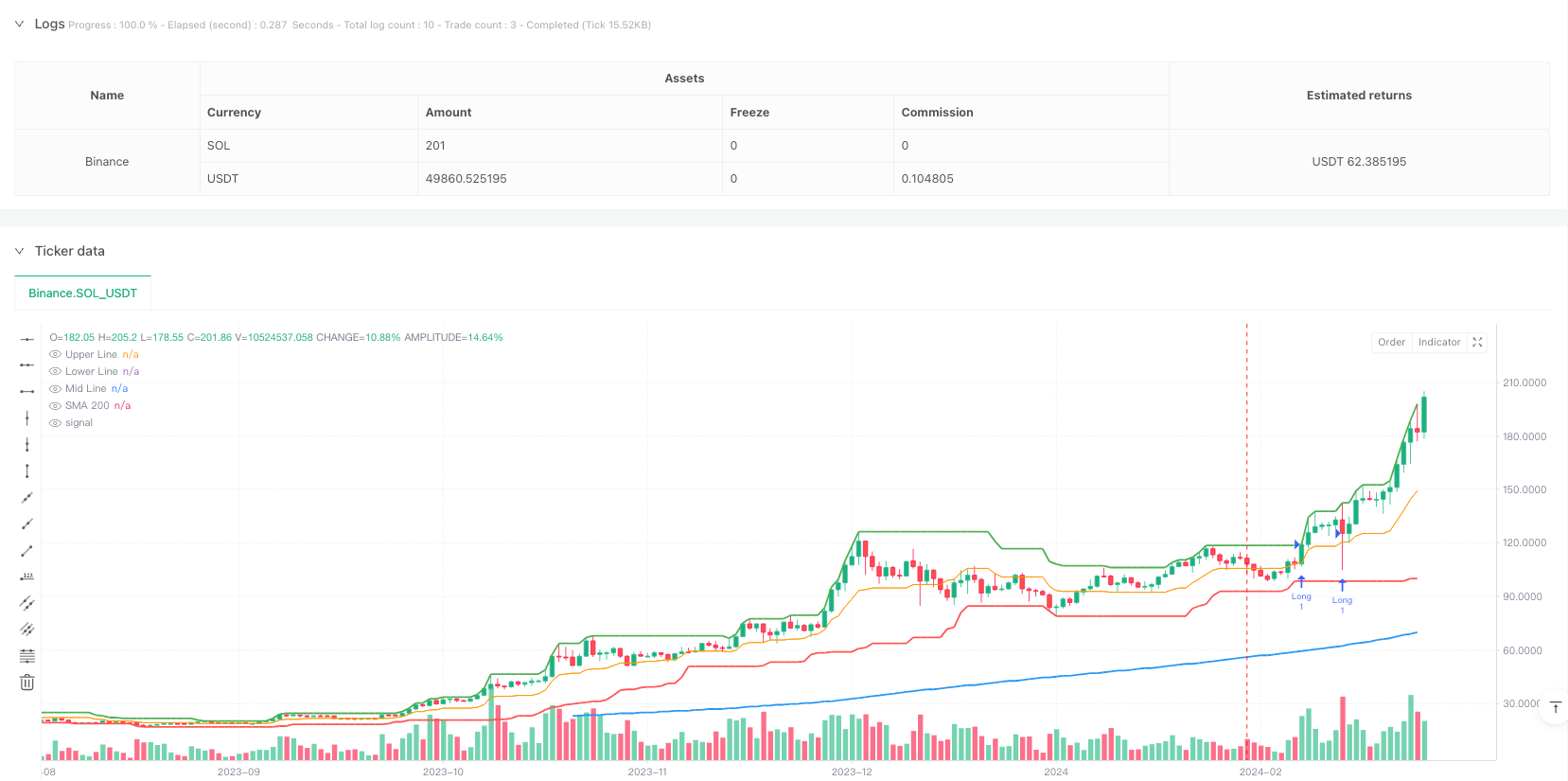
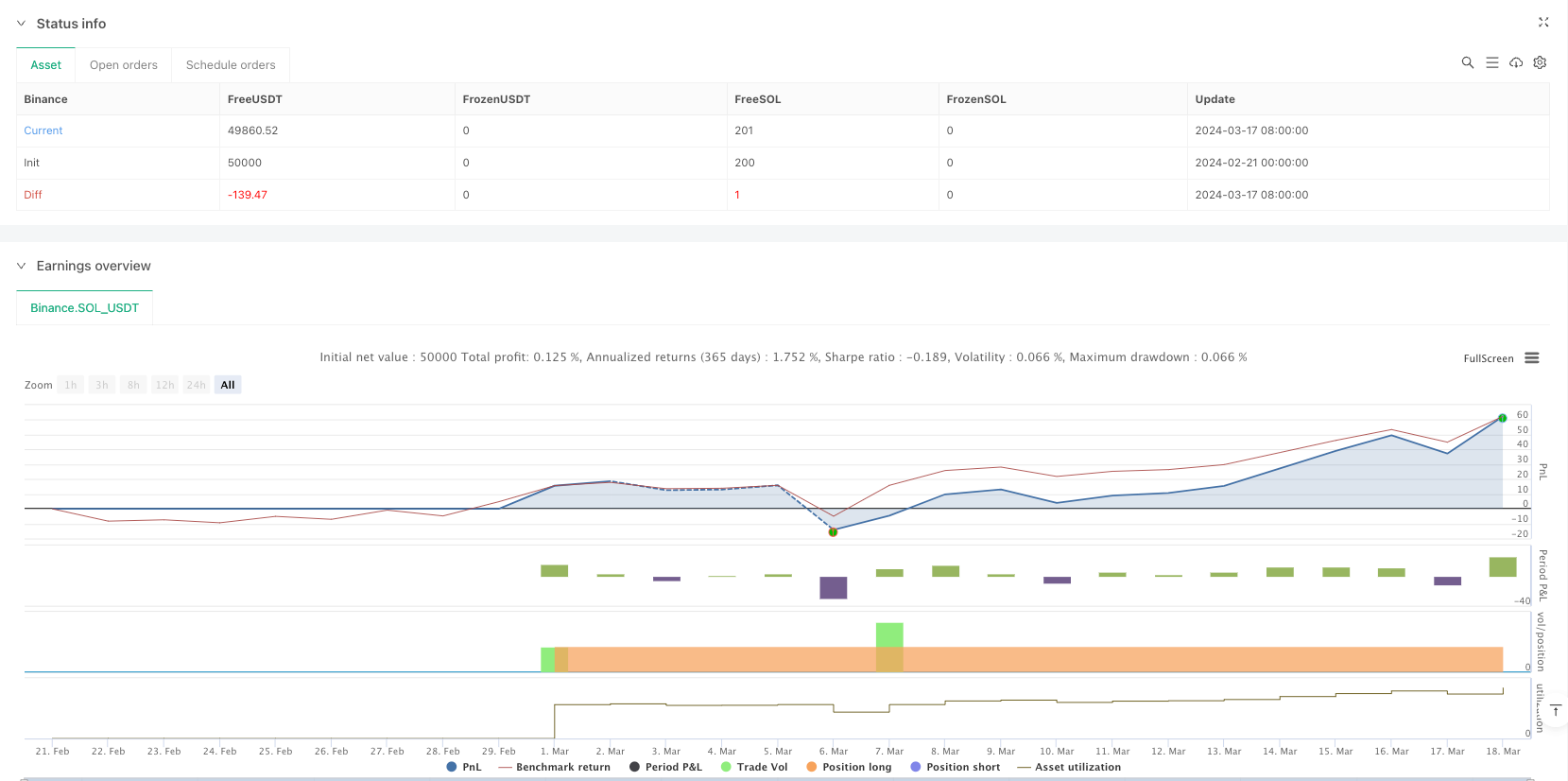
[trans]
概述
该策略是一个结合了唐奇安通道(Donchian Channel)和200周期简单移动平均线(SMA)的趋势跟踪交易系统。策略通过观察价格突破唐奇安通道的上下轨并结合SMA走势来识别潜在的做多和做空机会。同时,策略还设计了基于通道中线的动态止损机制,用于控制风险。
策略原理
策略的核心逻辑基于以下几个关键要素:
- 使用20周期计算唐奇安通道的上轨、下轨和中轨
- 结合200周期SMA走势判断整体趋势方向
- 入场信号:
- 当价格突破唐奇安通道上轨且位于SMA200之上时,触发做多信号
- 当价格跌破唐奇安通道下轨且位于SMA200之下时,触发做空信号
- 止损设置:
- 多头止损设置在通道中线下方45%处
- 空头止损设置在通道中线上方45%处
策略优势
- 趋势跟踪效果显著:通过结合唐奇安通道突破和SMA200趋势确认,能够有效捕捉中长期趋势
- 风险控制合理:基于通道中线设计的动态止损机制,能够根据市场波动自适应调整止损位置
- 参数设置简洁:仅需设置通道周期和移动平均线周期两个主要参数,降低了过度优化的风险
- 策略逻辑清晰:入场和出场条件明确,易于理解和执行
- 适应性强:可应用于不同的交易品种和时间周期
策略风险
- 震荡市场风险:在横盘震荡行情下可能产生频繁的假突破信号,导致连续止损
- 滑点风险:在快速行情下,实际成交价格可能与信号价格存在较大偏差
- 趋势反转风险:大趋势转向时可能出现较大回撤
- 参数敏感性:通道周期和移动平均线周期的选择会显著影响策略表现
风险控制建议:
- 建议结合其他技术指标进行交叉验证
- 可以添加趋势强度过滤器
- 考虑使用动态仓位管理方案
- 定期检查和优化策略参数
策略优化方向
-
信号优化:
- 添加成交量确认机制
- 引入趋势强度指标
- 考虑价格形态分析
-
止损优化:
- 研究最优止损百分比
- 添加追踪止损机制
- 考虑波动率自适应止损
-
仓位管理优化:
- 实现基于波动率的动态仓位控制
- 加入分批建仓和减仓机制
-
时机优化:
- 添加市场环境识别机制
- 优化交易时间过滤器
总结
该策略通过结合经典的唐奇安通道和移动平均线指标,构建了一个逻辑清晰、风险可控的趋势跟踪系统。策略的主要优势在于信号明确、风险控制合理,但在震荡市场中表现可能欠佳。通过添加成交量确认、优化止损机制和引入动态仓位管理等方式,策略还有较大的优化空间。建议交易者在实盘应用时做好风险控制,并根据具体交易品种和市场环境进行针对性优化。 ||
Overview
This strategy is a trend following trading system that combines the Donchian Channel and 200-period Simple Moving Average (SMA). It identifies potential long and short opportunities by observing price breakouts of the Donchian Channel in conjunction with SMA trends. The strategy also incorporates a dynamic stop-loss mechanism based on the channel midline for risk control.
Strategy Principles
The core logic of the strategy is based on the following key elements:
- Uses 20-period calculation for Donchian Channel's upper, lower, and middle bands
- Incorporates 200-period SMA to determine overall trend direction
- Entry signals:
- Long signal triggers when price breaks above the Donchian Channel upper band and is above SMA200
- Short signal triggers when price breaks below the Donchian Channel lower band and is below SMA200
- Stop-loss settings:
- Long position stop-loss is set at 45% below the channel midline
- Short position stop-loss is set at 45% above the channel midline
Strategy Advantages
- Effective trend following: Successfully captures medium to long-term trends by combining Donchian Channel breakouts with SMA200 confirmation
- Reasonable risk control: Dynamic stop-loss mechanism based on channel midline adapts to market volatility
- Simple parameter settings: Only requires two main parameters - channel period and moving average period, reducing over-optimization risk
- Clear strategy logic: Entry and exit conditions are well-defined, easy to understand and execute
- High adaptability: Applicable to different trading instruments and timeframes
Strategy Risks
- Sideways market risk: May generate frequent false breakout signals in ranging markets, leading to consecutive stops
- Slippage risk: Actual execution prices may significantly differ from signal prices in fast-moving markets
- Trend reversal risk: Potential for large drawdowns during major trend shifts
- Parameter sensitivity: Strategy performance significantly affected by channel and moving average period selection
Risk control suggestions:
- Recommend cross-validation with other technical indicators
- Consider adding trend strength filters
- Implement dynamic position sizing
- Regular parameter review and optimization
Strategy Optimization Directions
-
Signal optimization:
- Add volume confirmation mechanism
- Introduce trend strength indicators
- Consider price pattern analysis
-
Stop-loss optimization:
- Research optimal stop-loss percentage
- Add trailing stop mechanism
- Consider volatility-adaptive stops
-
Position management optimization:
- Implement volatility-based dynamic position sizing
- Add scaled entry and exit mechanisms
-
Timing optimization:
- Add market environment recognition
- Optimize trading time filters
Summary
This strategy combines the classic Donchian Channel and moving average indicators to create a trend following system with clear logic and controllable risk. Its main advantages lie in clear signals and reasonable risk control, though performance may be suboptimal in ranging markets. The strategy has significant optimization potential through adding volume confirmation, improving stop-loss mechanisms, and introducing dynamic position management. Traders are advised to maintain strict risk control in live trading and optimize the strategy based on specific trading instruments and market conditions.[/trans]
Source (PineScript)
/*backtest
start: 2024-02-21 00:00:00
end: 2024-03-18 00:00:00
period: 1d
basePeriod: 1d
exchanges: [{"eid":"Binance","currency":"SOL_USDT"}]
*/

// This Pine Script™ code is subject to the terms of the Mozilla Public License 2.0 at https://mozilla.org/MPL/2.0/
// © ardhankurniawan

//@version=5
strategy("Donchian Channel Strategy with SMA 200 and Custom SL", overlay=true)

// Parameters
length = 20
smaLength = 200  // Changed SMA to 200

// Calculate Donchian Channel
upper = ta.highest(high, length)
lower = ta.lowest(low, length)
mid = (upper + lower) / 2  // Mid Line

// Calculate SMA 200
sma200 = ta.sma(close, smaLength)

// Plot Donchian Channel, SMA 200, and Mid Line
plot(upper, color=color.green, linewidth=2, title="Upper Line")
plot(lower, color=color.red, linewidth=2, title="Lower Line")
plot(mid, color=color.orange, linewidth=1, title="Mid Line")
plot(sma200, color=color.blue, linewidth=2, title="SMA 200")

// Long and Short logic based on SMA 200
longCondition = upper > ta.highest(upper[1], length) and close > sma200
shortCondition = lower < ta.lowest(lower[1], length) and close < sma200

// Calculate Stop Loss for Long and Short based on new conditions
longSL = mid - 0.45 * (mid - lower)  // SL for Long when price crosses down mid line
shortSL = mid + 0.45 * (upper - mid) // SL for Short when price crosses up mid line

// Enter Long or Short position
if (longCondition)
    strategy.entry("Long", strategy.long)

if (shortCondition)
    strategy.entry("Short", strategy.short)

// Place Stop Loss
strategy.exit("Exit Long", from_entry="Long", stop=longSL)
strategy.exit("Exit Short", from_entry="Short", stop=shortSL)
Detail
https://www.fmz.com/strategy/483061
Last Modified
2025-02-27 17:07:14