
12 KiB
Name
基于动态多均线与MACD指标的XAUUSD交易策略Dynamic-Multi-SMA-and-MACD-based-XAUUSD-Trading-Strategy
Author
ChaoZhang
Strategy Description
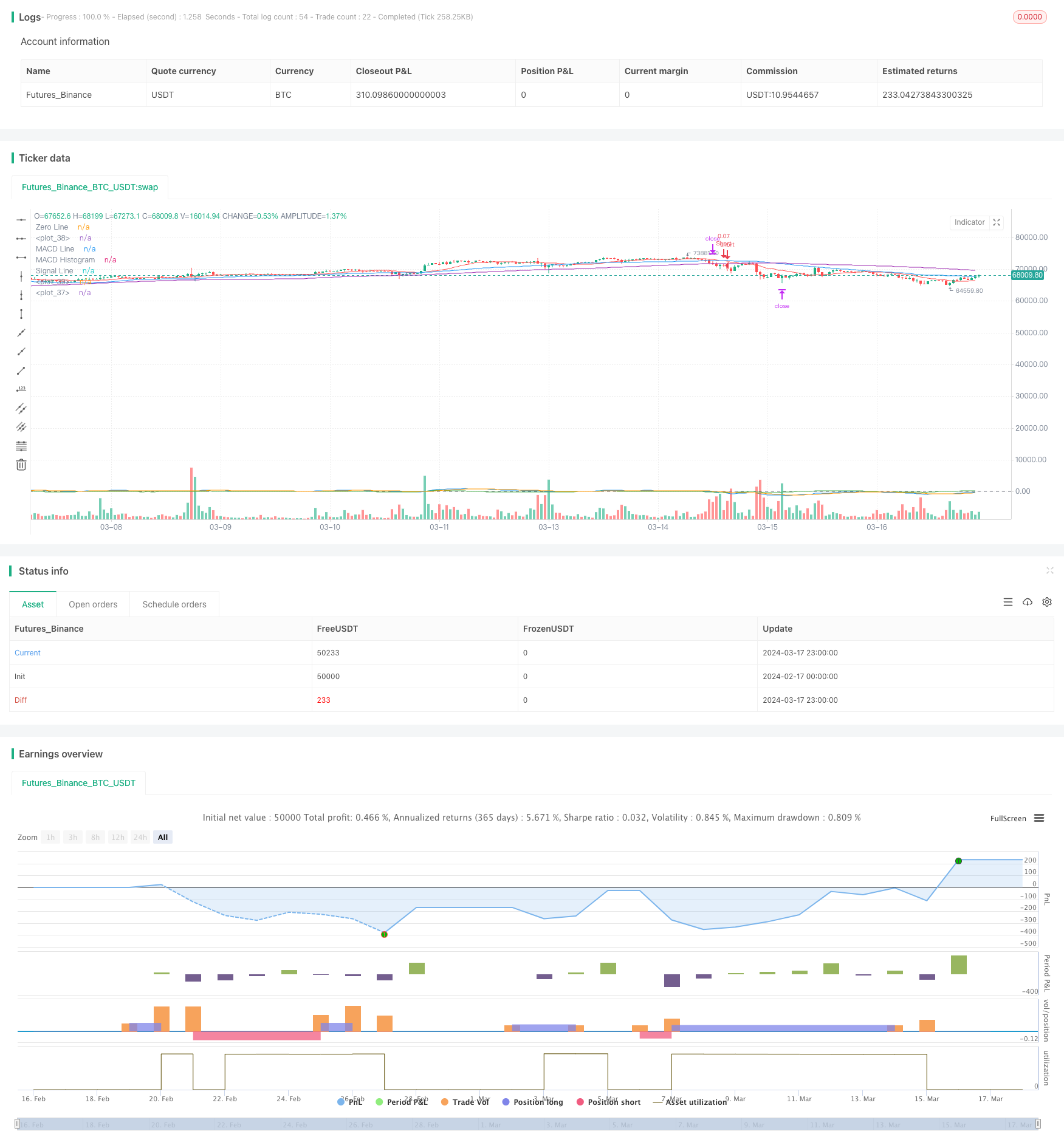 [trans]
策略概述
该策略是一个结合了移动平均线(SMA)和移动平均线聚散指标(MACD)的XAUUSD交易策略。策略使用不同周期的SMA来判断趋势方向和潜在的进场点,并利用MACD指标来确认动量方向与SMA交叉产生的信号一致。此外,该策略还采用平均真实波幅(ATR)来设置动态止损和止盈水平,以适应不同的市场波动情况。
策略原理
该策略的核心原理可以分为三个部分:
-
趋势判断: 策略使用100周期的SMA来判断整体趋势方向。当价格在该SMA上方时,认为处于上升趋势,考虑做多;当价格在该SMA下方时,认为处于下降趋势,考虑做空。此外,策略还使用了15周期的快速SMA和45周期的慢速SMA,通过它们的交叉来识别更即时的趋势变化和潜在进场点。
-
动量确认: 策略采用MACD(12, 26, 9)指标来确认动量方向与SMA交叉产生的进场信号一致。当MACD线与信号线发生正背离(MACD线上穿信号线)时,支持做多;当MACD线与信号线发生负背离(MACD线下穿信号线)时,支持做空。
-
风险管理: 策略利用ATR(14周期)来设置动态止损和止盈水平,以适应当前市场波动情况。止损位置设置在距离进场价3倍ATR的位置,而止盈目标则设置在距离进场价6倍ATR的位置(是止损距离的两倍),以期望获得2:1的风险回报比。
该策略的多头进场条件为:收盘价在100周期趋势SMA上方,15周期快速SMA上穿45周期慢速SMA,MACD线在信号线上方(表明看涨动量)。空头进场条件为:收盘价在100周期趋势SMA下方,15周期快速SMA下穿45周期慢速SMA,MACD线在信号线下方(表明看跌动量)。
策略优势
-
趋势跟踪与动量相结合: 该策略利用不同周期的SMA来判断趋势方向,同时结合MACD指标来确认动量,能够在趋势明确且价格波动较大的市场中表现出色。
-
动态风险管理: 策略采用ATR来动态设置止损和止盈水平,能够根据当前市场波动情况自动调整风险管理,有助于提升策略在不同波动环境下的表现。
-
适用于系统化交易: 该策略的进场和出场条件都有明确定义,适合寻求系统化交易方法的交易者使用。
策略风险
-
震荡市: 当市场处于震荡区间时,该策略可能会产生较多的虚假信号,导致频繁交易和资金损失。
-
趋势反转: 当市场趋势发生突然反转时,该策略可能无法及时调整仓位,导致较大回撤。
-
参数优化: 该策略的表现依赖于SMA、MACD和ATR的参数选择,不同市场环境下最优参数可能有所不同,需要根据历史数据进行参数优化和调整。
优化方向
-
加入滤波条件: 可以考虑引入其他技术指标或价格行为特征作为附加条件,以过滤掉一部分虚假信号,提高信号质量。例如,可以结合布林带或者价格突破等方法。
-
改进风险管理: 除了基于ATR的动态止损和止盈,还可以探索其他风险管理方法,如基于波动率或者价格水平的止损,或者采用移动止损策略,以进一步控制风险敞口。
-
结合基本面分析: XAUUSD的价格走势受到多种基本面因素的影响,如货币政策、通胀预期、地缘政治风险等。将基本面分析纳入策略决策过程,有助于提高策略的适应性和稳健性。
总结
该策略是一个结合趋势跟踪和动量策略的XAUUSD交易方法,通过使用不同周期的SMA来判断趋势方向和潜在进场点,并利用MACD指标来确认动量方向与SMA信号一致。同时,该策略采用基于ATR的动态止损和止盈机制,能够根据市场波动情况自动调整风险管理。
该策略的优势在于趋势跟踪与动量相结合,以及动态的风险管理方式,适合在趋势明确且价格波动较大的市场中使用。但在震荡市或者趋势反转时,该策略可能面临较多虚假信号和回撤风险。
未来优化方向可以考虑引入附加的滤波条件、改进风险管理方法,以及结合基本面分析,以提高策略的信号质量、风险控制能力和适应性。在实际应用前,还需要根据历史数据进行参数优化和回测,并根据个人风险偏好进行必要调整。
||
Strategy Overview
This strategy is an XAUUSD trading strategy that combines moving averages (SMA) and the Moving Average Convergence Divergence (MACD) indicator. It uses SMAs with different periods to determine the trend direction and potential entry points, and employs the MACD indicator to confirm the momentum direction aligns with the signals generated by SMA crossovers. Additionally, the strategy utilizes the Average True Range (ATR) to set dynamic stop-loss and take-profit levels, adapting to different market volatility scenarios.
Strategy Principles
The core principles of this strategy can be divided into three parts:
-
Trend Determination: The strategy uses a 100-period SMA to gauge the overall trend direction. When the price is above this SMA, it is considered an uptrend, and long positions are considered. When the price is below this SMA, it is considered a downtrend, and short positions are considered. Additionally, the strategy employs a 15-period fast SMA and a 45-period slow SMA to identify more immediate trend changes and potential entry points based on their crossover.
-
Momentum Confirmation: The strategy uses the MACD (12, 26, 9) indicator to confirm the momentum direction aligns with the entry signals derived from the SMA crossover. A positive divergence (MACD line crossing above the signal line) supports a long entry, while a negative divergence (MACD line crossing below the signal line) supports a short entry.
-
Risk Management: The strategy utilizes the ATR (14-period) to set dynamic stop-loss and take-profit levels based on the current market volatility. The stop-loss is set at a distance of 3 times the ATR from the entry price, while the take-profit target is set at a distance of 6 times the ATR from the entry price (twice the stop-loss distance), aiming for a 2:1 risk-reward ratio.
The long entry conditions for this strategy are: the closing price is above the 100-period trend SMA, the 15-period fast SMA crosses above the 45-period slow SMA, and the MACD line is above the signal line (indicating bullish momentum). The short entry conditions are: the closing price is below the 100-period trend SMA, the 15-period fast SMA crosses below the 45-period slow SMA, and the MACD line is below the signal line (indicating bearish momentum).
Strategy Advantages
-
Combining trend following and momentum: The strategy leverages SMAs of different periods to determine the trend direction and combines it with the MACD indicator to confirm momentum, which can be particularly effective in markets with clear trends and significant price movements.
-
Dynamic risk management: By using ATR to dynamically set stop-loss and take-profit levels, the strategy automatically adjusts risk management based on the current market volatility, potentially enhancing its performance across different volatility environments.
-
Suitable for systematic trading: The strategy has clearly defined entry and exit conditions, making it suitable for traders seeking a systematic approach to trading.
Strategy Risks
-
Choppy markets: During range-bound or choppy market conditions, the strategy may generate numerous false signals, leading to frequent trades and potential capital losses.
-
Trend reversals: When market trends suddenly reverse, the strategy may struggle to adjust positions promptly, resulting in significant drawdowns.
-
Parameter optimization: The strategy's performance depends on the chosen parameters for the SMAs, MACD, and ATR. Optimal parameters may vary across different market environments, requiring parameter optimization and adjustment based on historical data.
Optimization Directions
-
Adding filters: Consider incorporating additional technical indicators or price action features as supplementary conditions to filter out some false signals and improve signal quality. For example, combining Bollinger Bands or price breakout methods could be explored.
-
Enhancing risk management: In addition to the ATR-based dynamic stop-loss and take-profit, explore other risk management techniques, such as volatility-based or price level-based stop-losses, or employing trailing stop strategies to further control risk exposure.
-
Incorporating fundamental analysis: XAUUSD price movements are influenced by various fundamental factors, such as monetary policies, inflation expectations, and geopolitical risks. Integrating fundamental analysis into the strategy's decision-making process can help improve its adaptability and robustness.
Conclusion
This strategy combines trend following and momentum approaches for trading XAUUSD, using SMAs of different periods to determine the trend direction and potential entry points, and the MACD indicator to confirm the momentum direction aligns with the SMA signals. Simultaneously, it employs an ATR-based dynamic stop-loss and take-profit mechanism, allowing it to automatically adjust risk management based on market volatility.
The strategy's strengths lie in its combination of trend following and momentum, as well as its dynamic risk management approach, making it suitable for markets with clear trends and significant price movements. However, it may face challenges during choppy markets or trend reversals, generating false signals and potential drawdowns.
Future optimization directions could include introducing additional filters, enhancing risk management techniques, and incorporating fundamental analysis to improve the strategy's signal quality, risk control capabilities, and adaptability. Before actual implementation, it is crucial to conduct parameter optimization and backtesting based on historical data and make necessary adjustments according to individual risk preferences.
[/trans]
Source (PineScript)
/*backtest
start: 2024-02-17 00:00:00
end: 2024-03-18 00:00:00
period: 1h
basePeriod: 15m
exchanges: [{"eid":"Futures_Binance","currency":"BTC_USDT"}]
*/

// This Pine Script™ code is subject to the terms of the Mozilla Public License 2.0 at https://mozilla.org/MPL/2.0/
// © Egede

//@version=5
strategy("Refined XAUUSD SMA and MACD Strategy", overlay=true, default_qty_type=strategy.percent_of_equity, default_qty_value=10)

// Moving Averages for trend direction and entry signals
trendSMA = ta.sma(close, 100) // Trend direction SMA
fastSMA = ta.sma(close, 15)
slowSMA = ta.sma(close, 45)

// MACD parameters for entry signal strength
[macdLine, signalLine, _] = ta.macd(close, 12, 26, 9)

// ATR for dynamic stop loss and take profit
atrPeriod = 14
atrMultiplier = 3.0
atr = ta.atr(atrPeriod)

// Entry conditions with trend filter and stronger MACD divergence
longCondition = close > trendSMA and ta.crossover(fastSMA, slowSMA) and (macdLine - signalLine) > 0
shortCondition = close < trendSMA and ta.crossunder(fastSMA, slowSMA) and (signalLine - macdLine) > 0

// Dynamic stop loss and take profit based on ATR
dynamicSL = atr * atrMultiplier
dynamicTP = atr * atrMultiplier * 2 // Aiming for a 2:1 risk-reward ratio

if (longCondition)
    strategy.entry("Long", strategy.long)
    strategy.exit("Exit Long", "Long", stop=close - dynamicSL, limit=close + dynamicTP)

if (shortCondition)
    strategy.entry("Short", strategy.short)
    strategy.exit("Exit Short", "Short", stop=close + dynamicSL, limit=close - dynamicTP)

// Plotting
plot(trendSMA, color=color.purple)
plot(fastSMA, color=color.red)
plot(slowSMA, color=color.blue)
hline(0, "Zero Line", color=color.gray)
plot(macdLine - signalLine, color=color.green, title="MACD Histogram")
plot(macdLine, color=color.blue, title="MACD Line")
plot(signalLine, color=color.orange, title="Signal Line")
Detail
https://www.fmz.com/strategy/445467
Last Modified
2024-03-19 17:34:17