
8.1 KiB
Name
双均线趋势判断与波动率止损策略-Dual-Moving-Average-Trend-Detection-with-Volatility-Based-Stop-Loss-Strategy
Author
ianzeng123
Strategy Description
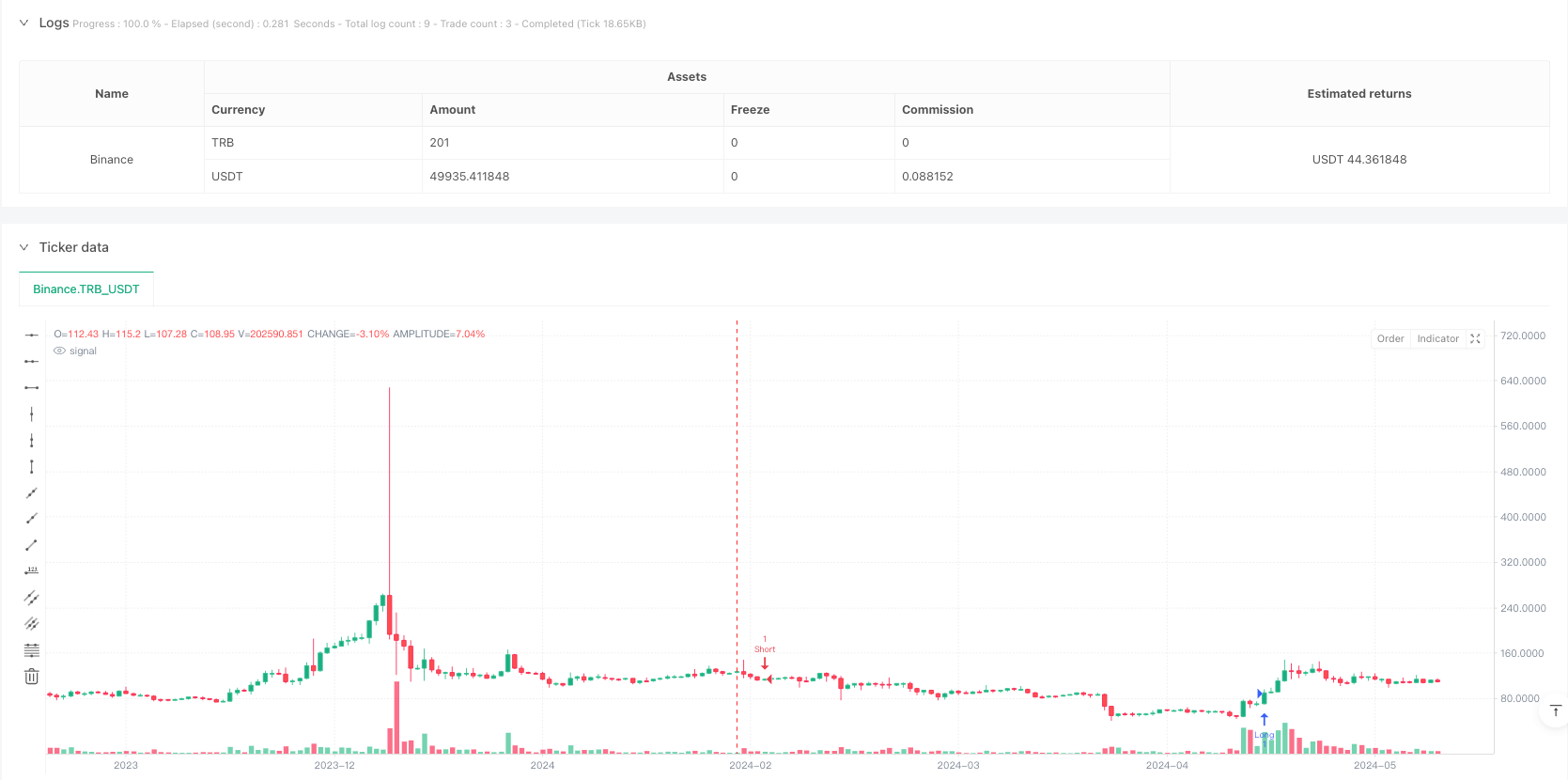
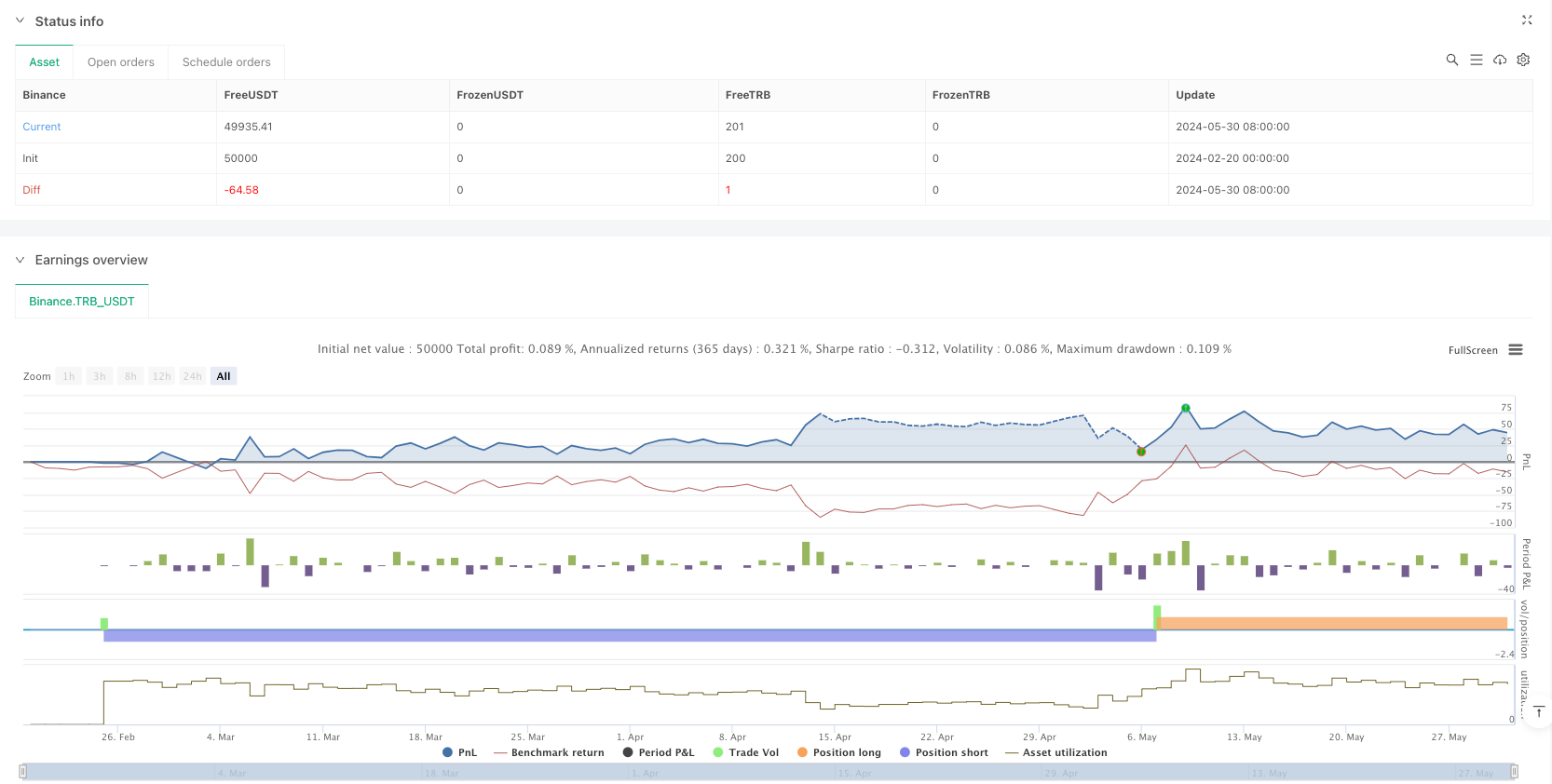
[trans]
概述
本策略是一个结合了指数移动平均线(EMA)和基于真实波动幅度(ATR)的止损机制的趋势跟踪交易系统。策略使用9周期和21周期的EMA来识别市场趋势,同时利用ATR动态调整止损位置,实现了趋势跟踪和风险控制的有机结合。
策略原理
策略的核心逻辑包含两个主要部分:趋势判断和风险控制。在趋势判断方面,通过监测快速EMA(9周期)与慢速EMA(21周期)的交叉来确定市场趋势。当快线上穿慢线时,触发做多信号;当快线下穿慢线时,触发做空信号。在风险控制方面,策略使用ATR指标计算动态止损位置。具体而言,多头仓位的止损点位设置为入场价格减去ATR值的1.5倍,空头仓位的止损点位设置为入场价格加上ATR值的1.5倍。
策略优势
- 趋势识别准确性高:通过使用两个不同周期的EMA,能够有效过滤市场噪音,提高趋势判断的准确性。
- 风险控制灵活:基于ATR的动态止损机制能够根据市场波动性自适应调整,在波动加剧时提供更宽松的止损空间,在波动减弱时收紧止损位置。
- 参数可调性强:策略的关键参数(EMA周期、ATR周期、ATR乘数)均可根据不同市场特征和交易周期进行优化调整。
- 实现简单易懂:策略逻辑清晰,代码结构简洁,便于理解和维护。
策略风险
- 震荡市场风险:在横盘震荡市场中,均线交叉信号频繁,可能导致过度交易和连续止损。
- 滞后性风险:EMA指标本身具有一定滞后性,在市场快速转向时可能反应不及时。
- 止损设置风险:ATR倍数的选择需要权衡止损空间和盈利机会,设置不当可能导致过早止损或承担过大风险。
策略优化方向
- 引入趋势强度确认:可以添加趋势强度指标(如ADX)作为交易过滤条件,仅在趋势明确时入场。
- 动态调整ATR倍数:可以根据市场波动周期自动调整ATR乘数,提高止损设置的适应性。
- 增加盈利目标:可以设置基于ATR的动态获利目标,实现风险收益比的动态管理。
- 加入交易量确认:在入场信号确认时增加成交量分析,提高交易信号的可靠性。
总结
该策略通过结合均线交叉判断趋势和ATR动态止损,构建了一个完整的趋势跟踪交易系统。策略的优势在于判断标准客观、风险控制灵活,但也需要注意应对震荡市场风险和信号滞后性问题。通过添加趋势强度确认、优化止损设置等方式,策略还有较大的改进空间。总体而言,这是一个基础扎实、逻辑清晰的趋势跟踪策略,适合作为构建更复杂交易系统的基础。 ||
Overview
This strategy is a trend-following trading system that combines Exponential Moving Averages (EMA) with a stop-loss mechanism based on the Average True Range (ATR). The strategy uses 9-period and 21-period EMAs to identify market trends while utilizing ATR to dynamically adjust stop-loss positions, achieving an organic combination of trend following and risk control.
Strategy Principle
The core logic of the strategy consists of two main components: trend determination and risk control. For trend determination, market trends are identified by monitoring the crossover between the fast EMA (9-period) and slow EMA (21-period). A long signal is triggered when the fast line crosses above the slow line, and a short signal is triggered when the fast line crosses below the slow line. For risk control, the strategy uses the ATR indicator to calculate dynamic stop-loss positions. Specifically, the stop-loss point for long positions is set at the entry price minus 1.5 times the ATR value, while the stop-loss point for short positions is set at the entry price plus 1.5 times the ATR value.
Strategy Advantages
- High trend identification accuracy: By using two EMAs with different periods, the strategy effectively filters market noise and improves trend judgment accuracy.
- Flexible risk control: The ATR-based dynamic stop-loss mechanism can adaptively adjust according to market volatility, providing wider stop-loss space during increased volatility and tighter stops during reduced volatility.
- Strong parameter adaptability: Key parameters (EMA periods, ATR period, ATR multiplier) can be optimized for different market characteristics and trading timeframes.
- Simple and understandable implementation: The strategy logic is clear, and the code structure is concise, making it easy to understand and maintain.
Strategy Risks
- Sideways market risk: In ranging markets, frequent EMA crossover signals may lead to overtrading and consecutive stop-losses.
- Lag risk: EMAs inherently have some lag, which may result in delayed reactions to rapid market reversals.
- Stop-loss setting risk: The choice of ATR multiplier requires balancing between stop-loss space and profit opportunity; improper settings may lead to premature stops or excessive risk exposure.
Strategy Optimization Directions
- Introduce trend strength confirmation: Add trend strength indicators (such as ADX) as trading filters to enter only during clear trends.
- Dynamic adjustment of ATR multiplier: Automatically adjust the ATR multiplier based on market volatility cycles to improve stop-loss adaptability.
- Add profit targets: Set dynamic profit targets based on ATR to achieve dynamic risk-reward ratio management.
- Include volume confirmation: Add volume analysis for entry signal confirmation to improve trading signal reliability.
Summary
This strategy builds a complete trend-following trading system by combining EMA crossover trend determination with ATR dynamic stop-loss. The strategy's strengths lie in its objective judgment criteria and flexible risk control, but attention must be paid to sideways market risks and signal lag issues. There is significant room for improvement through adding trend strength confirmation, optimizing stop-loss settings, and other enhancements. Overall, this is a trend-following strategy with solid foundations and clear logic, suitable as a basis for building more complex trading systems.[/trans]
Source (PineScript)
/*backtest
start: 2024-02-20 00:00:00
end: 2024-05-31 00:00:00
period: 1d
basePeriod: 1d
exchanges: [{"eid":"Binance","currency":"TRB_USDT"}]
*/

//@version=5
strategy("EMA 9/21 + ATR SL Strategy", shorttitle="EMA+ATR", overlay=true)

// ===== Input Parameters ===== //
emaFastLen  = input.int(9,  "Fast EMA")
emaSlowLen  = input.int(21, "Slow EMA")
atrLen      = input.int(14, "ATR Length")
atrMult     = input.float(1.5, "ATR Multiplier")

// ===== EMA Calculation ===== //
emaFast = ta.ema(close, emaFastLen)
emaSlow = ta.ema(close, emaSlowLen)

// ===== ATR Calculation ===== //
atrValue = ta.atr(atrLen)

// ===== Conditions for Entry ===== //
longCondition  = ta.crossover(emaFast, emaSlow)   // Long when 9 EMA crosses above 21 EMA
shortCondition = ta.crossunder(emaFast, emaSlow)  // Short when 9 EMA crosses below 21 EMA

// ===== Entry Commands ===== //
if longCondition
    strategy.entry("Long", strategy.long)

if shortCondition
    strategy.entry("Short", strategy.short)

// ===== Set Stop-Loss Using ATR ===== //
//
// For LONG: stop-loss = entry price - (atrMult * ATR)
// For SHORT: stop-loss = entry price + (atrMult * ATR)
//
// Note: You can adjust the atrMult values based on market volatility
//
if strategy.position_size > 0
    // If holding LONG, define stop-loss below the entry price
    strategy.exit("Exit Long", "Long", stop = strategy.position_avg_price - atrMult * atrValue)

if strategy.position_size < 0
    // If holding SHORT, define stop-loss above the entry price
    strategy.exit("Exit Short", "Short", stop = strategy.position_avg_price + atrMult * atrValue)
Detail
https://www.fmz.com/strategy/482669
Last Modified
2025-02-27 17:57:02