
7.8 KiB
Name
双均线交叉与相对强弱指数结合的自适应趋势跟踪策略-Adaptive-Trend-Following-Strategy-Combining-Dual-Moving-Average-Crossover-and-RSI
Author
ianzeng123
Strategy Description
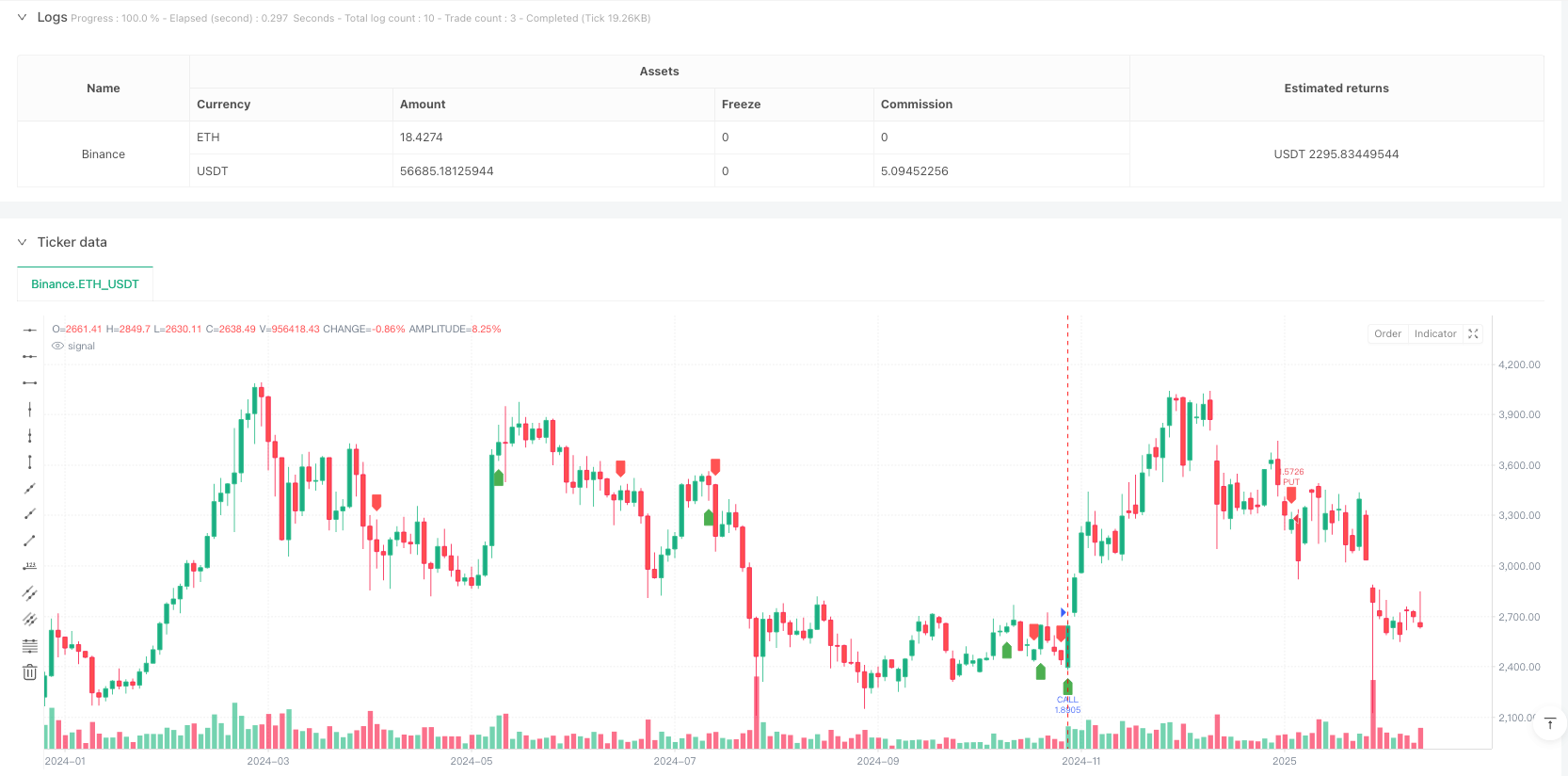
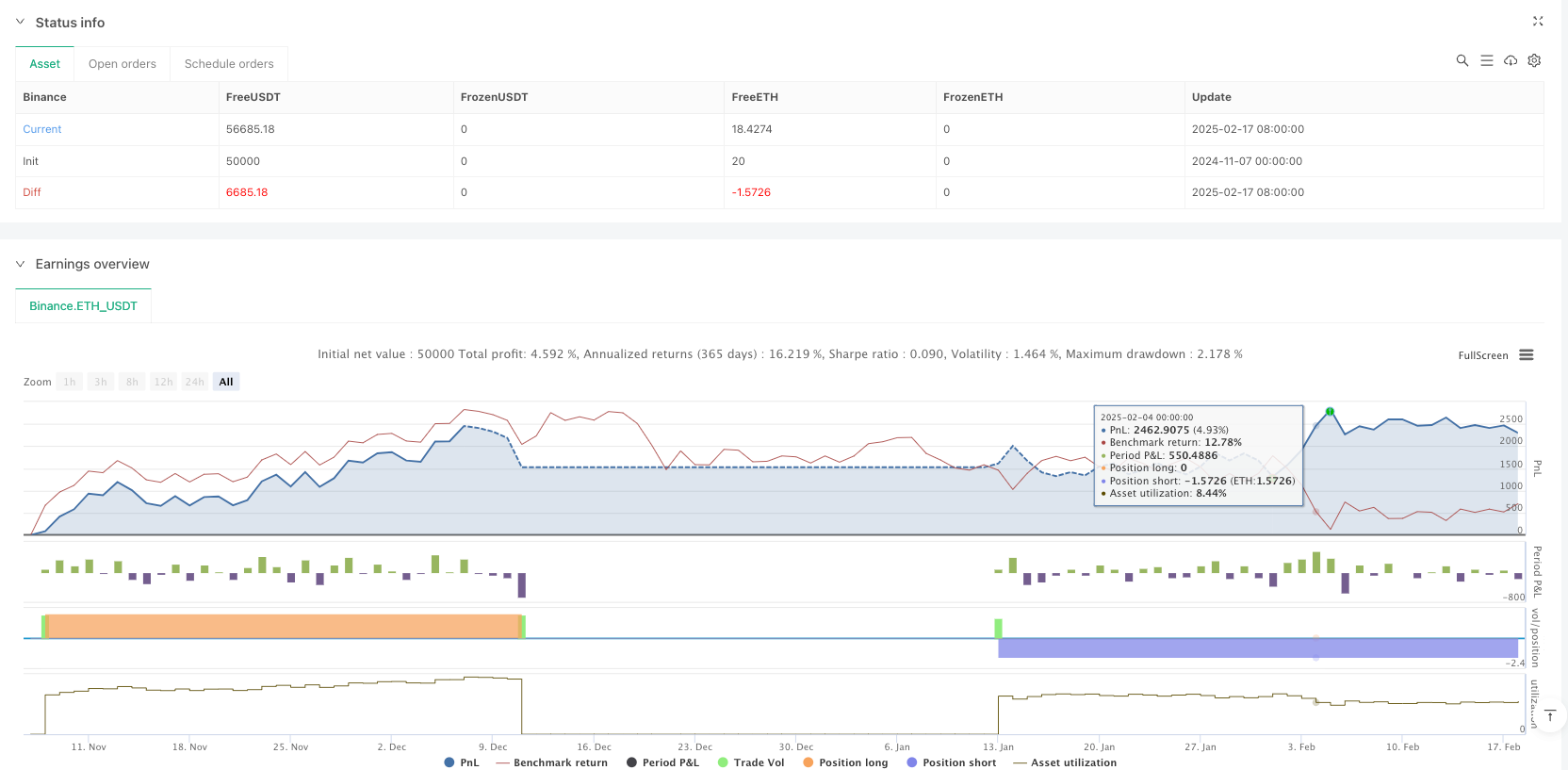
[trans]
概述
该策略是一个结合了双均线交叉系统与相对强弱指数(RSI)的趋势跟踪策略。通过9周期与21周期指数移动平均线(EMA)的交叉来捕捉市场趋势,同时利用RSI指标进行超买超卖过滤,并结合成交量确认来提高交易信号的可靠性。策略还整合了基于真实波动幅度(ATR)的动态止损机制,实现了全方位的风险控制。
策略原理
策略的核心逻辑基于以下几个关键要素:
- 使用快速EMA(9周期)和慢速EMA(21周期)的交叉来识别潜在的趋势变化
- 通过RSI指标进行超买超卖过滤,RSI值在40-60区间内才允许交易
- 设置最小成交量阈值(100,000)作为交易确认条件
- 采用1.5倍ATR作为动态止损距离,实现灵活的风险控制
当快速EMA向上穿越慢速EMA,且RSI大于40,同时成交量超过阈值时,系统产生做多信号。反之,当快速EMA向下穿越慢速EMA,且RSI小于60,同时成交量确认时,系统产生做空信号。
策略优势
- 指标组合科学合理:将趋势跟踪、动量指标和成交量分析有机结合
- 风险控制完善:通过RSI过滤和动态止损实现多层次风险管理
- 参数设置灵活:关键参数均可根据不同市场特征进行优化调整
- 信号确认严格:要求多重条件同时满足,有效降低虚假信号
- 执行逻辑清晰:策略规则明确,便于实盘操作和回测验证
策略风险
- 横盘市场可能产生频繁交易:在震荡市中双均线交叉较多
- RSI过滤可能错过部分趋势起点:强势行情初期RSI可能已处于高位
- 成交量过滤在某些市场可能过于严格:部分低流动性品种难以满足条件
- 固定倍数的ATR止损在剧烈波动时可能不够灵活
- 没有设置固定止盈点位可能影响资金利用效率
策略优化方向
- 引入自适应参数:可根据市场波动率动态调整EMA周期和RSI阈值
- 优化止损机制:结合支撑阻力位设置多层次止损
- 增加市场环境过滤:添加趋势强度指标,仅在明确趋势中交易
- 完善资金管理:根据信号强度和市场波动调整持仓规模
- 添加止盈机制:设置基于ATR的动态止盈点位
总结
该策略通过科学组合经典技术指标,构建了一个逻辑严密的趋势跟踪系统。策略的多重过滤机制和风险控制手段使其具有较强的实战应用价值。通过建议的优化方向,策略还有进一步提升的空间。特别适合波动较大且流动性充足的市场,但使用前需要充分测试和参数优化。 ||
Overview
This strategy is a trend following system that combines a dual moving average crossover with the Relative Strength Index (RSI). It captures market trends through the crossover of 9-period and 21-period Exponential Moving Averages (EMA), while using RSI for overbought/oversold filtering and volume confirmation to enhance signal reliability. The strategy also incorporates a dynamic stop-loss mechanism based on Average True Range (ATR) for comprehensive risk control.
Strategy Principles
The core logic is based on several key elements:
- Using fast EMA (9-period) and slow EMA (21-period) crossovers to identify potential trend changes
- Filtering through RSI indicator, allowing trades only when RSI is between 40-60
- Setting minimum volume threshold (100,000) as trade confirmation
- Implementing 1.5x ATR as dynamic stop-loss distance for flexible risk control
Long signals are generated when the fast EMA crosses above the slow EMA, RSI is above 40, and volume exceeds the threshold. Conversely, short signals occur when the fast EMA crosses below the slow EMA, RSI is below 60, and volume confirms.
Strategy Advantages
- Scientific indicator combination: integrating trend following, momentum, and volume analysis
- Comprehensive risk control: multi-level risk management through RSI filtering and dynamic stops
- Flexible parameters: key parameters can be optimized for different market characteristics
- Strict signal confirmation: multiple conditions required, effectively reducing false signals
- Clear execution logic: explicit rules facilitating live trading and backtesting
Strategy Risks
- Frequent trades in ranging markets: multiple crossovers during consolidation
- RSI filter may miss trend beginnings: RSI might be high at strong trend initiation
- Volume filter might be too strict: challenging for low liquidity instruments
- Fixed multiplier ATR stops may lack flexibility during extreme volatility
- Absence of fixed take-profit levels may affect capital efficiency
Optimization Directions
- Introduce adaptive parameters: dynamically adjust EMA periods and RSI thresholds based on volatility
- Optimize stop-loss mechanism: implement multi-level stops using support/resistance
- Add market environment filtering: incorporate trend strength indicators
- Improve money management: adjust position sizes based on signal strength and volatility
- Add take-profit mechanism: implement ATR-based dynamic take-profit levels
Summary
The strategy constructs a logically rigorous trend following system through scientific combination of classic technical indicators. Its multiple filtering mechanisms and risk control measures provide strong practical value. There's room for further improvement through the suggested optimizations. It's particularly suitable for volatile and liquid markets, but requires thorough testing and parameter optimization before implementation.[/trans]
Source (PineScript)
/*backtest
start: 2024-11-07 00:00:00
end: 2025-02-18 08:00:00
period: 2d
basePeriod: 2d
exchanges: [{"eid":"Binance","currency":"ETH_USDT"}]
*/

//@version=5
strategy("Call & Put Options Strategy (Optimized)", overlay=true, default_qty_type=strategy.percent_of_equity, default_qty_value=10)

// ? Configuration Parameters
emaShort = input(9, title="Short EMA")
emaLong = input(21, title="Long EMA")
rsiLength = input(14, title="RSI Period")
rsiOverbought = input(60, title="RSI Overbought") // Adjusted for more signals
rsiOversold = input(40, title="RSI Oversold")   // More flexible to confirm buys
atrLength = input(14, title="ATR Period")
atrMult = input(1.5, title="ATR Multiplier for Stop Loss")
minVol = input(100000, title="Minimum Volume to Confirm Entry") // Volume filter

// ? Indicator Calculations
emaFast = ta.ema(close, emaShort)
emaSlow = ta.ema(close, emaLong)
rsi = ta.rsi(close, rsiLength)
atr = ta.atr(atrLength)
vol = volume

// ? Entry Signal Conditions
condCALL = ta.crossover(emaFast, emaSlow) and rsi > rsiOversold and vol > minVol
condPUT = ta.crossunder(emaFast, emaSlow) and rsi < rsiOverbought and vol > minVol

// ? Plot signals on the chart
plotshape(condCALL, location=location.belowbar, color=color.green, style=shape.labelup, title="CALL", size=size.small)
plotshape(condPUT, location=location.abovebar, color=color.red, style=shape.labeldown, title="PUT", size=size.small)

// ? Alert conditions
alertcondition(condCALL, title="CALL Signal", message="? CALL signal confirmed")
alertcondition(condPUT, title="PUT Signal", message="? PUT signal confirmed")

// ? Risk Management - Stop Loss and Take Profit
longStop = close - (atr * atrMult)
shortStop = close + (atr * atrMult)

strategy.entry("CALL", strategy.long, when=condCALL)
strategy.exit("CALL Exit", from_entry="CALL", stop=longStop)

strategy.entry("PUT", strategy.short, when=condPUT)
strategy.exit("PUT Exit", from_entry="PUT", stop=shortStop)
Detail
https://www.fmz.com/strategy/482877
Last Modified
2025-02-27 17:32:08