
10 KiB
Name
动态优化超级趋势交易策略-Dynamic-Optimized-Supertrend-Trading-Strategy
Author
ChaoZhang
Strategy Description
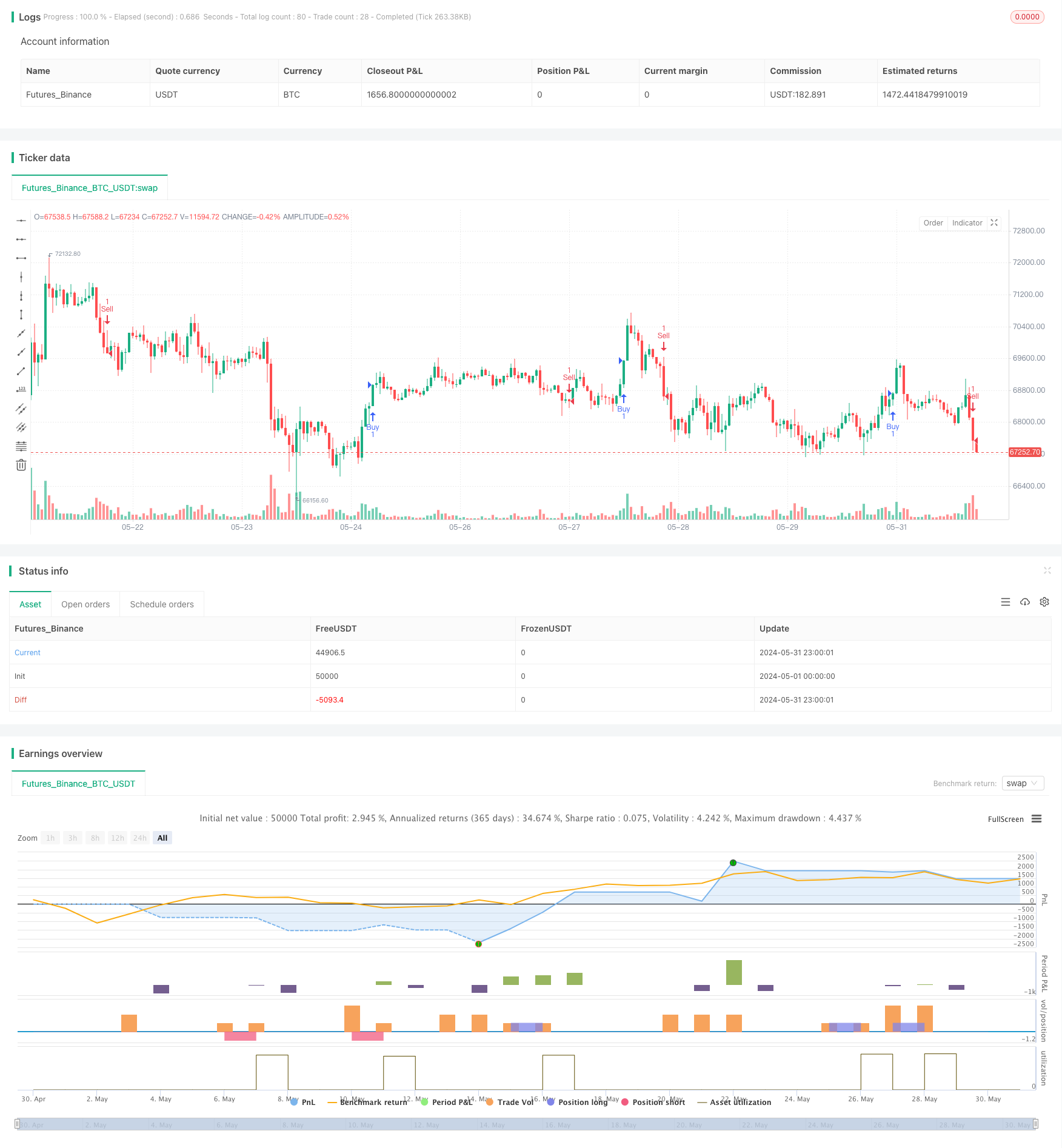
[trans]
概述
本策略是一个基于超级趋势指标的动态优化交易系统,结合了自适应真实波幅(ATR)来调整止损和获利水平。该策略利用超级趋势指标的方向变化来确定入场信号,同时采用动态的止损和获利水平来管理风险和锁定利润。策略的核心在于其灵活性和适应性,能够根据市场波动性自动调整关键参数。
策略原理
-
超级趋势指标:使用输入的因子和ATR周期计算超级趋势指标。这个指标用于确定市场趋势方向。
-
入场信号:当超级趋势指标的方向发生变化时,策略会触发入场信号。方向由负变正时进入多头,由正变负时进入空头。
-
动态风险管理:
- 止损水平:使用ATR值乘以用户定义的乘数来设置动态止损。
- 获利水平:同样使用ATR值乘以另一个用户定义的乘数来设置动态获利目标。
-
仓位管理:策略使用账户净值的固定百分比(15%)来确定每次交易的规模。
-
退出逻辑:当价格达到动态设置的止损或获利水平时,策略会自动平仓。
策略优势
-
适应性强:通过使用ATR来调整止损和获利水平,策略能够适应不同的市场波动状况。
-
风险管理优化:动态止损和获利水平有助于在波动性较大时提供更好的保护,在波动性较小时允许更大的利润空间。
-
趋势跟踪:超级趋势指标有助于捕捉中长期趋势,提高策略的盈利潜力。
-
灵活性:用户可以通过调整输入参数来优化策略,以适应不同的市场条件和个人风险偏好。
-
自动化:策略可以在TradingView平台上自动执行,减少了人为情绪干扰。
策略风险
-
过度交易:在震荡市场中,超级趋势指标可能频繁变向,导致过多的交易和手续费损失。
-
滑点风险:在快速市场中,实际执行价格可能与信号价格有显著差异。
-
资金管理风险:固定使用账户15%的资金可能在某些情况下过于激进。
-
参数敏感性:策略性能可能对输入参数的选择高度敏感,不当的参数设置可能导致表现不佳。
-
市场条件变化:策略在趋势市场中表现可能优于震荡市场,市场状态的变化可能影响策略表现。
策略优化方向
-
市场状态过滤:引入市场状态识别机制,如波动率指标或趋势强度指标,以在不同市场环境下调整策略行为。
-
动态仓位管理:根据市场波动性和当前账户表现动态调整交易规模,而不是固定使用15%的账户资金。
-
多时间框架分析:整合更长时间周期的趋势分析,以提高入场信号的质量和减少假突破。
-
优化退出机制:考虑引入移动止损或基于波动率的动态调整止损,以更好地锁定利润。
-
参数优化:使用历史数据进行参数优化,找到在不同市场周期中表现稳定的参数组合。
-
增加过滤条件:结合其他技术指标或基本面数据,提高入场信号的准确性。
总结
动态优化超级趋势交易策略是一个灵活且具有适应性的系统,通过结合超级趋势指标和动态风险管理,旨在捕捉市场趋势并优化风险回报比。其核心优势在于能够根据市场波动性自动调整关键参数,提高了策略在不同市场环境下的适应性。然而,用户需要注意潜在的过度交易风险和参数敏感性问题。通过进一步优化,如引入市场状态过滤、动态仓位管理和多时间框架分析,该策略有潜力成为一个更加稳健和盈利的交易系统。在实盘交易中应用时,建议进行充分的回测和前向测试,并根据个人风险承受能力谨慎调整参数。
||
Overview
This strategy is a dynamically optimized trading system based on the Supertrend indicator, incorporating Adaptive True Range (ATR) to adjust stop-loss and take-profit levels. The strategy utilizes changes in the Supertrend indicator's direction to determine entry signals, while employing dynamic stop-loss and take-profit levels to manage risk and secure profits. The core of the strategy lies in its flexibility and adaptability, automatically adjusting key parameters based on market volatility.
Strategy Principles
-
Supertrend Indicator: Calculates the Supertrend indicator using input factor and ATR period. This indicator is used to determine market trend direction.
-
Entry Signals: The strategy triggers entry signals when the Supertrend indicator's direction changes. It enters long positions when the direction changes from negative to positive, and short positions when it changes from positive to negative.
-
Dynamic Risk Management:
- Stop-Loss Level: Uses the ATR value multiplied by a user-defined multiplier to set dynamic stop-loss.
- Take-Profit Level: Similarly uses the ATR value multiplied by another user-defined multiplier to set dynamic take-profit targets.
-
Position Sizing: The strategy uses a fixed percentage (15%) of account equity to determine the size of each trade.
-
Exit Logic: The strategy automatically closes positions when the price reaches the dynamically set stop-loss or take-profit levels.
Strategy Advantages
-
High Adaptability: By using ATR to adjust stop-loss and take-profit levels, the strategy can adapt to different market volatility conditions.
-
Optimized Risk Management: Dynamic stop-loss and take-profit levels help provide better protection in high volatility periods and allow for larger profit potential in low volatility periods.
-
Trend Following: The Supertrend indicator helps capture medium to long-term trends, increasing the strategy's profit potential.
-
Flexibility: Users can optimize the strategy by adjusting input parameters to suit different market conditions and personal risk preferences.
-
Automation: The strategy can be executed automatically on the TradingView platform, reducing emotional interference.
Strategy Risks
-
Overtrading: In choppy markets, the Supertrend indicator may frequently change direction, leading to excessive trading and commission losses.
-
Slippage Risk: In fast-moving markets, actual execution prices may significantly differ from signal prices.
-
Capital Management Risk: Using a fixed 15% of account funds for each trade may be too aggressive in certain situations.
-
Parameter Sensitivity: Strategy performance may be highly sensitive to the choice of input parameters, and improper parameter settings may lead to poor performance.
-
Changing Market Conditions: The strategy may perform better in trending markets than in ranging markets, and changes in market state may affect strategy performance.
Strategy Optimization Directions
-
Market State Filtering: Introduce market state recognition mechanisms, such as volatility indicators or trend strength indicators, to adjust strategy behavior in different market environments.
-
Dynamic Position Sizing: Dynamically adjust trade size based on market volatility and current account performance, rather than using a fixed 15% of account funds.
-
Multi-Timeframe Analysis: Integrate trend analysis from longer time periods to improve the quality of entry signals and reduce false breakouts.
-
Optimize Exit Mechanism: Consider introducing trailing stops or volatility-based dynamic stop adjustments to better lock in profits.
-
Parameter Optimization: Use historical data to optimize parameters, finding parameter combinations that perform consistently across different market cycles.
-
Add Filtering Conditions: Combine other technical indicators or fundamental data to improve the accuracy of entry signals.
Conclusion
The Dynamic Optimized Supertrend Trading Strategy is a flexible and adaptive system that aims to capture market trends and optimize risk-reward ratios by combining the Supertrend indicator with dynamic risk management. Its core advantage lies in its ability to automatically adjust key parameters based on market volatility, improving the strategy's adaptability to different market environments. However, users need to be aware of potential overtrading risks and parameter sensitivity issues. Through further optimization, such as introducing market state filtering, dynamic position sizing, and multi-timeframe analysis, this strategy has the potential to become a more robust and profitable trading system. When applying it to live trading, it is recommended to conduct thorough backtesting and forward testing, and carefully adjust parameters according to individual risk tolerance.
[/trans]
Source (PineScript)
/*backtest
start: 2024-05-01 00:00:00
end: 2024-05-31 23:59:59
period: 1h
basePeriod: 15m
exchanges: [{"eid":"Futures_Binance","currency":"BTC_USDT"}]
*/

//@version=5
strategy("Optimized Supertrend Strategy", overlay=true)

// Input parameters
atrPeriod = input(14, "ATR Length")
factor = input.float(3.0, "Factor", step=0.1, minval=1.0, maxval=10.0)

// Calculate Supertrend
[supertrend, direction] = ta.supertrend(factor, atrPeriod)

// Entry conditions
if ta.change(direction) < 0
    strategy.entry("Buy", strategy.long)

if ta.change(direction) > 0
    strategy.entry("Sell", strategy.short)

// Define stop loss and take profit levels (adjust dynamically)
stopLossMultiplier = input.float(1.0, "Stop Loss Multiplier", step=0.1, minval=0.5, maxval=5.0)
takeProfitMultiplier = input.float(2.0, "Take Profit Multiplier", step=0.1, minval=1.0, maxval=5.0)

stopLoss = ta.atr(atrPeriod) * stopLossMultiplier
takeProfit = ta.atr(atrPeriod) * takeProfitMultiplier

// Exit logic
if strategy.opentrades > 0
    if strategy.position_size > 0
        strategy.exit("Take Profit/Stop Loss", "Buy", stop=close - stopLoss, limit=close + takeProfit)
    else if strategy.position_size < 0
        strategy.exit("Take Profit/Stop Loss", "Sell", stop=close + stopLoss, limit=close - takeProfit)

// Optional: Plot equity curve
// plot(strategy.equity, title="Equity", color=color.green, linewidth=2, style=plot.style_area)
Detail
https://www.fmz.com/strategy/455364
Last Modified
2024-06-28 15:23:53