
11 KiB
Name
动态价差市场做市策略-Dynamic-Spread-Market-Making-Strategy
Author
ChaoZhang
Strategy Description
[trans]
概述
动态价差市场做市策略是一种量化交易方法,旨在通过持续提供买卖报价来为市场提供流动性,同时从买卖价差中获利。该策略利用简单移动平均线(SMA)作为基准价格,动态调整买卖价格,并通过库存管理来控制风险。这种方法适用于各种金融市场,包括股票、外汇和加密货币等。
策略原理
-
移动平均线计算:使用简单移动平均线(SMA)作为基准价格,反映市场的整体趋势。
-
动态价格设置:基于SMA和预设的价差百分比,动态计算买入和卖出价格。买入价格设定在SMA以下,卖出价格设定在SMA以上,确保在市场波动中始终保持利润空间。
-
库存管理:实施简化的库存管理系统,跟踪买入和卖出的单位数量,设定最大库存限制以控制风险。
-
订单执行:
- 当市场价格低于或等于买入价格,且当前库存未达到上限时,执行买入订单。
- 当市场价格高于或等于卖出价格,且有可用库存时,执行卖出订单。
-
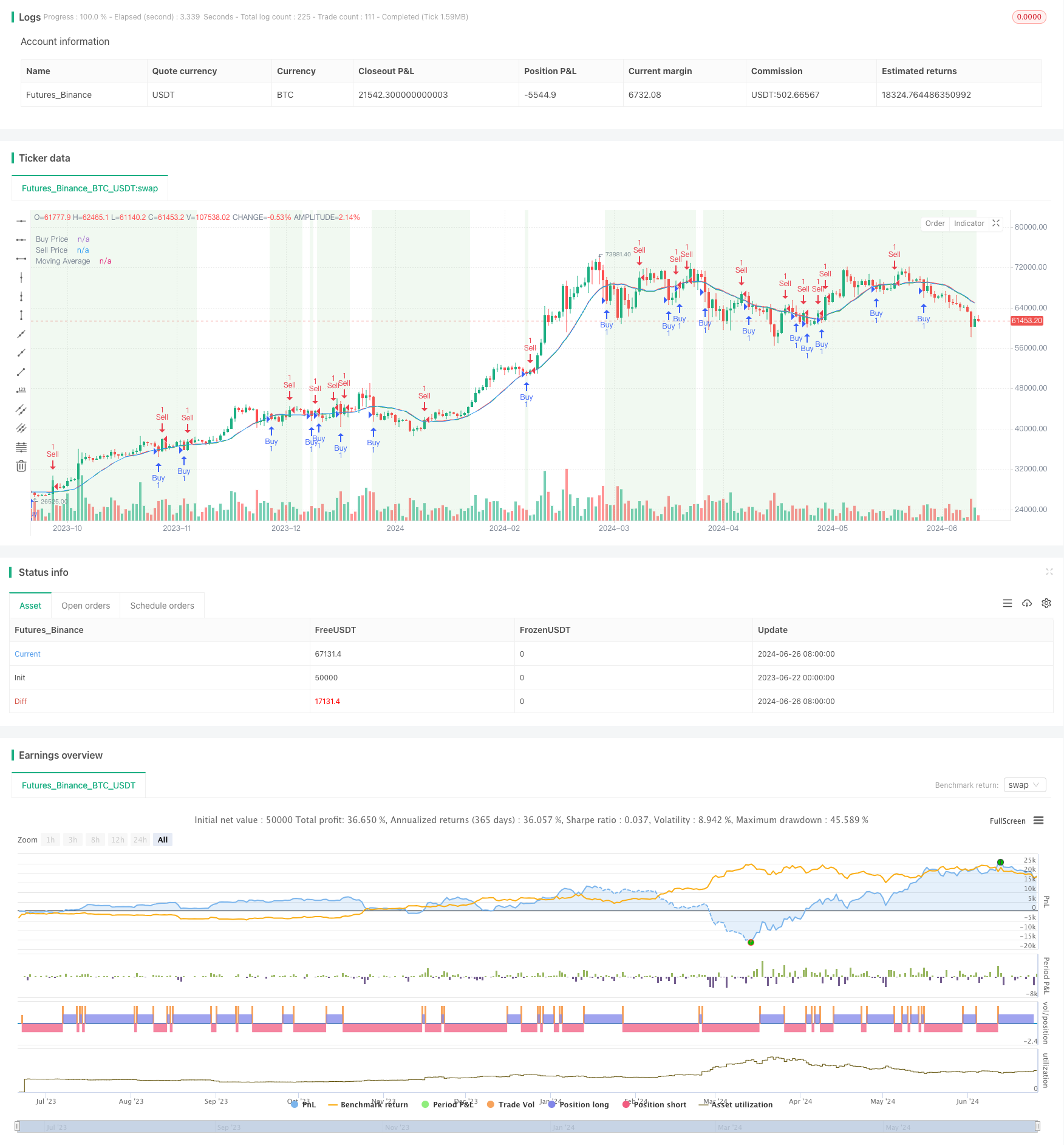
可视化:在图表上绘制买入价格、卖出价格和移动平均线,使用背景颜色来指示当前的库存状态,提高策略的可视化效果。
策略优势
-
动态适应市场:通过使用移动平均线,策略能够随市场趋势变化而调整,提高了对市场波动的适应性。
-
持续盈利机会:通过不断提供买卖报价,策略可以从小幅价格波动中持续获利,即使在横盘市场中也能创造收益。
-
风险控制:库存限制和动态价格调整机制有助于控制风险,防止在单一方向上积累过多头寸。
-
提供流动性:通过持续的市场参与,该策略为市场提供了流动性,有助于减少价格波动和改善市场效率。
-
灵活性:策略参数(如移动平均线长度、价差百分比等)可以根据不同市场条件进行调整,提高了策略的适用性。
策略风险
-
趋势风险:在强趋势市场中,策略可能面临持续亏损的风险,特别是当价格持续超出设定的买卖价格范围时。
-
库存积累:在单向市场中,策略可能导致库存快速积累,增加了持仓风险。
-
滑点和执行风险:在高波动性市场中,可能面临订单执行滑点,影响策略的盈利能力。
-
参数敏感性:策略性能高度依赖于参数设置,不当的参数可能导致策略表现不佳。
-
市场冲击:大额订单可能对市场价格产生影响,特别是在流动性较低的市场中。
策略优化方向
-
高级价格预测:引入更复杂的价格预测模型,如机器学习算法,以提高价格预测的准确性。
-
动态价差调整:根据市场波动性自动调整价差百分比,在高波动期间增加价差,低波动期间减小价差。
-
智能库存管理:实现更复杂的库存管理策略,如基于当前市场趋势和预测的动态库存限制。
-
多时间框架分析:整合多个时间框架的市场数据,以更全面地评估市场状况和趋势。
-
风险管理增强:加入止损和止盈机制,以及更高级的风险度量,如风险价值(VaR)计算。
-
订单分割:实现订单分割策略,减少大额订单对市场的影响,降低滑点风险。
-
交易成本优化:考虑交易费用和市场冲击,优化订单大小和执行频率。
-
市场微观结构分析:整合订单簿数据分析,更精确地把握市场深度和流动性状况。
总结
动态价差市场做市策略提供了一种灵活且可扩展的方法来参与市场做市活动。通过结合简单移动平均线、动态价格设置和基本库存管理,该策略为交易者提供了在各种市场条件下获利的机会。然而,成功实施这种策略需要仔细的参数调整、持续的市场监控和有效的风险管理。通过进一步优化,如引入高级预测模型、智能库存管理和多维度市场分析,可以显著提高策略的稳健性和盈利能力。在实际交易中,应当充分考虑市场特性、监管要求和操作风险,并进行全面的回测和实盘验证,以确保策略在各种市场环境下的可靠性和有效性。
||
Overview
The Dynamic Spread Market Making Strategy is a quantitative trading approach designed to provide liquidity to the market by continuously offering buy and sell quotes while profiting from the bid-ask spread. This strategy utilizes a Simple Moving Average (SMA) as a benchmark price, dynamically adjusts buy and sell prices, and manages inventory to control risk. This method is applicable to various financial markets, including stocks, forex, and cryptocurrencies.
Strategy Principles
-
Moving Average Calculation: Uses a Simple Moving Average (SMA) as the benchmark price, reflecting overall market trends.
-
Dynamic Price Setting: Dynamically calculates buy and sell prices based on the SMA and a preset spread percentage. Buy price is set below the SMA, and sell price above, ensuring profit margins amid market fluctuations.
-
Inventory Management: Implements a simplified inventory management system, tracking the number of units bought and sold, with a maximum inventory limit to control risk.
-
Order Execution:
- Executes buy orders when the market price is at or below the buy price and current inventory hasn't reached the limit.
- Executes sell orders when the market price is at or above the sell price and there's available inventory.
-
Visualization: Plots buy price, sell price, and moving average on the chart, using background color to indicate current inventory status, enhancing strategy visualization.
Strategy Advantages
-
Dynamic Market Adaptation: By using a moving average, the strategy can adjust to changing market trends, improving adaptability to market fluctuations.
-
Continuous Profit Opportunities: Through constant provision of buy and sell quotes, the strategy can profit from small price movements, even in sideways markets.
-
Risk Control: Inventory limits and dynamic price adjustment mechanisms help control risk, preventing excessive position accumulation in a single direction.
-
Liquidity Provision: Through continuous market participation, the strategy provides liquidity, helping reduce price volatility and improve market efficiency.
-
Flexibility: Strategy parameters (such as moving average length, spread percentage) can be adjusted for different market conditions, enhancing strategy applicability.
Strategy Risks
-
Trend Risk: In strong trend markets, the strategy may face continuous losses, especially when prices consistently move beyond the set buy and sell price ranges.
-
Inventory Accumulation: In unidirectional markets, the strategy may lead to rapid inventory accumulation, increasing position risk.
-
Slippage and Execution Risk: In highly volatile markets, order execution slippage may occur, affecting strategy profitability.
-
Parameter Sensitivity: Strategy performance is highly dependent on parameter settings; improper parameters may lead to poor strategy performance.
-
Market Impact: Large orders may influence market prices, especially in markets with lower liquidity.
Strategy Optimization Directions
-
Advanced Price Prediction: Introduce more complex price prediction models, such as machine learning algorithms, to improve price prediction accuracy.
-
Dynamic Spread Adjustment: Automatically adjust spread percentage based on market volatility, increasing spreads during high volatility and decreasing during low volatility periods.
-
Intelligent Inventory Management: Implement more sophisticated inventory management strategies, such as dynamic inventory limits based on current market trends and forecasts.
-
Multi-Timeframe Analysis: Integrate market data from multiple timeframes for a more comprehensive assessment of market conditions and trends.
-
Enhanced Risk Management: Add stop-loss and take-profit mechanisms, as well as more advanced risk metrics such as Value at Risk (VaR) calculations.
-
Order Splitting: Implement order splitting strategies to reduce the impact of large orders on the market and lower slippage risk.
-
Trading Cost Optimization: Consider trading fees and market impact to optimize order size and execution frequency.
-
Market Microstructure Analysis: Integrate order book data analysis for more precise understanding of market depth and liquidity conditions.
Conclusion
The Dynamic Spread Market Making Strategy offers a flexible and scalable approach to market making activities. By combining simple moving averages, dynamic price setting, and basic inventory management, the strategy provides opportunities for traders to profit under various market conditions. However, successful implementation of this strategy requires careful parameter tuning, continuous market monitoring, and effective risk management. Further optimization, such as introducing advanced prediction models, intelligent inventory management, and multi-dimensional market analysis, can significantly enhance the strategy's robustness and profitability. In practical trading, it's crucial to fully consider market characteristics, regulatory requirements, and operational risks, and conduct comprehensive backtesting and live validation to ensure strategy reliability and effectiveness across various market environments.
[/trans]
Source (PineScript)
//@version=5
strategy("Market Making Example", overlay=true)

// Define parameters
length = input.int(14, title="Moving Average Length")
spread = input.float(0.1, title="Spread Percentage")
inventory_limit = input.int(100, title="Inventory Limit")
price_offset = input.float(0.01, title="Price Offset")

// Calculate the moving average as a simple method for price prediction
ma = ta.sma(close, length)

// Define buy and sell prices based on the moving average and spread
buy_price = ma * (1 - spread / 100) - price_offset
sell_price = ma * (1 + spread / 100) + price_offset

// Manage inventory (simplified for example purposes)
var float inventory = 0

// Execute buy order if below inventory limit
if close <= buy_price and inventory < inventory_limit
    strategy.entry("Buy", strategy.long, qty=1)
    inventory := inventory + 1

// Execute sell order if inventory is positive
if close >= sell_price and inventory > 0
    strategy.entry("Sell", strategy.short, qty=1)
    inventory := inventory - 1

// Plot buy and sell prices on the chart
plot(buy_price, color=color.green, title="Buy Price")
plot(sell_price, color=color.red, title="Sell Price")
plot(ma, color=color.blue, title="Moving Average")

// Display inventory on the chart
bgcolor(inventory > 0 ? color.new(color.green, 90) : na)
bgcolor(inventory < 0 ? color.new(color.red, 90) : na)
Detail
https://www.fmz.com/strategy/455358
Last Modified
2024-06-28 15:08:53