
9.7 KiB
Name
中高频动态区间中点突破限价交易策略-Midpoint-Crossing-Dynamic-Range-Limit-Order-Trading-Strategy
Author
ianzeng123
Strategy Description
[trans]
概述
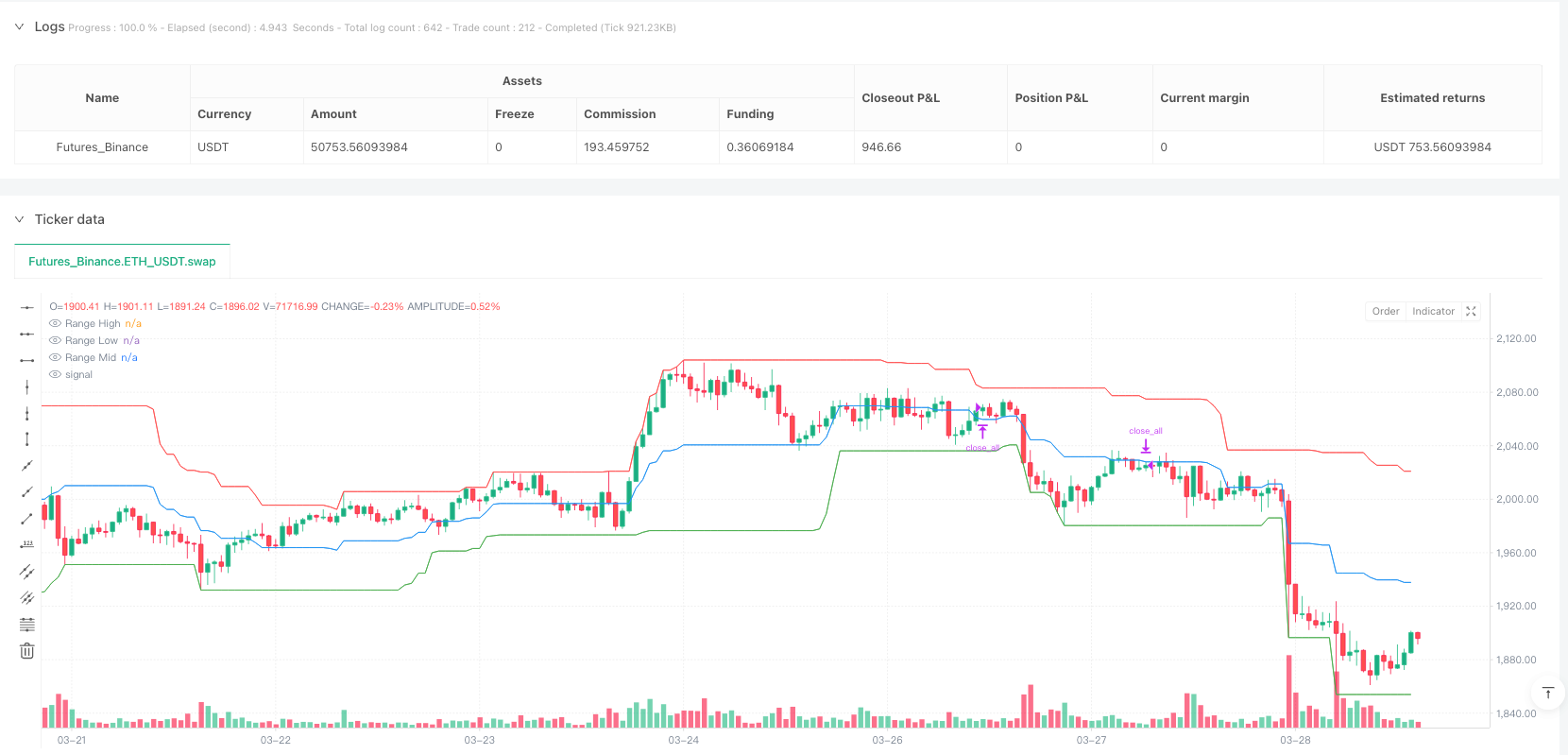
本策略是一种基于市场动态区间中点的高精度交易方法,通过捕捉价格在特定时间范围内的波动特征,实现精准的入场和出场时机。策略核心是利用可配置的回溯周期,动态计算价格区间的高点、低点和中点,并在纽约证券交易所交易时段内执行限价交易。
策略原理
策略原理基于以下关键机制:
- 动态区间计算:通过设定可调整的回溯周期(默认30个K线),实时计算价格的最高点、最低点和中点。
- 时间约束交易:严格限定在纽约证券交易所交易时段(上午9:30至下午3:00)内进行交易。
- 中点突破信号:当收盘价格突破区间中点时,产生做多或做空信号。
- 限价订单策略:在区间中点下单,并设置止盈和止损价格为区间高点和低点。
策略优势
- 高精度入场:通过动态计算区间中点,提供更加精准的入场时机。
- 风险可控:严格的止盈和止损机制,有效控制单笔交易风险。
- 时间选择性:仅在交易所活跃时段交易,避免低流动性periods。
- 参数灵活:回溯周期可调,适应不同市场环境。
- 避免隔夜风险:在交易日结束前自动平仓。
策略风险
- 区间计算局限性:在剧烈波动市场中,固定回溯周期可能无法准确反映实时市场状态。
- 交易频率风险:频繁交易可能增加交易成本和滑点风险。
- 参数敏感性:回溯周期和交易时段设置对策略表现影响显著。
- 市场适应性:策略可能不适用于所有品种和市场环境。
策略优化方向
- 动态回溯周期:引入自适应算法,根据市场波动性动态调整回溯周期。
- 多时间框架验证:结合不同时间框架的信号,提高信号准确性。
- volatility过滤:增加波动率指标,过滤低质量交易信号。
- 机器学习优化:使用机器学习算法动态调整入场和出场参数。
- 风险管理增强:引入更复杂的仓位管理和动态止损机制。
总结
本策略通过精确的区间中点突破和限价交易机制,为交易者提供了一种系统化、规则明确的交易方法。其核心优势在于高精度入场、风险可控和时间选择性。未来的优化方向将focus于提高策略的自适应性和稳定性。
关键技术指标
- 回溯周期(Lookback Period)
- 区间高点(Range High)
- 区间低点(Range Low)
- 区间中点(Range Midpoint)
- 交易时段(NYSE Trading Hours)
交易逻辑总结
通过动态计算价格区间并在中点附近进行限价交易,在严格的时间和风险管理框架下,捕捉短期价格趋势和反转机会。
风险提示
本策略仅供参考,实际交易中需要根据个人风险承受能力和市场环境进行调整。
推荐应用场景
适用于追求稳定、系统化交易策略的中短线投资者,特别是专注于期指和高流动性品种交易的交易者。
结语
量化交易的核心在于不断优化和适应,本策略为交易者提供了一个值得深入研究和改进的交易框架。
||
Overview
This strategy is a high-precision trading method based on the market's dynamic range midpoint, capturing price fluctuation characteristics within a specific time range to achieve precise entry and exit timing. The core of the strategy is to use a configurable lookback period to dynamically calculate the price range's high, low, and midpoint, and execute limit orders during New York Stock Exchange trading hours.
Strategy Principles
The strategy principles are based on the following key mechanisms:
- Dynamic Range Calculation: Real-time calculation of price highs, lows, and midpoints by setting an adjustable lookback period (default 30 candles).
- Time-Constrained Trading: Strictly limited to New York Stock Exchange trading hours (9:30 AM to 3:00 PM).
- Midpoint Breakthrough Signals: Generate long or short signals when closing prices cross the range midpoint.
- Limit Order Strategy: Place orders at the range midpoint with take profit and stop loss set at range high and low points.
Strategy Advantages
- High-Precision Entry: Provide more accurate entry timing through dynamic midpoint calculation.
- Controllable Risk: Strict take profit and stop loss mechanisms effectively control single trade risk.
- Time Selectivity: Trade only during active exchange hours, avoiding low liquidity periods.
- Flexible Parameters: Adjustable lookback period adapts to different market environments.
- Overnight Risk Avoidance: Automatic position closure before trading day end.
Strategy Risks
- Range Calculation Limitations: Fixed lookback periods may not accurately reflect real-time market conditions during volatile markets.
- Trading Frequency Risks: Frequent trading may increase transaction costs and slippage risks.
- Parameter Sensitivity: Lookback period and trading hours significantly impact strategy performance.
- Market Adaptability: Strategy may not apply to all instruments and market environments.
Strategy Optimization Directions
- Dynamic Lookback Period: Introduce adaptive algorithms to dynamically adjust lookback periods based on market volatility.
- Multi-Timeframe Verification: Combine signals from different timeframes to improve signal accuracy.
- Volatility Filtering: Add volatility indicators to filter low-quality trading signals.
- Machine Learning Optimization: Use machine learning algorithms to dynamically adjust entry and exit parameters.
- Enhanced Risk Management: Introduce more complex position management and dynamic stop-loss mechanisms.
Summary
This strategy provides traders with a systematic, rule-clear trading method through precise range midpoint breakthrough and limit order trading mechanisms. Its core advantages lie in high-precision entry, risk control, and time selectivity. Future optimization will focus on improving the strategy's adaptability and stability.
Key Technical Indicators
- Lookback Period
- Range High
- Range Low
- Range Midpoint
- NYSE Trading Hours
Trading Logic Summary
Capture short-term price trends and reversal opportunities by dynamically calculating price ranges and executing limit trades near the midpoint within a strict time and risk management framework.
Risk Disclaimer
This strategy is for reference only. Actual trading requires adjustment based on individual risk tolerance and market environment.
Recommended Application Scenarios
Suitable for medium and short-term investors seeking stable, systematic trading strategies, especially those focusing on index futures and high-liquidity instruments.
Conclusion
The core of quantitative trading is continuous optimization and adaptation. This strategy provides traders with a trading framework worth in-depth research and improvement. [/trans]
Source (PineScript)
/*backtest
start: 2024-03-31 00:00:00
end: 2025-03-29 08:00:00
period: 1h
basePeriod: 1h
exchanges: [{"eid":"Futures_Binance","currency":"ETH_USDT"}]
*/

//@version=5
strategy("Midpoint Crossing Strategy", overlay=true)

// Input for lookback period
lookback = input.int(30, title="Lookback Period", minval=1)

// Input for NYSE trading hours
startHour = 9
startMinute = 30
endHour = 15
endMinute = 0

// Variables to store high, low, and midpoint of the lookback period
var float rangeHigh = na
var float rangeLow = na
var float rangeMid = na

// Calculate high, low, and midpoint based on lookback period
if (bar_index >= lookback)
    rangeHigh := ta.highest(high, lookback)
    rangeLow := ta.lowest(low, lookback)
    rangeMid := (rangeHigh + rangeLow) / 2

// Plot high, low, and midpoint for reference
plot(rangeHigh, color=color.red, title="Range High")
plot(rangeLow, color=color.green, title="Range Low")
plot(rangeMid, color=color.blue, title="Range Mid")

// Time condition for NYSE hours
currentTime = timestamp("GMT-5", year, month, dayofmonth, hour, minute)
startTime = timestamp("GMT-5", year, month, dayofmonth, startHour, startMinute)
endTime = timestamp("GMT-5", year, month, dayofmonth, endHour, endMinute)

// Check if the current time is within NYSE hours
isNYSEHours = currentTime >= startTime and currentTime <= endTime

// Entry conditions (only during NYSE hours)
longCondition = ta.crossover(close, rangeMid) and isNYSEHours
shortCondition = ta.crossunder(close, rangeMid) and isNYSEHours

// Define stop loss and take profit levels based on the range
longStopLoss = rangeLow
longTakeProfit = rangeHigh
shortStopLoss = rangeHigh
shortTakeProfit = rangeLow

// Place limit order at mid-price
if (longCondition and not strategy.opentrades)
    strategy.order("Long Limit", strategy.long, limit=rangeMid)
    strategy.exit("Take Profit", "Long Limit", limit=longTakeProfit, stop=longStopLoss)

if (shortCondition and not strategy.opentrades)
    strategy.order("Short Limit", strategy.short, limit=rangeMid)
    strategy.exit("Take Profit", "Short Limit", limit=shortTakeProfit, stop=shortStopLoss)

// Close open positions at 4:00 PM to avoid overnight risk
if (currentTime >= endTime)
    strategy.close_all(comment="Close All at 4:00 PM")

// Add a check for open positions
if (strategy.opentrades > 0)
    // Ensure no recalculation while a position is open
    rangeHigh := na
    rangeLow := na
    rangeMid := na
Detail
https://www.fmz.com/strategy/488897
Last Modified
2025-03-31 16:43:45