148 lines
9.2 KiB
Markdown
148 lines
9.2 KiB
Markdown

|
|
||
|
|
> Name
|
||
|
|
|
||
|
|
动态头寸规模短线外汇交易策略Dynamic-Position-Sizing-Short-Term-Forex-Trading-Strategy
|
||
|
|
|
||
|
|
> Author
|
||
|
|
|
||
|
|
ChaoZhang
|
||
|
|
|
||
|
|
> Strategy Description
|
||
|
|
|
||
|
|
|
||
|
|
|
||
|
|
[trans]
|
||
|
|
#### 概述
|
||
|
|
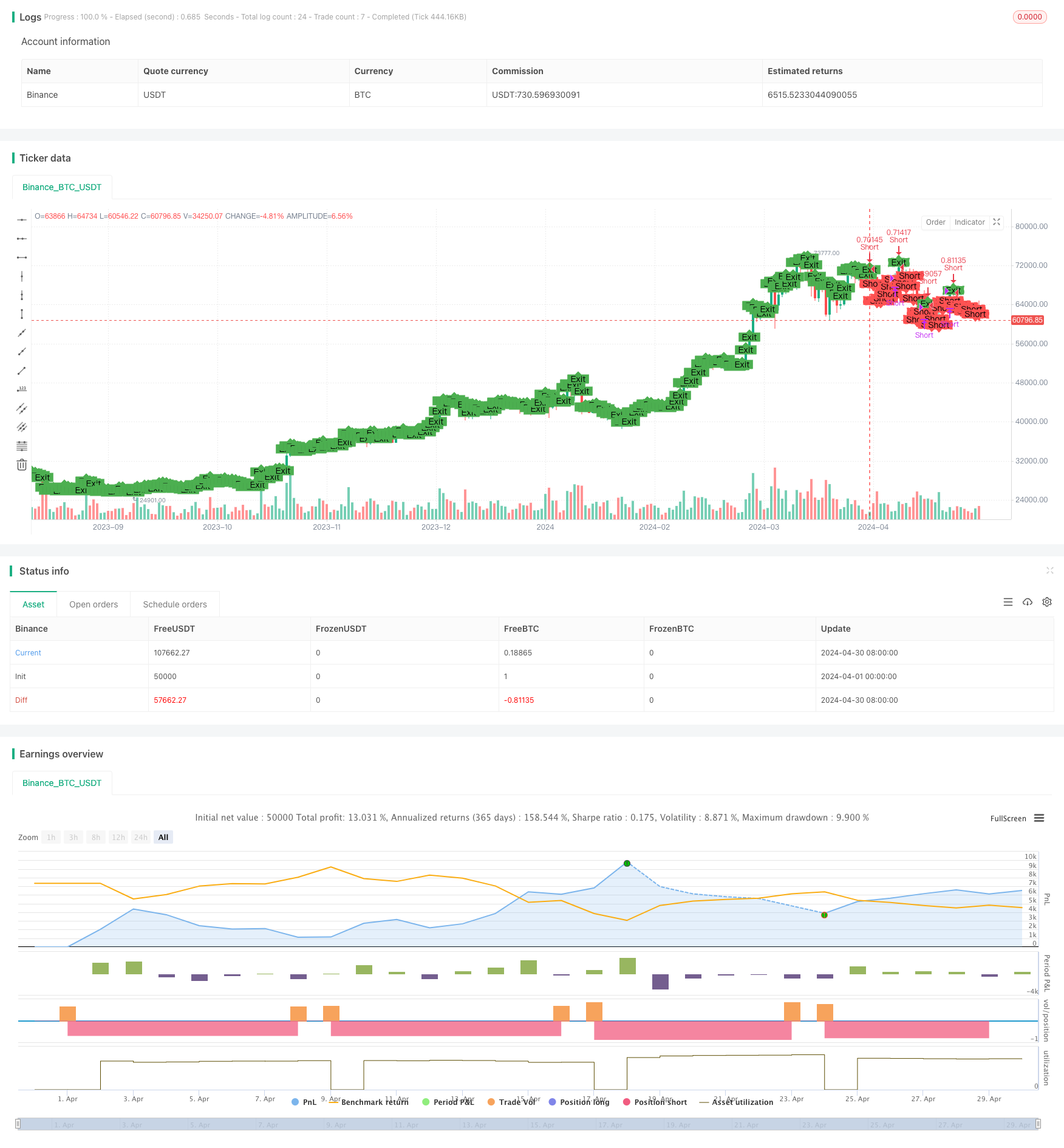
该策略是一种短线外汇交易策略,主要思路是通过动态调整头寸规模来增强风险管理。策略根据当前账户权益和每笔交易的风险比例,计算出动态的头寸规模。同时,策略设置了严格的止损和止盈条件,在价格出现不利变动时快速平仓,控制风险;在价格朝有利方向变动时,及时锁定利润。
|
||
|
|
|
||
|
|
#### 策略原理
|
||
|
|
1. 根据用户输入的参数,如短线持仓天数、价格下跌百分比、每笔交易风险比例、止损百分比和止盈百分比,初始化相关变量。
|
||
|
|
2. 在没有持仓的情况下,根据当前账户权益和每笔交易风险比例,计算出动态的头寸规模,然后以市价开空头。
|
||
|
|
3. 记录开仓价格和预期平仓的时间。
|
||
|
|
4. 在持仓过程中,实时监测价格变动。如果达到止损价格、止盈价格或预设的持仓时间,则平掉空头头寸。
|
||
|
|
5. 在图表上标记开仓和平仓点位,直观显示交易情况。
|
||
|
|
|
||
|
|
#### 优势分析
|
||
|
|
1. 动态头寸规模:根据账户权益和风险比例动态调整每笔交易的头寸规模,在控制风险的同时提高资金使用效率。
|
||
|
|
2. 严格的止损止盈:设置紧密的止损位和止盈位,有效控制单笔交易的风险敞口,同时及时锁定利润。
|
||
|
|
3. 短线交易:策略专注于短线交易机会,持仓时间较短,可以快速适应市场变化,抓住短期内的价格波动。
|
||
|
|
4. 简单易用:策略逻辑清晰,参数设置简单,适合初学者学习和使用。
|
||
|
|
|
||
|
|
#### 风险分析
|
||
|
|
1. 市场风险:外汇市场瞬息万变,短期内价格波动剧烈,可能导致策略频繁触发止损。
|
||
|
|
2. 参数设置风险:不恰当的参数设置,如过高的风险比例、过窄的止损止盈空间等,可能导致账户快速爆仓。
|
||
|
|
3. 头寸规模风险:虽然策略采用了动态头寸规模,但仍需谨慎设置每笔交易的风险比例,以避免单笔交易占用过多资金。
|
||
|
|
|
||
|
|
#### 优化方向
|
||
|
|
1. 引入更多技术指标,如移动平均线、MACD等,辅助判断趋势和开平仓时机。
|
||
|
|
2. 优化止损止盈逻辑,如采用追踪止损、部分止盈等方法,提高策略收益风险比。
|
||
|
|
3. 针对不同货币对和市场状况,设置不同的参数组合,提高策略的适应性和稳定性。
|
||
|
|
4. 加入仓位管理逻辑,如采用Kelly公式等方法,动态调整每笔交易的风险比例。
|
||
|
|
|
||
|
|
#### 总结
|
||
|
|
该策略通过动态头寸规模和严格的止损止盈,在短线交易中实现了风险控制和利润追求的平衡。策略逻辑简单清晰,适合初学者学习掌握。但是,在实际应用中仍需谨慎,注意控制风险,并根据市场变化不断优化和改进策略。通过引入更多技术指标、优化止损止盈逻辑、针对不同市场状况设置参数、加入仓位管理等方法,可以进一步提升策略的稳健性和盈利能力。
|
||
|
|
|
||
|
|
||
|
||
|
|
|
||
|
|
#### Overview
|
||
|
|
This strategy is a short-term forex trading strategy that focuses on enhancing risk management by dynamically adjusting position sizes. The strategy calculates the dynamic position size based on the current account equity and the risk percentage per trade. Additionally, it sets strict stop-loss and take-profit conditions to quickly close positions when prices move unfavorably and lock in profits when prices move in a favorable direction.
|
||
|
|
|
||
|
|
#### Strategy Principles
|
||
|
|
1. Initialize relevant variables based on user input parameters, such as the number of days for short-term holding, price drop percentage, risk percentage per trade, stop-loss percentage, and take-profit percentage.
|
||
|
|
2. When there is no open position, calculate the dynamic position size based on the current account equity and risk percentage per trade, and then open a short position at the market price.
|
||
|
|
3. Record the entry price and the expected exit time.
|
||
|
|
4. During the holding period, continuously monitor price movements. If the price reaches the stop-loss price, take-profit price, or the preset holding time, close the short position.
|
||
|
|
5. Mark the entry and exit points on the chart to visually display the trading situation.
|
||
|
|
|
||
|
|
#### Advantage Analysis
|
||
|
|
1. Dynamic Position Sizing: By dynamically adjusting the position size for each trade based on account equity and risk percentage, the strategy improves capital utilization while controlling risks.
|
||
|
|
2. Strict Stop-Loss and Take-Profit: Setting tight stop-loss and take-profit levels effectively controls the risk exposure of individual trades while timely locking in profits.
|
||
|
|
3. Short-Term Trading: The strategy focuses on short-term trading opportunities with shorter holding periods, allowing quick adaptation to market changes and capturing short-term price fluctuations.
|
||
|
|
4. Simple and User-Friendly: The strategy logic is clear, and parameter settings are simple, making it suitable for beginners to learn and use.
|
||
|
|
|
||
|
|
#### Risk Analysis
|
||
|
|
1. Market Risk: The forex market is highly dynamic, with intense short-term price fluctuations that may cause the strategy to frequently trigger stop-losses.
|
||
|
|
2. Parameter Setting Risk: Inappropriate parameter settings, such as excessively high risk percentages or overly narrow stop-loss and take-profit ranges, may lead to rapid account blowouts.
|
||
|
|
3. Position Size Risk: Although the strategy employs dynamic position sizing, it is still necessary to cautiously set the risk percentage for each trade to avoid allocating too much capital to a single trade.
|
||
|
|
|
||
|
|
#### Optimization Directions
|
||
|
|
1. Introduce more technical indicators, such as moving averages and MACD, to assist in judging trends and entry/exit timing.
|
||
|
|
2. Optimize the stop-loss and take-profit logic, such as using trailing stop-losses and partial take-profits, to improve the strategy's risk-reward ratio.
|
||
|
|
3. Set different parameter combinations for various currency pairs and market conditions to enhance the adaptability and stability of the strategy.
|
||
|
|
4. Incorporate position management logic, such as using the Kelly Criterion, to dynamically adjust the risk percentage for each trade.
|
||
|
|
|
||
|
|
#### Summary
|
||
|
|
By utilizing dynamic position sizing and strict stop-loss and take-profit rules, this strategy achieves a balance between risk control and profit pursuit in short-term trading. The strategy logic is simple and clear, making it suitable for beginners to learn and master. However, caution is still needed in practical application, with attention paid to risk control and continuous optimization and improvement based on market changes. By introducing more technical indicators, optimizing stop-loss and take-profit logic, setting parameters for different market conditions, and incorporating position management, the strategy's robustness and profitability can be further enhanced.
|
||
|
|
[/trans]
|
||
|
|
|
||
|
|
|
||
|
|
|
||
|
|
> Source (PineScript)
|
||
|
|
|
||
|
|
``` pinescript
|
||
|
|
/*backtest
|
||
|
|
start: 2024-04-01 00:00:00
|
||
|
|
end: 2024-04-30 23:59:59
|
||
|
|
period: 1d
|
||
|
|
basePeriod: 1h
|
||
|
|
exchanges: [{"eid":"Binance","currency":"BTC_USDT"}]
|
||
|
|
*/
|
||
|
|
|
||
|
|
//@version=5
|
||
|
|
strategy("Short High-Grossing Forex Pair - Enhanced Risk Management", overlay=true)
|
||
|
|
|
||
|
|
// Parameters
|
||
|
|
shortDuration = input.int(7, title="Short Duration (days)")
|
||
|
|
priceDropPercentage = input.float(30, title="Price Drop Percentage", minval=0, maxval=100)
|
||
|
|
riskPerTrade = input.float(2, title="Risk per Trade (%)", minval=0.1, maxval=100) / 100 // Increased risk for short trades
|
||
|
|
stopLossPercent = input.float(2, title="Stop Loss Percentage", minval=0) // Tighter stop-loss for short trades
|
||
|
|
takeProfitPercent = input.float(30, title="Take Profit Percentage", minval=0) // Take Profit Percentage
|
||
|
|
|
||
|
|
// Initialize variables
|
||
|
|
var int shortEnd = na
|
||
|
|
var float entryPrice = na
|
||
|
|
|
||
|
|
// Calculate dynamic position size
|
||
|
|
equity = strategy.equity
|
||
|
|
riskAmount = equity * riskPerTrade
|
||
|
|
pipValue = syminfo.pointvalue
|
||
|
|
stopLossPips = close * (stopLossPercent / 100)
|
||
|
|
positionSize = riskAmount / (stopLossPips * pipValue)
|
||
|
|
|
||
|
|
// Entry condition: Enter short position at the first bar with calculated position size
|
||
|
|
if (strategy.opentrades == 0)
|
||
|
|
strategy.entry("Short", strategy.short, qty=positionSize)
|
||
|
|
shortEnd := bar_index + shortDuration
|
||
|
|
entryPrice := close
|
||
|
|
alert("Entering short position", alert.freq_once_per_bar_close)
|
||
|
|
|
||
|
|
// Exit conditions
|
||
|
|
exitCondition = (bar_index >= shortEnd) or (close <= entryPrice * (1 - priceDropPercentage / 100))
|
||
|
|
|
||
|
|
// Stop-loss and take-profit conditions
|
||
|
|
stopLossCondition = (close >= entryPrice * (1 + stopLossPercent / 100))
|
||
|
|
takeProfitCondition = (close <= entryPrice * (1 - takeProfitPercent / 100))
|
||
|
|
|
||
|
|
// Exit the short position based on the conditions
|
||
|
|
if (strategy.opentrades > 0 and (exitCondition or stopLossCondition or takeProfitCondition))
|
||
|
|
strategy.close("Short")
|
||
|
|
alert("Exiting short position", alert.freq_once_per_bar_close)
|
||
|
|
|
||
|
|
// Plot entry and exit points for visualization
|
||
|
|
plotshape(series=strategy.opentrades > 0, location=location.belowbar, color=color.red, style=shape.labeldown, text="Short")
|
||
|
|
plotshape(series=strategy.opentrades == 0, location=location.abovebar, color=color.green, style=shape.labelup, text="Exit")
|
||
|
|
|
||
|
|
// Add alert conditions
|
||
|
|
alertcondition(strategy.opentrades > 0, title="Short Entry Alert", message="Entering short position")
|
||
|
|
alertcondition(strategy.opentrades == 0, title="Short Exit Alert", message="Exiting short position")
|
||
|
|
|
||
|
|
```
|
||
|
|
|
||
|
|
> Detail
|
||
|
|
|
||
|
|
https://www.fmz.com/strategy/452696
|
||
|
|
|
||
|
|
> Last Modified
|
||
|
|
|
||
|
|
2024-05-28 11:11:26
|