306 lines
16 KiB
Markdown
306 lines
16 KiB
Markdown

|
|
|||
|
|
> Name
|
|||
|
|
|
|||
|
|
三重指数移动平均与三重相对移动平均自适应通道交叉策略-Triple-EMA-and-Triple-RMA-Adaptive-Channel-Crossover-Strategy
|
|||
|
|
|
|||
|
|
> Author
|
|||
|
|
|
|||
|
|
ianzeng123
|
|||
|
|
|
|||
|
|
> Strategy Description
|
|||
|
|
|
|||
|
|
|
|||
|
|
|
|||
|
|
|
|||
|
|
|
|||
|
|
[trans]
|
|||
|
|
|
|||
|
|
## 概述
|
|||
|
|
|
|||
|
|
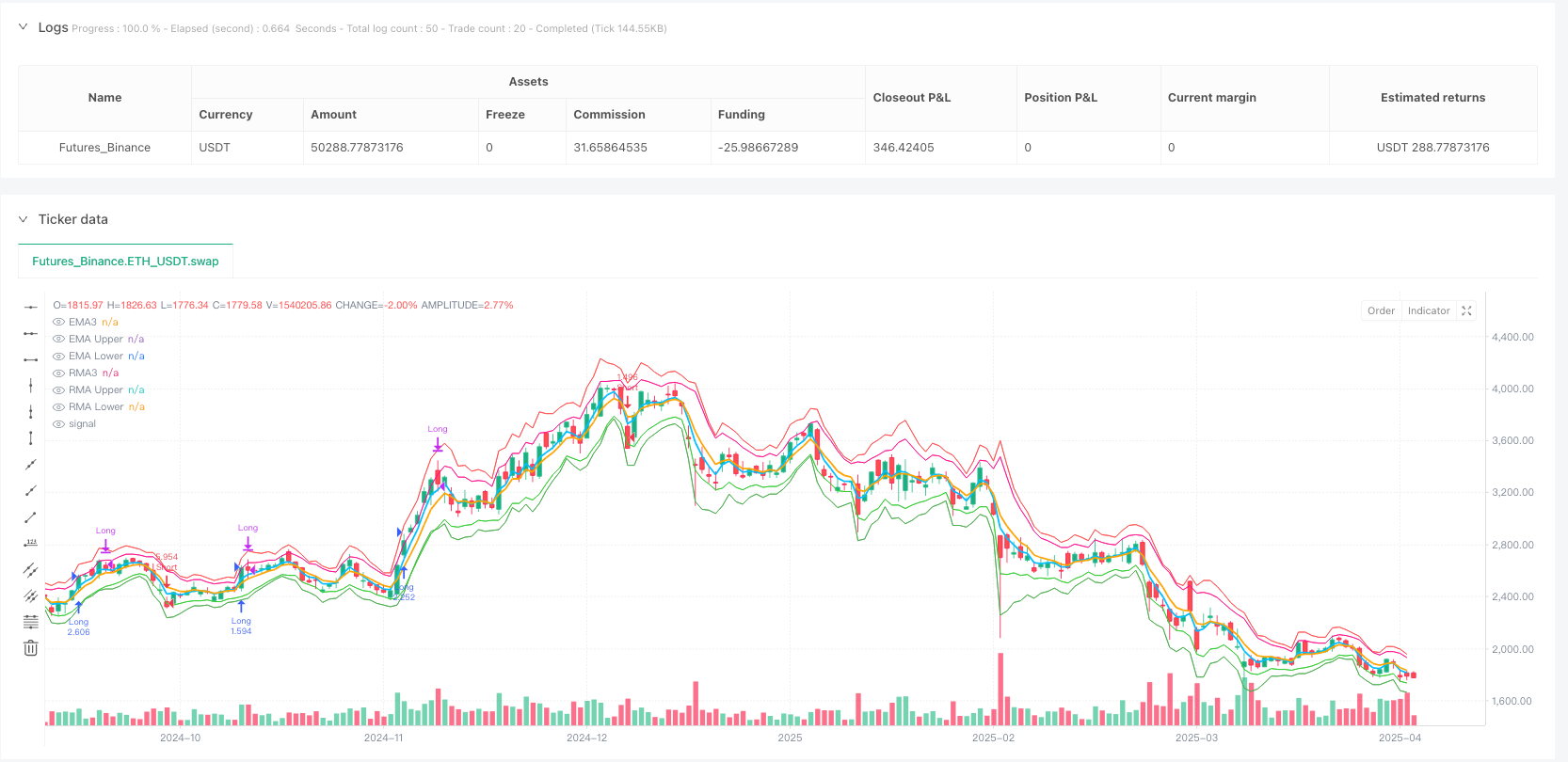
三重指数移动平均与三重相对移动平均自适应通道交叉策略是一种结合短周期EMA(指数移动平均线)和RMA(相对移动平均线)的量化交易系统。该策略利用ATR(真实波幅)指标构建价格通道,通过捕捉价格对这些通道的突破行为来识别入场信号。策略内置风险管理机制,采用固定风险比例计算仓位大小,并使用开盘价作为止损点,同时设计了基于前一周期开盘价的平仓机制,形成了一个完整的交易系统。
|
|||
|
|
|
|||
|
|
#### 策略原理
|
|||
|
|
|
|||
|
|
该策略的核心逻辑基于两组平均线与其ATR通道的组合:
|
|||
|
|
|
|||
|
|
1. **EMA通道系统**:
|
|||
|
|
- 使用3周期EMA作为中心线
|
|||
|
|
- 通过ATR乘以1.5倍系数构建上下通道边界
|
|||
|
|
- 当价格突破上轨产生做多信号;突破下轨产生做空信号
|
|||
|
|
|
|||
|
|
2. **RMA通道系统**:
|
|||
|
|
- 使用3周期RMA作为中心线
|
|||
|
|
- 通过ATR乘以1.0倍系数构建上下通道边界
|
|||
|
|
- 同样通过通道突破产生交易信号
|
|||
|
|
|
|||
|
|
3. **信号触发条件**:
|
|||
|
|
- 收盘价突破任一通道上轨触发做多
|
|||
|
|
- 收盘价突破任一通道下轨触发做空
|
|||
|
|
- 信号仅在K线确认后有效(barstate.isconfirmed)
|
|||
|
|
|
|||
|
|
4. **仓位管理**:
|
|||
|
|
- 采用固定风险比例方法(0.5%)计算仓位大小
|
|||
|
|
- 入场价与止损价之间的距离决定了最终仓位大小
|
|||
|
|
|
|||
|
|
5. **止损与平仓机制**:
|
|||
|
|
- 入场时立即设置在开盘价的止损单
|
|||
|
|
- 当低点向上穿越前一周期开盘价时平多仓
|
|||
|
|
- 当高点向下穿越前一周期开盘价时平空仓
|
|||
|
|
|
|||
|
|
#### 策略优势
|
|||
|
|
|
|||
|
|
1. **快速响应市场变化**:使用超短周期(3)的移动平均线,策略能够迅速捕捉价格波动并及时进入趋势。
|
|||
|
|
|
|||
|
|
2. **双重确认机制**:EMA和RMA两套系统共同工作,当两者都发出相同方向信号时,交易的可靠性显著提高。
|
|||
|
|
|
|||
|
|
3. **自适应波动率调整**:通过ATR指标调整通道宽度,策略能够在不同波动环境下自动调整敏感度。
|
|||
|
|
|
|||
|
|
4. **精确的风险控制**:每笔交易风险固定为账户资金的0.5%,严格控制单笔交易风险敞口。
|
|||
|
|
|
|||
|
|
5. **明确的退出策略**:基于前一周期开盘价的平仓机制为交易提供了清晰的获利了结条件。
|
|||
|
|
|
|||
|
|
6. **差异化通道乘数**:EMA通道使用1.5倍ATR,而RMA通道使用1.0倍ATR,这种设计使两个系统具有不同的敏感度,能够捕捉不同类型的市场机会。
|
|||
|
|
|
|||
|
|
#### 策略风险
|
|||
|
|
|
|||
|
|
1. **过度交易风险**:超短周期(3)的移动平均线可能在震荡市场中产生过多虚假信号,导致频繁交易和手续费侵蚀。
|
|||
|
|
- 解决方法:可考虑增加确认过滤器,如成交量确认或趋势方向过滤。
|
|||
|
|
|
|||
|
|
2. **止损设置过于固定**:使用开盘价作为止损点可能不总是最优选择,特别是在高波动或跳空行情中。
|
|||
|
|
- 解决方法:可基于ATR或波动率百分比动态调整止损距离。
|
|||
|
|
|
|||
|
|
3. **平仓条件较为简单**:仅依赖前一周期开盘价的交叉可能导致在强趋势中过早退出。
|
|||
|
|
- 解决方法:考虑引入趋势强度指标,在强趋势中采用更宽松的平仓条件。
|
|||
|
|
|
|||
|
|
4. **缺乏市场环境过滤**:策略没有区分不同市场状态(趋势/震荡),可能在不适合的市场环境下频繁交易。
|
|||
|
|
- 解决方法:增加市场状态判断指标,如ADX或波动率指标,在震荡市场暂停交易。
|
|||
|
|
|
|||
|
|
5. **参数优化风险**:当前参数(如周期3和ATR乘数)可能过于拟合历史数据,未来表现存在不确定性。
|
|||
|
|
- 解决方法:进行参数稳健性测试,使用步进优化方法验证参数稳定性。
|
|||
|
|
|
|||
|
|
#### 策略优化方向
|
|||
|
|
|
|||
|
|
1. **市场状态适应性优化**:
|
|||
|
|
- 增加市场环境识别机制,如ADX或波动率区间判断
|
|||
|
|
- 在不同市场状态下使用不同的参数设置或交易规则
|
|||
|
|
- 这样可以避免在震荡市场中的过度交易问题
|
|||
|
|
|
|||
|
|
2. **多时间框架确认**:
|
|||
|
|
- 引入更长周期(如日线)的趋势判断
|
|||
|
|
- 仅在短周期信号与长周期趋势方向一致时交易
|
|||
|
|
- 这将提高信号的可靠性,减少逆势交易
|
|||
|
|
|
|||
|
|
3. **动态止损优化**:
|
|||
|
|
- 基于当前ATR值动态设置止损距离
|
|||
|
|
- 在高波动环境下给予价格更多呼吸空间
|
|||
|
|
- 这种方法能更好地适应不同市场条件下的波动特征
|
|||
|
|
|
|||
|
|
4. **平仓策略增强**:
|
|||
|
|
- 引入移动止损或跟踪止损机制
|
|||
|
|
- 根据已获利润动态调整退出策略
|
|||
|
|
- 这可以更好地保护已有利润并允许趋势充分发展
|
|||
|
|
|
|||
|
|
5. **信号质量评估**:
|
|||
|
|
- 开发信号强度评分系统
|
|||
|
|
- 根据信号质量动态调整仓位大小
|
|||
|
|
- 这将使策略在高确信度条件下加大仓位,在低确信度条件下减小风险
|
|||
|
|
|
|||
|
|
#### 总结
|
|||
|
|
|
|||
|
|
三重指数移动平均与三重相对移动平均自适应通道交叉策略巧妙地结合了两种不同类型的移动平均线与ATR通道,形成了对价格突破敏感、同时具备风险控制能力的交易系统。该策略特别适合捕捉短期价格波动,对快速发展的趋势反应迅速。通过固定风险比例的仓位管理和明确的止损策略,该系统在追求收益的同时也注重资金安全。
|
|||
|
|
|
|||
|
|
然而,该策略也存在潜在的过度交易风险和市场环境适应性问题。通过增加市场状态过滤、优化止损机制、引入多时间框架确认等方式,可以显著提升该策略的稳健性和长期表现。特别是加入对市场环境的识别能力,将使策略能够在不同市场条件下有选择地参与交易,进一步提高策略的实用性和盈利能力。
|
|||
|
|
|
|||
|
|
总的来说,这是一个结构清晰、逻辑严谨的量化交易策略,具有良好的理论基础和应用潜力。通过本文建议的优化方向,该策略有望在各种市场环境中表现出更强的适应性和稳定性。 ||
|
|||
|
|
|
|||
|
|
## Overview
|
|||
|
|
|
|||
|
|
The Triple EMA and Triple RMA Adaptive Channel Crossover Strategy is a quantitative trading system that combines short-period EMA (Exponential Moving Average) and RMA (Relative Moving Average) indicators. This strategy utilizes the ATR (Average True Range) indicator to construct price channels and identifies entry signals by capturing price breakouts from these channels. The strategy incorporates a built-in risk management mechanism, calculating position size based on a fixed risk percentage, using the opening price as a stop-loss point, and designing a closing mechanism based on the previous period's opening price, forming a complete trading system.
|
|||
|
|
|
|||
|
|
#### Strategy Principles
|
|||
|
|
|
|||
|
|
The core logic of this strategy is based on two sets of moving averages combined with their ATR channels:
|
|||
|
|
|
|||
|
|
1. **EMA Channel System**:
|
|||
|
|
- Uses a 3-period EMA as the center line
|
|||
|
|
- Constructs upper and lower channel boundaries by multiplying ATR by a factor of 1.5
|
|||
|
|
- Generates long signals when price breaks through the upper band; short signals when it breaks through the lower band
|
|||
|
|
|
|||
|
|
2. **RMA Channel System**:
|
|||
|
|
- Uses a 3-period RMA as the center line
|
|||
|
|
- Constructs upper and lower channel boundaries by multiplying ATR by a factor of 1.0
|
|||
|
|
- Similarly generates trading signals through channel breakouts
|
|||
|
|
|
|||
|
|
3. **Signal Triggering Conditions**:
|
|||
|
|
- Long entry triggered when closing price breaks above either channel's upper band
|
|||
|
|
- Short entry triggered when closing price breaks below either channel's lower band
|
|||
|
|
- Signals are only valid after bar confirmation (barstate.isconfirmed)
|
|||
|
|
|
|||
|
|
4. **Position Management**:
|
|||
|
|
- Uses a fixed risk percentage method (0.5%) to calculate position size
|
|||
|
|
- The distance between entry price and stop-loss price determines the final position size
|
|||
|
|
|
|||
|
|
5. **Stop-Loss and Exit Mechanism**:
|
|||
|
|
- Immediately sets a stop-loss order at the opening price upon entry
|
|||
|
|
- Closes long positions when the low crosses above the previous period's opening price
|
|||
|
|
- Closes short positions when the high crosses below the previous period's opening price
|
|||
|
|
|
|||
|
|
#### Strategy Advantages
|
|||
|
|
|
|||
|
|
1. **Rapid Response to Market Changes**: Using ultra-short period (3) moving averages, the strategy can quickly capture price movements and enter trends in a timely manner.
|
|||
|
|
|
|||
|
|
2. **Dual Confirmation Mechanism**: EMA and RMA systems work together, significantly improving trading reliability when both emit signals in the same direction.
|
|||
|
|
|
|||
|
|
3. **Adaptive Volatility Adjustment**: By adjusting channel width through the ATR indicator, the strategy can automatically adjust sensitivity in different volatility environments.
|
|||
|
|
|
|||
|
|
4. **Precise Risk Control**: Each trade risks a fixed 0.5% of account equity, strictly controlling single trade risk exposure.
|
|||
|
|
|
|||
|
|
5. **Clear Exit Strategy**: The closing mechanism based on the previous period's opening price provides clear profit-taking conditions for trades.
|
|||
|
|
|
|||
|
|
6. **Differentiated Channel Multipliers**: The EMA channel uses 1.5x ATR, while the RMA channel uses 1.0x ATR. This design gives the two systems different sensitivities, capable of capturing different types of market opportunities.
|
|||
|
|
|
|||
|
|
#### Strategy Risks
|
|||
|
|
|
|||
|
|
1. **Overtrading Risk**: Ultra-short period (3) moving averages may generate too many false signals in oscillating markets, leading to frequent trading and commission erosion.
|
|||
|
|
- Solution: Consider adding confirmation filters, such as volume confirmation or trend direction filtering.
|
|||
|
|
|
|||
|
|
2. **Fixed Stop-Loss Setting**: Using the opening price as a stop-loss point may not always be optimal, especially in high-volatility or gap markets.
|
|||
|
|
- Solution: Dynamically adjust stop-loss distance based on ATR or volatility percentage.
|
|||
|
|
|
|||
|
|
3. **Simplistic Exit Conditions**: Relying solely on crosses of the previous period's opening price may lead to premature exits in strong trends.
|
|||
|
|
- Solution: Consider introducing trend strength indicators and adopting more relaxed exit conditions in strong trends.
|
|||
|
|
|
|||
|
|
4. **Lack of Market Environment Filtering**: The strategy does not distinguish between different market states (trending/oscillating), potentially trading frequently in unsuitable market environments.
|
|||
|
|
- Solution: Add market state judgment indicators, such as ADX or volatility indicators, to pause trading in oscillating markets.
|
|||
|
|
|
|||
|
|
5. **Parameter Optimization Risk**: Current parameters (such as period 3 and ATR multipliers) may be overfitted to historical data, with uncertain future performance.
|
|||
|
|
- Solution: Conduct parameter robustness testing and validate parameter stability using walk-forward optimization methods.
|
|||
|
|
|
|||
|
|
#### Strategy Optimization Directions
|
|||
|
|
|
|||
|
|
1. **Market State Adaptability Optimization**:
|
|||
|
|
- Add market environment recognition mechanisms, such as ADX or volatility range judgment
|
|||
|
|
- Use different parameter settings or trading rules in different market states
|
|||
|
|
- This can avoid overtrading problems in oscillating markets
|
|||
|
|
|
|||
|
|
2. **Multi-Timeframe Confirmation**:
|
|||
|
|
- Introduce longer-period (e.g., daily) trend judgment
|
|||
|
|
- Only trade when short-period signals align with long-period trend direction
|
|||
|
|
- This will improve signal reliability and reduce counter-trend trading
|
|||
|
|
|
|||
|
|
3. **Dynamic Stop-Loss Optimization**:
|
|||
|
|
- Dynamically set stop-loss distances based on current ATR values
|
|||
|
|
- Give prices more breathing room in high-volatility environments
|
|||
|
|
- This method can better adapt to volatility characteristics in different market conditions
|
|||
|
|
|
|||
|
|
4. **Enhanced Exit Strategy**:
|
|||
|
|
- Introduce trailing stop or trailing stop-loss mechanisms
|
|||
|
|
- Dynamically adjust exit strategies based on accumulated profits
|
|||
|
|
- This can better protect existing profits and allow trends to fully develop
|
|||
|
|
|
|||
|
|
5. **Signal Quality Assessment**:
|
|||
|
|
- Develop a signal strength scoring system
|
|||
|
|
- Dynamically adjust position size based on signal quality
|
|||
|
|
- This will increase positions under high-confidence conditions and reduce risk under low-confidence conditions
|
|||
|
|
|
|||
|
|
#### Summary
|
|||
|
|
|
|||
|
|
The Triple EMA and Triple RMA Adaptive Channel Crossover Strategy cleverly combines two different types of moving averages with ATR channels, forming a trading system that is sensitive to price breakouts while maintaining risk control capabilities. This strategy is particularly suitable for capturing short-term price movements and responds quickly to rapidly developing trends. Through position management with fixed risk percentages and clear stop-loss strategies, the system focuses on capital safety while pursuing returns.
|
|||
|
|
|
|||
|
|
However, the strategy also faces potential overtrading risks and market environment adaptability issues. By adding market state filtering, optimizing stop-loss mechanisms, introducing multi-timeframe confirmation, and other methods, the robustness and long-term performance of this strategy can be significantly enhanced. In particular, adding the ability to recognize market environments will enable the strategy to selectively participate in trading under different market conditions, further improving its practicality and profitability.
|
|||
|
|
|
|||
|
|
Overall, this is a clearly structured, logically rigorous quantitative trading strategy with a solid theoretical foundation and application potential. Through the optimization directions suggested in this article, the strategy is expected to demonstrate stronger adaptability and stability across various market environments.[/trans]
|
|||
|
|
|
|||
|
|
|
|||
|
|
|
|||
|
|
> Source (PineScript)
|
|||
|
|
|
|||
|
|
``` pinescript
|
|||
|
|
/*backtest
|
|||
|
|
start: 2024-04-07 00:00:00
|
|||
|
|
end: 2025-04-06 00:00:00
|
|||
|
|
period: 1d
|
|||
|
|
basePeriod: 1d
|
|||
|
|
exchanges: [{"eid":"Futures_Binance","currency":"ETH_USDT"}]
|
|||
|
|
*/
|
|||
|
|
|
|||
|
|
//@version=5
|
|||
|
|
strategy("EMA3 & RMA3 ATR Strategy", overlay=true, initial_capital=10000, currency=currency.USD)
|
|||
|
|
|
|||
|
|
// —— 输入参数 ——
|
|||
|
|
ema_len = input.int(3, "EMA周期")
|
|||
|
|
ema_mult = input.float(1.5, "EMA通道ATR乘数", step=0.1)
|
|||
|
|
rma_len = input.int(3, "RMA周期")
|
|||
|
|
rma_mult = input.float(1.0, "RMA通道ATR乘数", step=0.1)
|
|||
|
|
atr_len = input.int(3, "ATR周期")
|
|||
|
|
|
|||
|
|
// —— 核心计算 ——
|
|||
|
|
ema_val = ta.ema(close, ema_len)
|
|||
|
|
atr_val = ta.atr(atr_len)
|
|||
|
|
ema_upper = ema_val + atr_val * ema_mult
|
|||
|
|
ema_lower = ema_val - atr_val * ema_mult
|
|||
|
|
|
|||
|
|
rma_val = ta.rma(close, rma_len)
|
|||
|
|
rma_upper = rma_val + atr_val * rma_mult
|
|||
|
|
rma_lower = rma_val - atr_val * rma_mult
|
|||
|
|
|
|||
|
|
// —— 信号条件 ——
|
|||
|
|
ema_buy = barstate.isconfirmed and close > ema_upper
|
|||
|
|
ema_sell = barstate.isconfirmed and close < ema_lower
|
|||
|
|
rma_buy = barstate.isconfirmed and close > rma_upper
|
|||
|
|
rma_sell = barstate.isconfirmed and close < rma_lower
|
|||
|
|
|
|||
|
|
// —— 仓位计算 ——
|
|||
|
|
risk_percent = 0.5 // 单次风险0.5%
|
|||
|
|
position_size(price, stop_price) =>
|
|||
|
|
risk_amount = strategy.equity * risk_percent / 100
|
|||
|
|
math.abs(price - stop_price) > 0 ? (risk_amount / math.abs(price - stop_price)) : na
|
|||
|
|
|
|||
|
|
// —— 交易逻辑 ——
|
|||
|
|
var float prev_open = na
|
|||
|
|
if barstate.isconfirmed
|
|||
|
|
prev_open := open[1]
|
|||
|
|
|
|||
|
|
// 多单逻辑
|
|||
|
|
if (ema_buy or rma_buy) and strategy.position_size == 0
|
|||
|
|
stop_price = open
|
|||
|
|
qty = position_size(close, stop_price)
|
|||
|
|
if not na(qty)
|
|||
|
|
strategy.entry("Long", strategy.long, qty=qty)
|
|||
|
|
strategy.exit("Long Stop", "Long", stop=stop_price)
|
|||
|
|
|
|||
|
|
// 空单逻辑
|
|||
|
|
if (ema_sell or rma_sell) and strategy.position_size == 0
|
|||
|
|
stop_price = open
|
|||
|
|
qty = position_size(close, stop_price)
|
|||
|
|
if not na(qty)
|
|||
|
|
strategy.entry("Short", strategy.short, qty=qty)
|
|||
|
|
strategy.exit("Short Stop", "Short", stop=stop_price)
|
|||
|
|
|
|||
|
|
// 平仓逻辑
|
|||
|
|
if strategy.position_size > 0
|
|||
|
|
if ta.crossover(low, prev_open)
|
|||
|
|
strategy.close("Long")
|
|||
|
|
|
|||
|
|
if strategy.position_size < 0
|
|||
|
|
if ta.crossunder(high, prev_open)
|
|||
|
|
strategy.close("Short")
|
|||
|
|
|
|||
|
|
// —— 可视化 ——
|
|||
|
|
plot(ema_val, "EMA3", color.new(#00BFFF, 0), 2)
|
|||
|
|
plot(ema_upper, "EMA Upper", color.red, 1)
|
|||
|
|
plot(ema_lower, "EMA Lower", color.green, 1)
|
|||
|
|
plot(rma_val, "RMA3", color.new(#FFA500, 0), 2)
|
|||
|
|
plot(rma_upper, "RMA Upper", #FF1493, 1)
|
|||
|
|
plot(rma_lower, "RMA Lower", #32CD32, 1)
|
|||
|
|
|
|||
|
|
```
|
|||
|
|
|
|||
|
|
> Detail
|
|||
|
|
|
|||
|
|
https://www.fmz.com/strategy/489654
|
|||
|
|
|
|||
|
|
> Last Modified
|
|||
|
|
|
|||
|
|
2025-04-07 13:43:30
|