237 lines
16 KiB
Markdown
237 lines
16 KiB
Markdown

|
|
||
|
|
> Name
|
||
|
|
|
||
|
|
灵活双均线交叉量化策略-Flexible-Moving-Average-Crossover-Quantitative-Strategy
|
||
|
|
|
||
|
|
> Author
|
||
|
|
|
||
|
|
ianzeng123
|
||
|
|
|
||
|
|
> Strategy Description
|
||
|
|
|
||
|
|
|
||
|
|
|
||
|
|
|
||
|
|
|
||
|
|
|
||
|
|
[trans]
|
||
|
|
#### 概述
|
||
|
|
|
||
|
|
灵活双均线交叉量化策略是一种基于移动平均线交叉信号的趋势跟踪系统。该策略利用快速移动平均线与慢速移动平均线之间的交叉关系来识别市场趋势转变点并触发交易信号。策略的核心在于通过参数化设计允许交易者灵活选择移动平均线的类型(SMA、EMA、SMMA、WMA、VWMA)和周期,以适应不同市场环境和交易品种的特性。此外,策略还提供了交易方向的控制选项,可以根据交易者的偏好设置为双向交易、仅做多或仅做空模式。
|
||
|
|
|
||
|
|
#### 策略原理
|
||
|
|
|
||
|
|
该策略的核心原理基于两条不同周期移动平均线之间的相互关系来判断市场趋势。具体实现逻辑如下:
|
||
|
|
|
||
|
|
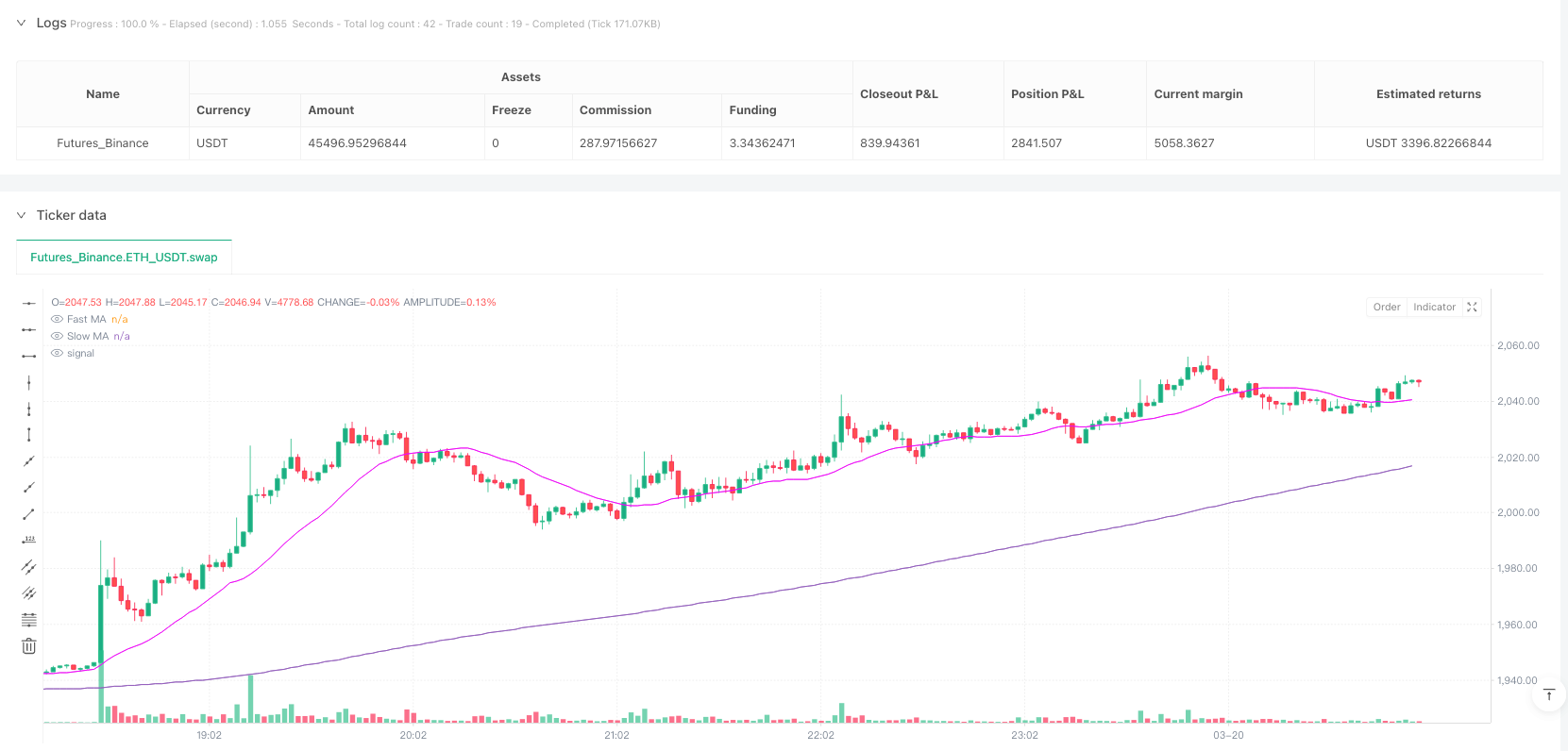
1. 参数设置:通过输入参数定义快速移动平均线和慢速移动平均线的周期和类型。默认配置为20周期SMA作为快线,200周期SMA作为慢线。
|
||
|
|
|
||
|
|
2. 移动平均线计算:通过自定义函数`ma()`灵活计算不同类型的移动平均线,包括简单移动平均线(SMA)、指数移动平均线(EMA)、平滑移动平均线(SMMA)、加权移动平均线(WMA)和成交量加权移动平均线(VWMA)。
|
||
|
|
|
||
|
|
3. 交易信号生成:
|
||
|
|
- 做多信号:当快速移动平均线向上穿越200周期SMA时触发做多信号
|
||
|
|
- 做空信号:当快速移动平均线向下穿越慢速移动平均线时触发做空信号
|
||
|
|
|
||
|
|
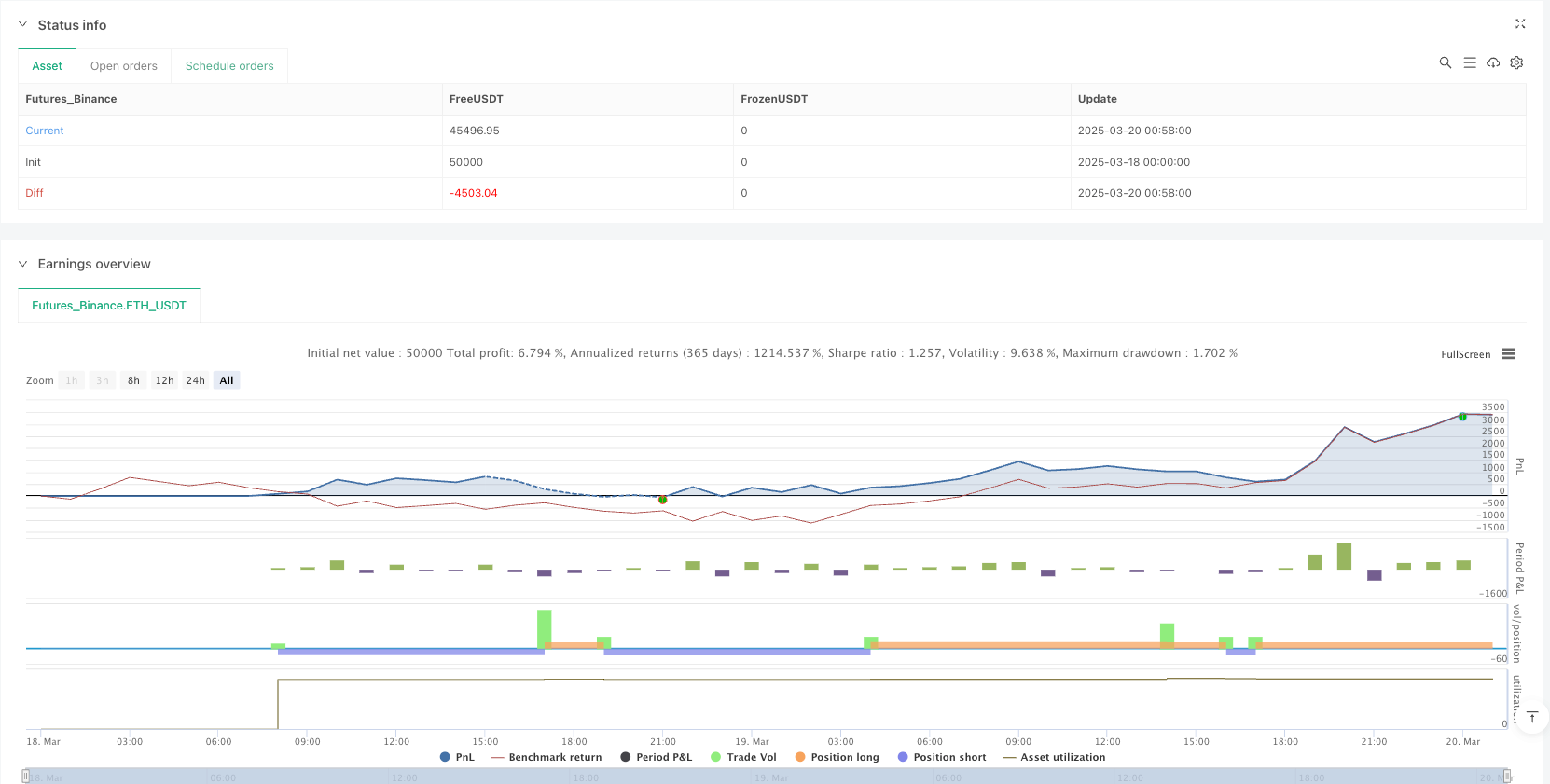
4. 交易执行控制:根据`directionOfTrade`参数设置,可以选择执行双向交易、仅做多或仅做空操作。在仅做多模式下,做空信号将关闭现有多头头寸;在仅做空模式下,做多信号将关闭现有空头头寸。
|
||
|
|
|
||
|
|
#### 策略优势
|
||
|
|
|
||
|
|
1. 灵活性高:策略允许用户自定义移动平均线类型和周期,适应性强,可以根据不同市场特性和交易品种进行参数优化。
|
||
|
|
|
||
|
|
2. 参数化设计:通过参数化的移动平均线函数,使得策略能够轻松切换不同类型的移动平均线,便于测试哪种均线组合在特定市场中表现最佳。
|
||
|
|
|
||
|
|
3. 视觉化支持:提供了移动平均线的可视化显示选项和颜色自定义,便于交易者直观地观察和分析市场走势与均线关系。
|
||
|
|
|
||
|
|
4. 交易方向控制:支持设置交易方向(双向、仅多头、仅空头),适合不同市场偏好和风险管理需求。
|
||
|
|
|
||
|
|
5. 趋势跟踪逻辑:策略基于均线交叉信号,有效捕捉中长期趋势变化,适合波动性较大的市场。
|
||
|
|
|
||
|
|
6. 资金管理:策略默认采用仓位百分比方式管理资金,有助于风险控制和资金增长的平衡。
|
||
|
|
|
||
|
|
#### 策略风险
|
||
|
|
|
||
|
|
1. 均线滞后性:所有基于移动平均线的策略都存在滞后性问题,可能导致入场点不够理想,尤其在震荡市场中容易产生虚假信号。
|
||
|
|
|
||
|
|
2. 信号频率不均衡:在剧烈波动或横盘整理市场中,可能产生过多的交叉信号,导致频繁交易和较高的手续费成本。
|
||
|
|
|
||
|
|
3. 参数敏感性:策略表现高度依赖于均线周期的选择,不同市场环境下最优参数可能差异很大,需要持续监控和调整。
|
||
|
|
|
||
|
|
4. 做多信号设计问题:当前策略的做多信号是基于快速均线上穿200均线,而做空信号则是基于快慢均线交叉,这种不对称的设计可能导致多空信号的触发逻辑不均衡。
|
||
|
|
|
||
|
|
5. 缺乏止损机制:当前策略没有设置止损条件,在趋势突然反转时可能面临较大损失风险。
|
||
|
|
|
||
|
|
解决方法:
|
||
|
|
- 引入附加指标(如RSI、MACD等)确认信号有效性
|
||
|
|
- 实施适当的止损和止盈策略
|
||
|
|
- 通过回测优化不同市场环境下的参数组合
|
||
|
|
- 调整交易频率,增加信号过滤条件
|
||
|
|
- 平衡多空信号的生成逻辑,使其更加一致
|
||
|
|
|
||
|
|
#### 策略优化方向
|
||
|
|
|
||
|
|
1. 信号确认机制:引入其他技术指标作为辅助确认工具,如相对强弱指数(RSI)、MACD或成交量指标,减少虚假信号。例如,可以在均线交叉发生时,要求RSI同时处于超买或超卖区域才执行交易。
|
||
|
|
|
||
|
|
2. 动态参数调整:实现基于市场波动性或趋势强度的动态参数调整机制,使策略能够自适应不同市场状态。例如,在高波动环境下自动延长均线周期以减少虚假信号。
|
||
|
|
|
||
|
|
3. 统一多空信号逻辑:修改当前不对称的多空信号生成逻辑,使两者都基于快慢均线交叉或选择其他更一致的信号生成方式。
|
||
|
|
|
||
|
|
4. 风险管理增强:增加止损和止盈功能,如基于ATR(真实波动幅度)的动态止损,或基于回撤百分比的尾随止损机制。
|
||
|
|
|
||
|
|
5. 优化资金管理:根据信号强度或市场波动性调整仓位大小,实现更智能的资金分配。
|
||
|
|
|
||
|
|
6. 时间过滤:增加交易时段过滤功能,避开低流动性或高不确定性的市场时段。
|
||
|
|
|
||
|
|
7. 回撤控制:增加最大回撤限制,当策略回撤达到预设阈值时暂停交易或减少仓位。
|
||
|
|
|
||
|
|
#### 总结
|
||
|
|
|
||
|
|
灵活双均线交叉量化策略是一个结构清晰、可定制性强的趋势跟踪系统。通过允许用户选择不同类型和周期的移动平均线,该策略能够适应各种交易品种和市场环境。其核心优势在于参数化设计和交易方向控制,使交易者能够根据个人偏好和市场状况调整策略行为。
|
||
|
|
|
||
|
|
然而,作为一个基于均线交叉的策略,它也面临滞后性和虚假信号等固有挑战。为了提升策略的稳健性和盈利能力,建议引入信号确认机制、完善风险管理体系、优化资金管理方法以及实现动态参数调整功能。这些优化方向不仅能够减少虚假信号和控制回撤,还能够提高策略对不同市场状态的适应性。
|
||
|
|
|
||
|
|
总的来说,这是一个具有良好基础框架的策略,通过适当的参数调整和功能扩展,能够发展成为一个更加全面和强大的量化交易系统,为交易者提供可靠的市场趋势捕捉工具。
|
||
|
|
||
|
||
|
|
#### Overview
|
||
|
|
|
||
|
|
The Flexible Moving Average Crossover Quantitative Strategy is a trend-following system based on moving average crossover signals. This strategy utilizes the crossover relationship between fast and slow moving averages to identify market trend reversal points and trigger trading signals. The core of the strategy lies in its parameterized design that allows traders to flexibly choose the type of moving average (SMA, EMA, SMMA, WMA, VWMA) and period to adapt to different market environments and trading instrument characteristics. Additionally, the strategy provides trade direction control options, which can be set to bidirectional trading, long-only, or short-only modes according to the trader's preference.
|
||
|
|
|
||
|
|
#### Strategy Principle
|
||
|
|
|
||
|
|
The core principle of this strategy is based on the relationship between two moving averages with different periods to determine market trends. The specific implementation logic is as follows:
|
||
|
|
|
||
|
|
1. Parameter Settings: Define the period and type of fast and slow moving averages through input parameters. The default configuration is a 20-period SMA as the fast line and a 200-period SMA as the slow line.
|
||
|
|
|
||
|
|
2. Moving Average Calculation: Flexibly calculate different types of moving averages through the custom function `ma()`, including Simple Moving Average (SMA), Exponential Moving Average (EMA), Smoothed Moving Average (SMMA), Weighted Moving Average (WMA), and Volume Weighted Moving Average (VWMA).
|
||
|
|
|
||
|
|
3. Trade Signal Generation:
|
||
|
|
- Long Signal: Triggered when the fast moving average crosses above the 200-period SMA
|
||
|
|
- Short Signal: Triggered when the fast moving average crosses below the slow moving average
|
||
|
|
|
||
|
|
4. Trade Execution Control: Based on the `directionOfTrade` parameter setting, the strategy can execute bidirectional trades, long-only, or short-only operations. In long-only mode, short signals will close existing long positions; in short-only mode, long signals will close existing short positions.
|
||
|
|
|
||
|
|
#### Strategy Advantages
|
||
|
|
|
||
|
|
1. High Flexibility: The strategy allows users to customize moving average types and periods, offering strong adaptability that can be optimized for different market characteristics and trading instruments.
|
||
|
|
|
||
|
|
2. Parameterized Design: Through the parameterized moving average function, the strategy can easily switch between different types of moving averages, facilitating testing of which moving average combination performs best in specific markets.
|
||
|
|
|
||
|
|
3. Visualization Support: Provides visualization options for moving averages with color customization, allowing traders to intuitively observe and analyze market trends and their relationship with moving averages.
|
||
|
|
|
||
|
|
4. Trade Direction Control: Supports setting trading direction (bidirectional, long-only, short-only), suitable for different market preferences and risk management requirements.
|
||
|
|
|
||
|
|
5. Trend Following Logic: The strategy is based on moving average crossover signals, effectively capturing medium to long-term trend changes, suitable for markets with higher volatility.
|
||
|
|
|
||
|
|
6. Capital Management: The strategy uses position percentage by default to manage funds, helping to balance risk control and capital growth.
|
||
|
|
|
||
|
|
#### Strategy Risks
|
||
|
|
|
||
|
|
1. Moving Average Lag: All strategies based on moving averages suffer from lag issues, which may lead to less-than-ideal entry points, especially in oscillating markets where false signals are common.
|
||
|
|
|
||
|
|
2. Uneven Signal Frequency: In highly volatile or range-bound markets, excessive crossover signals may occur, leading to frequent trading and higher transaction costs.
|
||
|
|
|
||
|
|
3. Parameter Sensitivity: Strategy performance is highly dependent on the choice of moving average periods. Optimal parameters may vary greatly across different market environments, requiring continuous monitoring and adjustment.
|
||
|
|
|
||
|
|
4. Long Signal Design Issue: The current strategy's long signal is based on the fast moving average crossing above the 200-period SMA, while the short signal is based on the crossover of fast and slow moving averages. This asymmetric design may lead to an imbalance in the triggering logic between long and short signals.
|
||
|
|
|
||
|
|
5. Lack of Stop-Loss Mechanism: The current strategy does not set stop-loss conditions, which may face significant loss risks in sudden trend reversals.
|
||
|
|
|
||
|
|
Solutions:
|
||
|
|
- Introduce additional indicators (such as RSI, MACD, etc.) to confirm signal validity
|
||
|
|
- Implement appropriate stop-loss and take-profit strategies
|
||
|
|
- Optimize parameter combinations for different market environments through backtesting
|
||
|
|
- Adjust trading frequency and add signal filtering conditions
|
||
|
|
- Balance the logic for generating long and short signals to make them more consistent
|
||
|
|
|
||
|
|
#### Strategy Optimization Directions
|
||
|
|
|
||
|
|
1. Signal Confirmation Mechanism: Introduce other technical indicators as auxiliary confirmation tools, such as Relative Strength Index (RSI), MACD, or volume indicators to reduce false signals. For example, require the RSI to be in overbought or oversold territories when a moving average crossover occurs before executing a trade.
|
||
|
|
|
||
|
|
2. Dynamic Parameter Adjustment: Implement a dynamic parameter adjustment mechanism based on market volatility or trend strength, allowing the strategy to self-adapt to different market states. For example, automatically extend moving average periods in high-volatility environments to reduce false signals.
|
||
|
|
|
||
|
|
3. Unify Long and Short Signal Logic: Modify the current asymmetric long and short signal generation logic to make both based on fast and slow moving average crossovers or choose other more consistent signal generation methods.
|
||
|
|
|
||
|
|
4. Risk Management Enhancement: Add stop-loss and take-profit functions, such as dynamic stop-loss based on ATR (Average True Range), or trailing stop-loss mechanisms based on drawdown percentage.
|
||
|
|
|
||
|
|
5. Optimize Capital Management: Adjust position size based on signal strength or market volatility for smarter fund allocation.
|
||
|
|
|
||
|
|
6. Time Filtering: Add trading session filtering functionality to avoid low liquidity or high uncertainty market periods.
|
||
|
|
|
||
|
|
7. Drawdown Control: Add maximum drawdown limits, pausing trading or reducing positions when strategy drawdown reaches preset thresholds.
|
||
|
|
|
||
|
|
#### Summary
|
||
|
|
|
||
|
|
The Flexible Moving Average Crossover Quantitative Strategy is a clear-structured, highly customizable trend-following system. By allowing users to select different types and periods of moving averages, this strategy can adapt to various trading instruments and market environments. Its core advantages lie in its parameterized design and trade direction control, enabling traders to adjust strategy behavior according to personal preferences and market conditions.
|
||
|
|
|
||
|
|
However, as a strategy based on moving average crossovers, it also faces inherent challenges such as lag and false signals. To enhance the strategy's robustness and profitability, it is recommended to introduce signal confirmation mechanisms, improve risk management systems, optimize capital management methods, and implement dynamic parameter adjustment functions. These optimization directions can not only reduce false signals and control drawdowns but also improve the strategy's adaptability to different market states.
|
||
|
|
|
||
|
|
Overall, this is a strategy with a solid foundational framework that, through appropriate parameter adjustments and functional extensions, can develop into a more comprehensive and powerful quantitative trading system, providing traders with a reliable tool for capturing market trends.
|
||
|
|
[/trans]
|
||
|
|
|
||
|
|
|
||
|
|
|
||
|
|
> Source (PineScript)
|
||
|
|
|
||
|
|
``` pinescript
|
||
|
|
/*backtest
|
||
|
|
start: 2025-03-18 00:00:00
|
||
|
|
end: 2025-03-20 01:00:00
|
||
|
|
period: 2m
|
||
|
|
basePeriod: 2m
|
||
|
|
exchanges: [{"eid":"Futures_Binance","currency":"ETH_USDT"}]
|
||
|
|
*/
|
||
|
|
|
||
|
|
// This Pine Script™ code is subject to the terms of the Mozilla Public License 2.0 at https://mozilla.org/MPL/2.0/
|
||
|
|
// © ccrockatt21700
|
||
|
|
|
||
|
|
//@version=6
|
||
|
|
strategy("MA crossover strategy", overlay=true, fill_orders_on_standard_ohlc = true, default_qty_type=strategy.percent_of_equity, default_qty_value=100)
|
||
|
|
|
||
|
|
ma(source, length, type) =>
|
||
|
|
type == "SMA" ? ta.sma(source, length) :
|
||
|
|
type == "EMA" ? ta.ema(source, length) :
|
||
|
|
type == "SMMA (RMA)" ? ta.rma(source, length) :
|
||
|
|
type == "WMA" ? ta.wma(source, length) :
|
||
|
|
type == "VWMA" ? ta.vwma(source, length) :
|
||
|
|
na
|
||
|
|
|
||
|
|
fastMAPeriod = input.int(20, "Fast moving average period", inline="Fast moving average")
|
||
|
|
fastMAType = input.string("SMA" , "" , inline="Fast moving average", options=["SMA", "EMA", "SMMA (RMA)", "WMA", "VWMA"])
|
||
|
|
fastMAColor = input(#ee09f6, "" , inline="Fast moving average")
|
||
|
|
plotFastMA = input.bool(true, "Plot Fast MA")
|
||
|
|
|
||
|
|
slowMAPeriod = input.int(200, "Slow moving average period", inline="Slow moving average")
|
||
|
|
slowMAType = input.string("SMA" , "" , inline="Slow moving average", options=["SMA", "EMA", "SMMA (RMA)", "WMA", "VWMA"])
|
||
|
|
slowMAColor = input(#2bd4e0, "" , inline="Slow moving average")
|
||
|
|
plotSlowMA = input.bool(true, "Plot Slow MA")
|
||
|
|
|
||
|
|
directionOfTrade = input.string("LongShort", "Trade direction: long & short, long only or short only", options=["LongShort", "Long", "Short"])
|
||
|
|
|
||
|
|
fastMA = ma(close, fastMAPeriod, fastMAType)
|
||
|
|
plot(plotFastMA ? fastMA : na, title="Fast MA", color=fastMAColor)
|
||
|
|
|
||
|
|
slowMA = ma(close, slowMAPeriod, slowMAType)
|
||
|
|
plot(plotSlowMA ? slowMA : na, title="Slow MA")
|
||
|
|
|
||
|
|
longCondition = ta.crossover(fastMA, ta.sma(close, 200))
|
||
|
|
if (longCondition)
|
||
|
|
if (directionOfTrade == "LongShort" or directionOfTrade == "Long")
|
||
|
|
strategy.entry("My Long Entry Id", strategy.long)
|
||
|
|
else
|
||
|
|
strategy.close("My Short Entry Id")
|
||
|
|
|
||
|
|
shortCondition = ta.crossunder(fastMA, slowMA)
|
||
|
|
if (shortCondition)
|
||
|
|
if (directionOfTrade == "LongShort" or directionOfTrade == "Short")
|
||
|
|
strategy.entry("My Short Entry Id", strategy.short)
|
||
|
|
else
|
||
|
|
strategy.close("My Long Entry Id")
|
||
|
|
|
||
|
|
```
|
||
|
|
|
||
|
|
> Detail
|
||
|
|
|
||
|
|
https://www.fmz.com/strategy/488239
|
||
|
|
|
||
|
|
> Last Modified
|
||
|
|
|
||
|
|
2025-03-26 11:01:59
|