175 lines
10 KiB
Markdown
175 lines
10 KiB
Markdown

|
|
||
|
|
> Name
|
||
|
|
|
||
|
|
动态均线趋势跟踪与波动率自适应纳斯达克期货交易策略-Dynamic-EMA-Trend-Following-with-Volatility-Adaptive-Nasdaq-Futures-Trading-Strategy
|
||
|
|
|
||
|
|
> Author
|
||
|
|
|
||
|
|
ianzeng123
|
||
|
|
|
||
|
|
> Strategy Description
|
||
|
|
|
||
|
|
|
||
|
|

|
||
|
|
|
||
|
|
|
||
|
|
|
||
|
|
[trans]
|
||
|
|
#### 概述
|
||
|
|
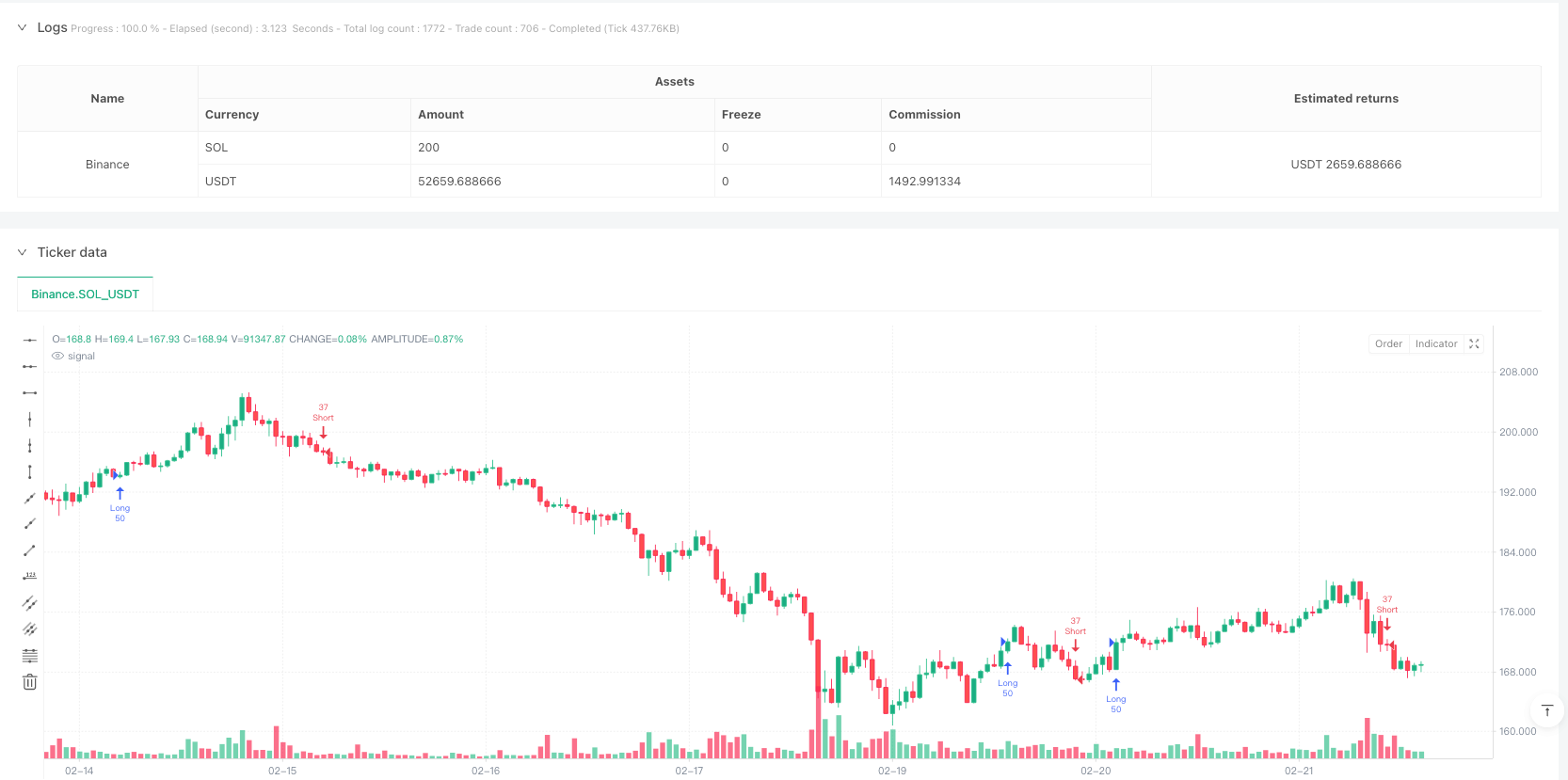
这是一个专为纳斯达克100微型期货设计的日内交易策略。策略核心采用双均线系统结合成交量加权平均价格(VWAP)作为趋势确认,并通过真实波动幅度(ATR)动态调整止损位置。该策略在保持资金安全的同时,通过严格的风险控制和动态的仓位管理来捕捉市场趋势。
|
||
|
|
|
||
|
|
#### 策略原理
|
||
|
|
策略主要基于以下几个核心组件:
|
||
|
|
1. 信号系统采用9周期与21周期指数移动平均线(EMA)的交叉来识别趋势方向。当短期均线向上穿越长期均线时产生做多信号,反之产生做空信号。
|
||
|
|
2. 使用VWAP作为趋势确认指标,价格需要位于VWAP之上才能开多仓,位于VWAP之下才能开空仓。
|
||
|
|
3. 风险管理系统使用基于ATR的动态止损,多仓止损设置为2倍ATR,空仓为1.5倍ATR。
|
||
|
|
4. 获利目标采用不对称设计,多仓使用3:1的收益风险比,空仓使用2:1的收益风险比。
|
||
|
|
5. 设置了移动止损和保本止损机制,当价格达到目标利润的50%时,止损点上移至成本位。
|
||
|
|
|
||
|
|
#### 策略优势
|
||
|
|
1. 动态适应性强 - 通过ATR来调整止损和移动止损参数,策略能够自动适应不同的市场波动环境。
|
||
|
|
2. 风险控制完善 - 每笔交易风险限制在1500美元以内,并设置了7500美元的每周最大亏损限制。
|
||
|
|
3. 不对称收益设计 - 考虑到市场特性,多空策略采用不同的收益风险比和仓位大小,更符合市场实际情况。
|
||
|
|
4. 多重确认机制 - 结合EMA交叉和VWAP确认,有效减少假突破信号。
|
||
|
|
5. 完整的止损体系 - 包含固定止损、移动止损和保本止损三重保护。
|
||
|
|
|
||
|
|
#### 策略风险
|
||
|
|
1. 震荡市场风险 - 在横盘震荡市场中,均线交叉信号可能产生较多假信号。
|
||
|
|
2. 滑点风险 - 在快速行情中,实际成交价格可能与信号价格存在较大偏差。
|
||
|
|
3. 系统性风险 - 当市场出现重大事件时,止损可能失效。
|
||
|
|
4. 过度交易风险 - 频繁的信号可能导致交易成本增加。
|
||
|
|
5. 资金管理风险 - 如果初始资金较小,可能无法有效执行完整的仓位管理计划。
|
||
|
|
|
||
|
|
#### 策略优化方向
|
||
|
|
1. 引入成交量过滤器 - 可以添加成交量确认机制,只在成交量满足条件时执行交易。
|
||
|
|
2. 优化时间过滤 - 考虑加入具体的交易时间窗口,避开波动较大的开盘和收盘时段。
|
||
|
|
3. 动态调整参数 - 可以根据不同的市场环境自动调整均线周期和ATR倍数。
|
||
|
|
4. 增加市场情绪指标 - 引入VIX等波动率指标来调整交易频率和仓位大小。
|
||
|
|
5. 完善移动止损 - 可以设计更灵活的移动止损算法,提高对趋势的把握能力。
|
||
|
|
|
||
|
|
#### 总结
|
||
|
|
该策略通过均线系统和VWAP的配合建立了稳健的趋势跟踪系统,并通过多层次的风险控制机制保护资金安全。策略的最大特点是其适应性和风险管理能力,通过ATR动态调整各项参数,使其能够在不同市场环境下保持稳定性能。该策略特别适合日内交易纳斯达克100微型期货,但需要交易者严格执行风险控制规则,并根据市场变化适时调整参数。 ||
|
||
|
|
|
||
|
|
#### Overview
|
||
|
|
This is a day trading strategy designed for Nasdaq 100 micro futures. The strategy core utilizes a dual EMA system combined with Volume Weighted Average Price (VWAP) for trend confirmation, and dynamically adjusts stop-loss positions through Average True Range (ATR). While maintaining capital safety, the strategy captures market trends through strict risk control and dynamic position management.
|
||
|
|
|
||
|
|
#### Strategy Principles
|
||
|
|
The strategy is based on several core components:
|
||
|
|
1. The signal system uses crossovers of 9-period and 21-period Exponential Moving Averages (EMA) to identify trend direction. Long signals are generated when the short-term EMA crosses above the long-term EMA, and vice versa.
|
||
|
|
2. VWAP is used as a trend confirmation indicator, requiring price to be above VWAP for long positions and below VWAP for short positions.
|
||
|
|
3. The risk management system uses ATR-based dynamic stops, with stop-loss set at 2x ATR for longs and 1.5x ATR for shorts.
|
||
|
|
4. Profit targets employ asymmetric design, using a 3:1 reward-risk ratio for longs and 2:1 for shorts.
|
||
|
|
5. Implements trailing stops and break-even mechanisms, moving the stop-loss to entry when price reaches 50% of target profit.
|
||
|
|
|
||
|
|
#### Strategy Advantages
|
||
|
|
1. Strong Dynamic Adaptability - Adjusts stops and trailing stops through ATR, automatically adapting to different market volatility environments.
|
||
|
|
2. Comprehensive Risk Control - Limits risk to $1,500 per trade with a $7,500 weekly maximum loss limit.
|
||
|
|
3. Asymmetric Return Design - Adopts different reward-risk ratios and position sizes for longs and shorts, better reflecting market characteristics.
|
||
|
|
4. Multiple Confirmation Mechanism - Combines EMA crossovers with VWAP confirmation, effectively reducing false breakout signals.
|
||
|
|
5. Complete Stop-Loss System - Includes fixed stops, trailing stops, and break-even stops for triple protection.
|
||
|
|
|
||
|
|
#### Strategy Risks
|
||
|
|
1. Ranging Market Risk - EMA crossover signals may generate numerous false signals in sideways markets.
|
||
|
|
2. Slippage Risk - Actual execution prices may significantly deviate from signal prices in fast markets.
|
||
|
|
3. Systemic Risk - Stops may fail during major market events.
|
||
|
|
4. Overtrading Risk - Frequent signals may increase transaction costs.
|
||
|
|
5. Capital Management Risk - Small initial capital may prevent effective execution of the complete position management plan.
|
||
|
|
|
||
|
|
#### Strategy Optimization Directions
|
||
|
|
1. Introduce Volume Filters - Add volume confirmation mechanisms, executing trades only when volume conditions are met.
|
||
|
|
2. Optimize Time Filters - Consider adding specific trading time windows to avoid high-volatility opening and closing periods.
|
||
|
|
3. Dynamic Parameter Adjustment - Automatically adjust EMA periods and ATR multipliers based on different market conditions.
|
||
|
|
4. Add Market Sentiment Indicators - Incorporate volatility indicators like VIX to adjust trading frequency and position sizes.
|
||
|
|
5. Enhance Trailing Stops - Design more flexible trailing stop algorithms to improve trend capture capability.
|
||
|
|
|
||
|
|
#### Summary
|
||
|
|
The strategy establishes a robust trend-following system through the combination of EMAs and VWAP, protecting capital through multi-layered risk control mechanisms. Its key features are adaptability and risk management capability, maintaining stability across different market environments through ATR-based dynamic parameter adjustment. The strategy is particularly suitable for day trading Nasdaq 100 micro futures, but requires traders to strictly execute risk control rules and adjust parameters according to market changes.[/trans]
|
||
|
|
|
||
|
|
|
||
|
|
|
||
|
|
> Source (PineScript)
|
||
|
|
|
||
|
|
``` pinescript
|
||
|
|
/*backtest
|
||
|
|
start: 2024-02-25 00:00:00
|
||
|
|
end: 2025-02-22 08:00:00
|
||
|
|
period: 1h
|
||
|
|
basePeriod: 1h
|
||
|
|
exchanges: [{"eid":"Binance","currency":"SOL_USDT"}]
|
||
|
|
*/
|
||
|
|
|
||
|
|
//@version=5
|
||
|
|
strategy("Nasdaq 100 Micro - Optimized Risk Management", overlay=true, default_qty_type=strategy.percent_of_equity, default_qty_value=100)
|
||
|
|
|
||
|
|
// === INPUTS ===
|
||
|
|
riskPerTrade = input(1500, title="Max Risk Per Trade ($)")
|
||
|
|
profitTarget = input(3000, title="Target Profit Per Trade ($)")
|
||
|
|
maxWeeklyLoss = input(7500, title="Max Weekly Loss ($)")
|
||
|
|
emaShort = input(9, title="Short EMA Period")
|
||
|
|
emaLong = input(21, title="Long EMA Period")
|
||
|
|
vwapEnabled = input(true, title="Use VWAP?")
|
||
|
|
contractSizeMax = input(50, title="Max Micro Contracts per Trade")
|
||
|
|
atrLength = input(14, title="ATR Length")
|
||
|
|
|
||
|
|
// === INDICATORS ===
|
||
|
|
emaFast = ta.ema(close, emaShort)
|
||
|
|
emaSlow = ta.ema(close, emaLong)
|
||
|
|
vwapLine = ta.vwap(close)
|
||
|
|
atrValue = ta.atr(atrLength)
|
||
|
|
|
||
|
|
// === CONDITIONS ===
|
||
|
|
// Long Entry: EMA Crossover + Above VWAP
|
||
|
|
longCondition = ta.crossover(emaFast, emaSlow) and (not vwapEnabled or close > vwapLine)
|
||
|
|
|
||
|
|
// Short Entry: EMA Crossunder + Below VWAP
|
||
|
|
shortCondition = ta.crossunder(emaFast, emaSlow) and (not vwapEnabled or close < vwapLine)
|
||
|
|
|
||
|
|
// Position Size Calculation (Adjusted for Shorts)
|
||
|
|
riskPerPoint = 5 // MNQ Micro Futures = $5 per point per contract
|
||
|
|
stopLossPointsLong = atrValue * 2 // More room for longs
|
||
|
|
stopLossPointsShort = atrValue * 1.5 // Tighter for shorts
|
||
|
|
contractsLong = math.min(contractSizeMax, math.floor(riskPerTrade / (stopLossPointsLong * riskPerPoint)))
|
||
|
|
contractsShort = math.min(math.floor(contractsLong * 0.75), contractSizeMax) // Shorts use 75% of long size
|
||
|
|
|
||
|
|
// Stop Loss & Take Profit
|
||
|
|
longSL = close - stopLossPointsLong
|
||
|
|
longTP = close + (stopLossPointsLong * 3) // 1:3 Risk-Reward for longs
|
||
|
|
shortSL = close + stopLossPointsShort
|
||
|
|
shortTP = close - (stopLossPointsShort * 2) // 1:2 Risk-Reward for shorts
|
||
|
|
|
||
|
|
// === BREAK-EVEN STOP MECHANISM ===
|
||
|
|
longBE = close + (stopLossPointsLong * 1.5) // If price moves 50% to TP, move SL to entry
|
||
|
|
shortBE = close - (stopLossPointsShort * 1) // More aggressive on shorts
|
||
|
|
|
||
|
|
// === TRAILING STOP LOGIC ===
|
||
|
|
trailStopLong = close - (atrValue * 1.5)
|
||
|
|
trailStopShort = close + (atrValue * 1)
|
||
|
|
|
||
|
|
// === EXECUTION ===
|
||
|
|
// Check for weekly loss limit
|
||
|
|
weeklyLoss = strategy.netprofit < -maxWeeklyLoss
|
||
|
|
|
||
|
|
if (longCondition and not weeklyLoss)
|
||
|
|
strategy.entry("Long", strategy.long, contractsLong)
|
||
|
|
strategy.exit("TakeProfitLong", from_entry="Long", limit=longTP, stop=longSL, trail_points=atrValue * 1.5, trail_offset=atrValue * 0.5)
|
||
|
|
strategy.exit("BreakEvenLong", from_entry="Long", stop=longBE, when=close >= longBE)
|
||
|
|
|
||
|
|
if (shortCondition and not weeklyLoss)
|
||
|
|
strategy.entry("Short", strategy.short, contractsShort)
|
||
|
|
strategy.exit("TakeProfitShort", from_entry="Short", limit=shortTP, stop=shortSL, trail_points=atrValue * 1, trail_offset=atrValue * 0.5)
|
||
|
|
strategy.exit("BreakEvenShort", from_entry="Short", stop=shortBE, when=close <= shortBE)
|
||
|
|
|
||
|
|
// === STOP TRADING IF WEEKLY LOSS EXCEEDED ===
|
||
|
|
if (weeklyLoss)
|
||
|
|
strategy.close_all()
|
||
|
|
|
||
|
|
```
|
||
|
|
|
||
|
|
> Detail
|
||
|
|
|
||
|
|
https://www.fmz.com/strategy/483527
|
||
|
|
|
||
|
|
> Last Modified
|
||
|
|
|
||
|
|
2025-02-27 16:44:56
|